Award show speeches are usually predictable.
A list of names. A few emotional thank-yous. Maybe a joke, maybe a tear. The moment passes, the music swells, and the show moves on.
But when P!nk accepted the MTV Video Vanguard Award, something different happened.
She didn’t just accept a career honor.
She used it.
A global stage, redirected
Standing at the microphone, at a peak moment in her career, P!nk had every reason to make the speech about her journey—years of hits, risks, reinvention, endurance.
Instead, she told a story.
Not about fame.
About her daughter.
It began with a simple, painful moment: Willow coming home from school, questioning herself after being told she looked like a boy. It’s the kind of comment that lands heavily in childhood—small on the surface, but capable of reshaping how a child sees themselves.
P!nk didn’t dismiss it. She didn’t soften it.
She answered it.
Turning insecurity into education
Rather than offering quick reassurance, P!nk did something more intentional.
She built a visual argument.
She gathered images—artists who had challenged traditional ideas of gender, beauty, and identity. People who didn’t fit neatly into categories but redefined them instead.
Figures like David Bowie and Prince weren’t just examples of fame.
They were examples of freedom.
Through that lens, she reframed the question entirely. The issue wasn’t whether Willow looked like something she was “supposed” to be.
The issue was who gets to decide what “supposed” even means.
A masterclass in front of millions
What made the speech extraordinary wasn’t just the message—it was the setting.
This wasn’t a private conversation at home. It was happening live, in front of a global audience, during one of the most visible moments of her career.
And yet, it didn’t feel performative.
It felt specific.
Personal.
Like a parent choosing, in real time, to prioritize a child’s understanding over public celebration.
She spoke about how she has lived her own life—how people had called her names, questioned her appearance, tried to box her into something easier to define. And how she refused.
Not by fighting every comment.
But by becoming fully herself anyway.
Why the moment hit harder than the award
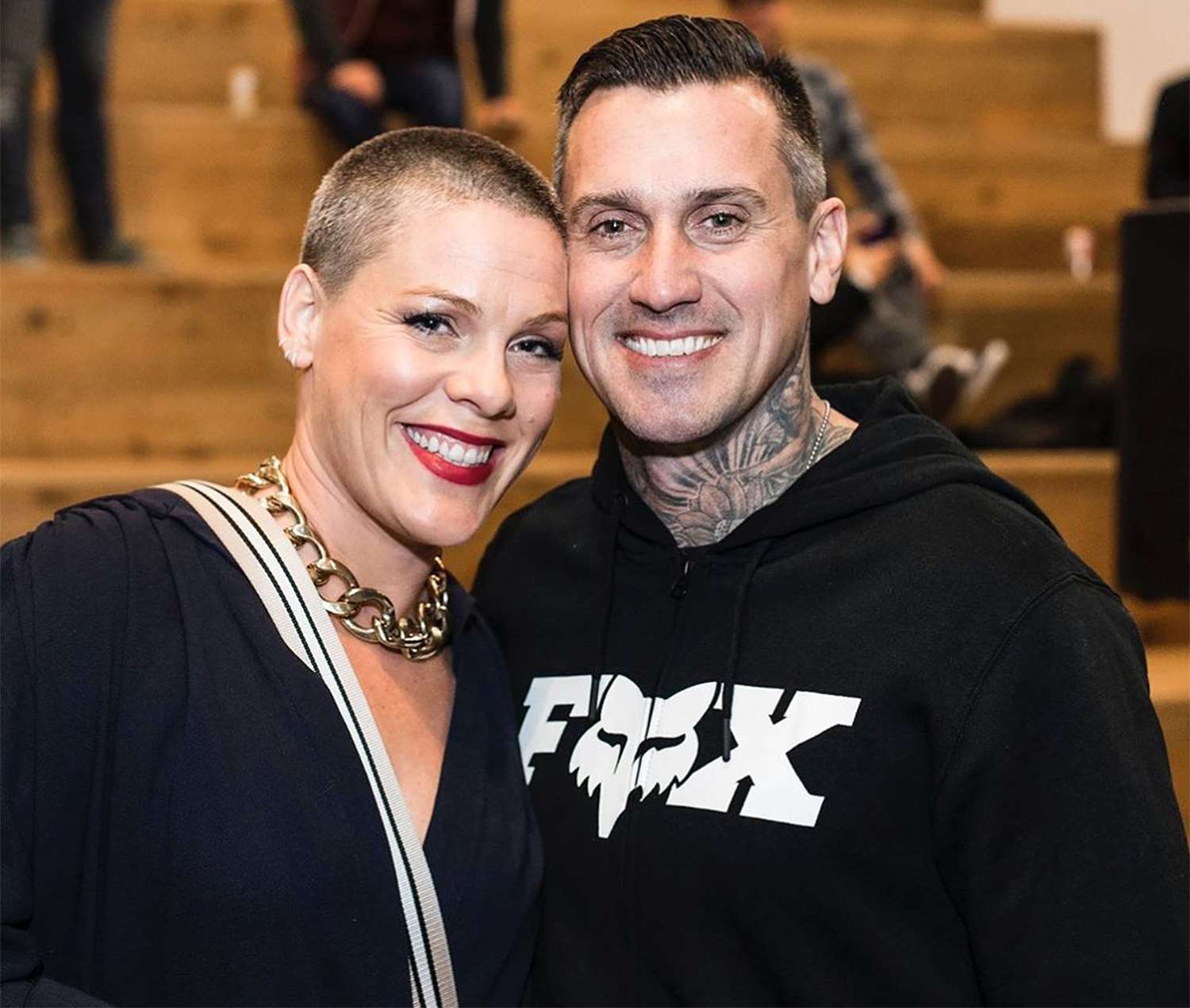
In the audience, Carey Hart watched it unfold—not just as a husband, but as a parent.
Because what was happening on that stage wasn’t just a speech.
It was modeling.
Modeling how to respond to criticism.
How to challenge assumptions.
How to build confidence without denying reality.
For a child, that kind of example can matter more than any reassurance.
And for an audience, it shifted the emotional center of the night.
The award became secondary.
The message stayed.
Redefining beauty in real time
One of the most powerful aspects of P!nk’s speech was how she reframed beauty—not as something fixed, but as something expansive.
She didn’t argue that Willow fit conventional standards.
She questioned the standards themselves.
That’s a subtle but important difference.
Because telling someone they do fit in can still reinforce the idea that fitting in is the goal.
Telling them they don’t have to—that’s liberation.
The cultural weight of androgyny
By referencing artists who blurred gender lines, P!nk placed her message in a broader cultural context.
Androgyny, in music and art, has long been a space of creative freedom. It challenges expectations, disrupts norms, and opens up new ways of expressing identity.
But for a child, those ideas can feel abstract—until they’re made visible.
By showing Willow real examples, P!nk turned theory into something tangible.
Not “you’re different, and that’s okay.”
But “look—difference has always been powerful.”
Why this moment still resonates
Years later, that speech continues to circulate—not because it was dramatic, but because it was grounded.
It didn’t rely on spectacle.
It relied on truth.
Parents saw themselves in it.
Young viewers saw possibility in it.
And many people saw, perhaps for the first time, a public figure using influence not to elevate themselves—but to lift someone else.
A different kind of legacy
Artists often define their legacy through records, tours, and awards.
But moments like this suggest another measure.
What you teach.
What you model.
What you leave behind in the people closest to you.
By pausing her own celebration, P!nk showed that influence isn’t just about reach.
It’s about intention.
The quiet power of being seen
For Willow, the impact of that moment wasn’t about applause or headlines.
It was about being understood.
About having a parent not only defend her, but expand her view of herself.
That kind of validation doesn’t just resolve a moment of doubt.
It reshapes how future doubts are handled.
More than a speech
In the end, the Vanguard Award recognized P!nk’s contributions to music and culture.
But her speech did something awards can’t quantify.
It demonstrated how to turn a moment of recognition into a moment of meaning.
Not louder.
Not bigger.
Just more human.
And that’s why people remember it.
Not as a speech about success.
But as a lesson in self-worth—delivered when it mattered most.