There’s a certain stillness that comes after movement.
For an artist like 50 Cent, movement has never been optional—it’s been constant. Flights, stages, cities, deals. A life measured in departures and arrivals, in unfamiliar rooms that briefly feel like home before becoming just another stop along the way.
And yet, when the question is finally asked—where did you feel happiest?—the answer doesn’t follow the map.
It pauses somewhere quieter.
“I like London a lot.”
Not New York. Not the city that built him. Not the place that defined everything about his rise. Instead, the answer begins somewhere across the Atlantic, in a city that greeted him differently.
A City That Welcomed Him First
London wasn’t just another destination on a tour schedule. It was a moment.
For artists stepping outside their home country, there’s always uncertainty. Will the audience understand? Will the connection translate? Will the energy carry across borders?
For 50 Cent, it did—immediately.
When he first arrived in London, the reception didn’t feel distant or cautious. It felt open. Warm. Almost unexpected. It left an impression strong enough that, years later, he could still point to it as a place where something clicked.
He didn’t just pass through it. He absorbed it.
So much so that he experimented with it—trying to weave its sound, its rhythm, even its accent into his music. Not because he needed to, but because something about it stayed with him.
It was admiration, but also curiosity.
A willingness to step outside himself, even briefly.
The Place That Shaped Him Never Left
But admiration isn’t the same as belonging.
Because when the conversation shifts from happiness to identity, the answer changes.
New York.
Not the version seen in films or postcards, but the one rooted in South Jamaica, Queens. A place that doesn’t offer comfort easily. A place that demands resilience before it offers recognition.
That’s where 50 Cent comes from.
And that distinction matters.
Because while London gave him a sense of welcome, New York gave him everything else. The edge. The perspective. The understanding of what it means to earn attention rather than expect it.
It’s also where the stakes were always real.
In 2000, that reality became undeniable when he was shot in his own neighborhood. A moment that could have ended everything instead became part of the foundation he would build from.
Not as a myth. As memory.
Success Didn’t Change The Relationship
Over time, success shifted his physical distance from New York.
His life expanded. Properties in different cities. A large estate in Connecticut. A schedule that no longer required him to stay in one place.
But distance didn’t erase connection.
He still returns.
Not out of obligation, but because something about the city remains unfinished. Or maybe unreplaceable.
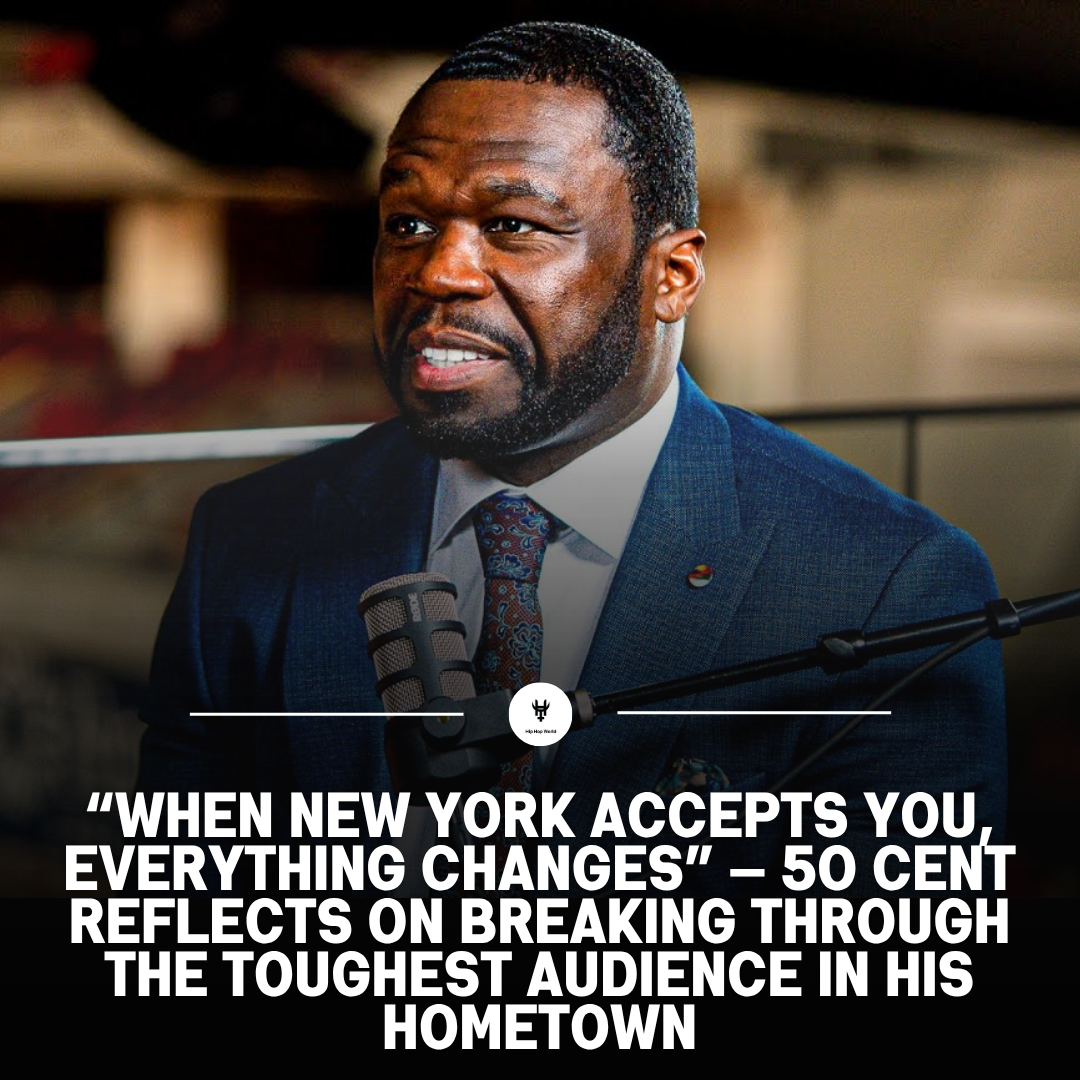
New York isn’t the easiest place to be accepted. In fact, it’s the opposite.
“It’s the roughest crowd.”
That’s how he describes it. Not as criticism, but as recognition. Because in New York, approval isn’t given freely. It’s tested. Measured. Earned over time.
And once it’s earned, it means something different.
It becomes validation that can’t be replicated anywhere else.
The Turning Point Isn’t Where You’re Loved—It’s Where You’re Proven
There’s a subtle difference between being embraced and being proven.
London embraced him early. It gave him a sense of ease, of appreciation that didn’t require negotiation.
New York did something else.
It challenged him.
It forced him to refine, to push, to become something undeniable. Not because the city demanded perfection, but because it didn’t respond to anything less than authenticity.
That’s the turning point in his story.
Not choosing between the two.
But understanding what each place represents.
One showed him how far he could go.
The other showed him who he had to be to get there.
What Stays When Everything Changes
For artists who move through the world at that scale, identity can become fluid. Cities blur together. Audiences change. Environments shift constantly.
But certain things remain fixed.
For 50 Cent, New York isn’t just geography. It’s reference.
It’s the standard against which everything else is measured. The place that reminds him of what it took to begin, and what it still takes to remain.
Even when he’s not there, it exists in the background.
In how he speaks. In how he moves. In how he evaluates everything around him.
London may have been where he felt happiest.
But New York is where he understands himself.
A Legacy Built Between Two Worlds
There’s something telling about the way he answers that original question.
He doesn’t dismiss London. He doesn’t downplay what it meant to him. He acknowledges it fully, even playfully—down to experimenting with its accent in his music.
But when it comes to what matters most, he doesn’t hesitate.
Home isn’t defined by comfort.
It’s defined by truth.
And for 50 Cent, that truth still traces back to Queens. To a place that didn’t promise anything, but gave him everything he needed to become who he is.
Because in the end, the world may open its doors.
But the place that built you is the one that never really lets you leave.