At the 86th Academy Awards, spectacle was expected. It always is. The Oscars trade in grandeur, precision, and moments engineered to linger.
But on one March evening in 2014, the most powerful performance came from restraint.
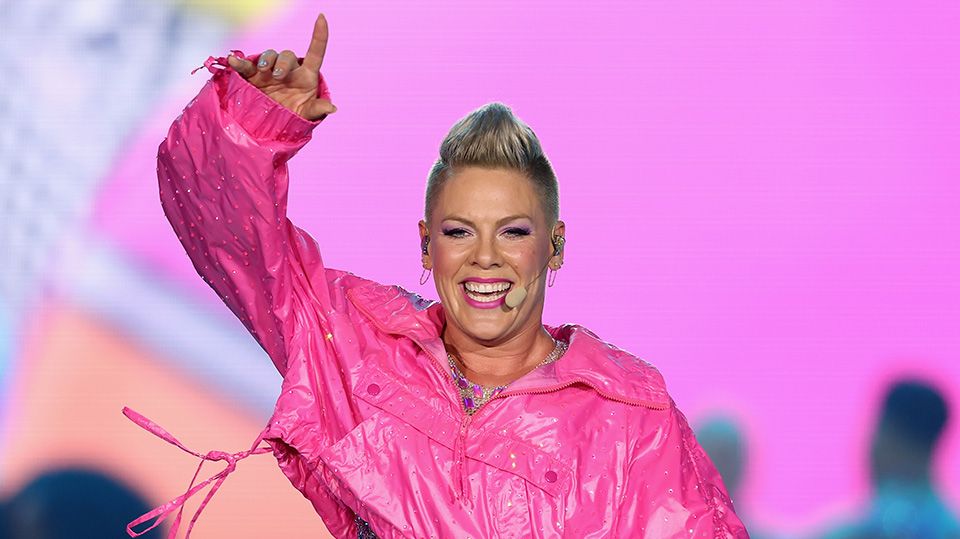
When Pink stepped onto the stage to honor The Wizard of Oz, she left behind the defining element of her live persona. No harness. No aerial choreography. No defiance of gravity. Just a microphone, an orchestra, and one of the most sacred songs in film history.
It was a risk—and a revelation.
A Voice Without a Safety Net
For years, Pink had built a reputation as one of the most physically fearless performers in modern music. Her concerts blurred the line between pop show and aerial performance, with vocals delivered mid-flight, suspended high above arenas.
That identity made her an unexpected choice for “Somewhere Over the Rainbow,” the song immortalized by Judy Garland in 1939.
But that was precisely the point.
The Academy didn’t need spectacle. It needed reverence. And Pink understood the assignment.
A Stage Reimagined Through Simplicity
As the opening notes of Somewhere Over the Rainbow filled the Dolby Theatre, the room softened. The usual ceremony rhythm—applause, movement, anticipation—gave way to stillness.
Pink appeared in a ruby-red gown, a quiet visual nod to Dorothy’s iconic slippers. She didn’t move far from the microphone. She didn’t need to.
From the first line, the performance made its intention clear: this would not be reinvention. It would be respect.
Her voice entered gently, almost cautiously, as if aware of the weight it was about to carry. Each phrase was measured, unhurried, allowing the melody to breathe.
There was no attempt to compete with Garland’s legacy. Only an effort to honor it.
The Moment the Room Fell Silent
Inside the theatre, the audience—filmmakers, actors, and industry veterans—responded not with immediate applause, but with attention. Complete, undistracted attention.
That silence became part of the performance.
As the song unfolded, Pink’s voice expanded, revealing a control and clarity that often sits beneath her more explosive rock delivery. The high notes arrived not as a display, but as a natural extension of the song’s emotional arc—clear, steady, and without strain.
It was the kind of singing that doesn’t demand reaction. It earns it.
A Legacy Handled With Care
“Somewhere Over the Rainbow” is more than a song. It’s a cultural landmark, inseparable from the emotional memory of The Wizard of Oz and Garland’s performance.
Many artists who approach it fall into one of two traps: imitation or reinvention.
Pink chose neither.
Instead, she delivered something quieter—a version grounded in sincerity, shaped by her own tone, but careful not to disrupt what made the original endure. The result felt less like a cover and more like a continuation.
The Ovation That Took a Second
When the final note faded, the room held its breath.
For a brief moment, nothing happened.
Then the audience rose.
The standing ovation wasn’t explosive at first—it built, as if the room needed a second to return from wherever the song had taken it. Applause followed, filling the theatre, while cameras captured faces that reflected something rare at an event like the Oscars: genuine emotional disarmament.
A Different Kind of Triumph
For Pink, the performance marked a shift—not in direction, but in perception.
It revealed a dimension of her artistry that often sits behind the spectacle. Strip away the choreography, the scale, the adrenaline, and what remains is a vocalist with precision, restraint, and deep emotional intelligence.
That night didn’t redefine her career.
It refined it.
Because in a space built for grandeur, Pink proved that the most commanding presence doesn’t always rise above the stage.
Sometimes, it stands perfectly still—and lets the song do the flying.