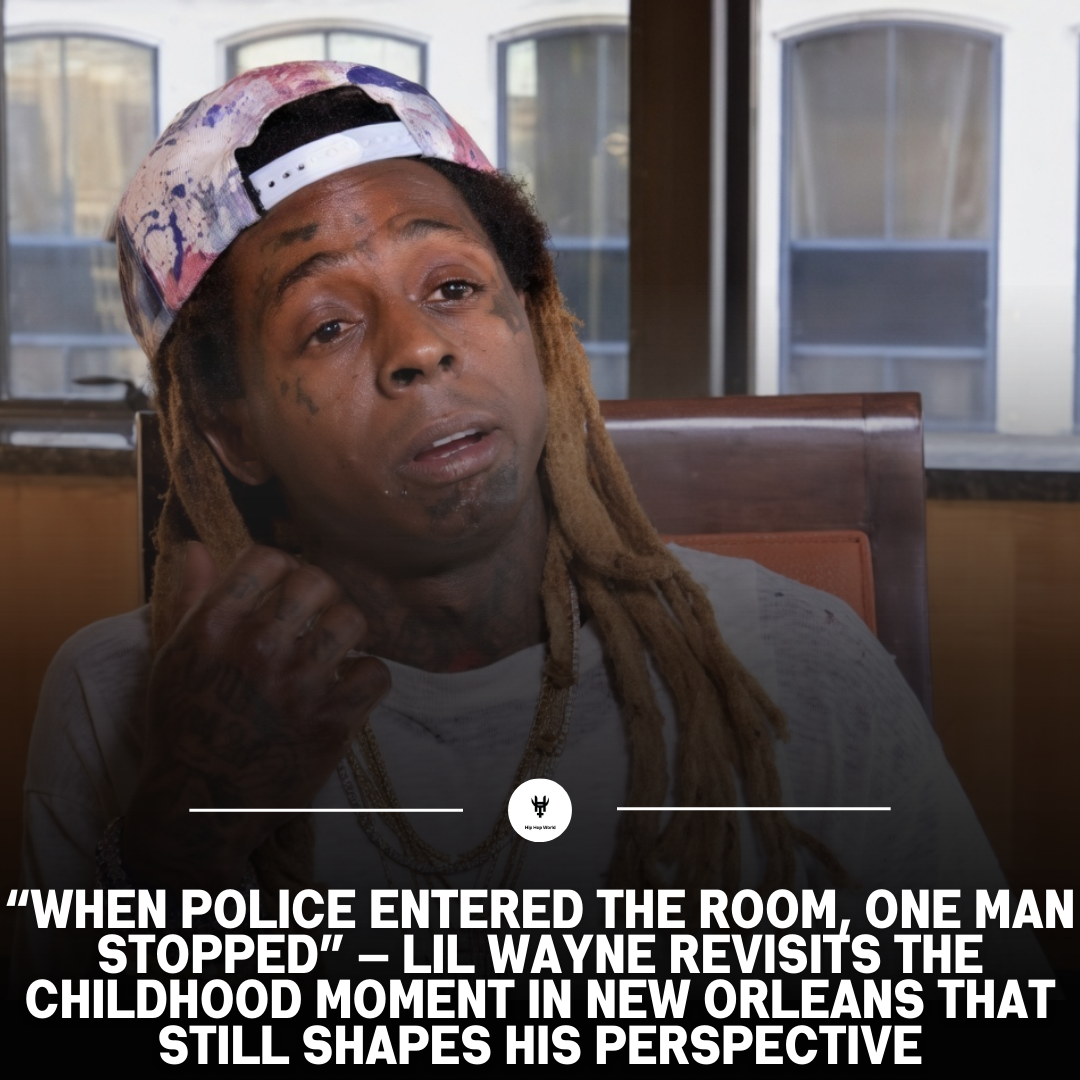
The lights inside the studio were bright, the conversation casual at first. Then the topic turned serious. Sitting across from the hosts of Undisputed, hip-hop icon Lil Wayne delivered a comment that would ripple far beyond the set.
“There is no such thing as racism,” he said.
Within hours, the statement spread across headlines, timelines, and talk shows. For many listeners, it sounded dismissive of a long and painful history. Critics argued that the comment ignored the experiences of millions who had faced discrimination. Yet Wayne insisted that what he said came from a deeply personal place—a life experience that shaped how he sees the world.
To understand his words, he later explained, people would have to understand the moment that nearly ended his life.
A Childhood Incident That Changed Everything
Long before stadium tours, Grammy awards, and chart-topping albums, Wayne was a young boy growing up in New Orleans. At the age of twelve, he accidentally shot himself in the chest.
The situation was chaotic. When police arrived at the scene, the room was filled with urgency and confusion. Officers entered the house looking for weapons and drugs. According to Wayne’s recollection, several of them stepped over his wounded body as they searched the room.
But one officer stopped.
Wayne has said that the man—whom he later referred to as “Uncle Bob”—noticed him lying on the floor and immediately took action. The officer rushed him to the hospital and stayed there until doctors confirmed that the young boy would survive.
For Wayne, that moment left a permanent imprint.
The man who saved his life was white.
Years later, reflecting on that moment, Wayne explained why it shaped his thinking. When he recalls the day he nearly died, he does not remember race as a dividing line. He remembers the person who stopped, picked him up, and refused to leave him behind.
That memory, he says, became one of the foundations of how he sees the world.
A Perspective Formed on Stage
As Wayne’s career grew, he began performing for audiences around the world. Standing under stage lights, looking out over crowds of thousands, he often saw fans of every background singing along to the same lyrics.
To him, that moment carried a certain symbolism.
From the stage, the audience did not appear divided by race or culture. It looked like one crowd, moving together to the same music. Wayne later explained that those experiences reinforced his personal belief that people are more alike than they are different.
This perspective led to the statement that ignited the controversy.
During his appearance on Undisputed, Wayne pointed to his concert audiences as evidence that racism was not the defining force many claimed it to be. In his view, the fact that large numbers of white fans attended his shows showed that the world had moved beyond certain barriers.
For many listeners, however, the comment felt deeply disconnected from broader reality.
Backlash and Clarification
The reaction came quickly.
Social media erupted with criticism, and commentators across the cultural and political spectrum challenged Wayne’s claim. Many argued that racism remained a structural issue affecting communities across the United States and beyond.
Some fans expressed disappointment, saying the rapper’s remarks overlooked experiences that millions of people still face.
In response to the backlash, Wayne later clarified his perspective during an interview with the Associated Press. He acknowledged that racism does exist, but emphasized that his original comments reflected his personal experiences rather than a broader social analysis.
From his point of view, he explained, he had never personally experienced racism in the way others described.
Instead, his life had been shaped by moments that complicated the narrative he often heard in public debate. The childhood incident with the police officer remained central to that worldview. To Wayne, the person who saved him was not defined by race but by action.
He also returned to the image of his concerts, where thousands of fans of different backgrounds gather to celebrate the same music.
When he looks out into the crowd, he says, he does not see separate groups. He sees people.
The Complexity of Personal Experience
Wayne’s comments opened a broader conversation about how personal experiences shape individual perspectives on social issues.
For many observers, his story illustrates how one defining moment can influence a lifetime of beliefs. The memory of the officer who saved him remains vivid in Wayne’s mind, and it continues to frame how he interprets discussions about race.
At the same time, critics argue that personal experience does not necessarily reflect the realities faced by others.
This tension—between individual perspective and collective experience—was at the heart of the debate surrounding Wayne’s remarks.
His words reminded listeners that public figures, like anyone else, interpret the world through the lens of their own lives. Those interpretations can resonate with some audiences while clashing sharply with others.
A Conversation Larger Than One Artist
For Wayne, the controversy was never about denying other people’s experiences. Instead, he framed his comments as an honest reflection of the life he has lived.
From a childhood incident that nearly turned fatal to the global stages where fans of every background gather to hear his music, the moments that shaped him did not reinforce the divisions many people expect him to see.
They showed him something different.
Whether audiences agree with his perspective or not, the debate that followed revealed how powerful personal stories can be in shaping public conversations.
And in Wayne’s case, the memory of a single moment—a wounded boy on the floor, an officer who refused to walk past him—continues to echo through the way he understands the world today.