MONTREUX, SWITZERLAND — In the final months of Freddie Mercury’s life, time itself seemed to move differently. Inside Mountain Studios, the music continued. Outside, reality was closing in. For Brian May, the weight of what was happening became almost impossible to face—not as a bandmate, but as a friend. Years later, the regret would surface in a confession so raw it stripped away the legend entirely: “He was my best friend… but I let him down.”
This wasn’t the story of abandonment. It was the story of emotional paralysis.
May wasn’t turning away from Freddie. He was turning away from the unbearable contrast between the man he had always known—vibrant, fearless, unstoppable—and the quiet physical toll the illness was taking. At the same time, May himself was unraveling. His personal life was collapsing under the strain of divorce, grief, and loss. The emotional foundation he had relied on for decades was gone. And now, the one person who had stood beside him through everything was slipping beyond reach.
He didn’t know how to say goodbye.
The Final Six Months: Freddie Mercury’s Race Against Silence
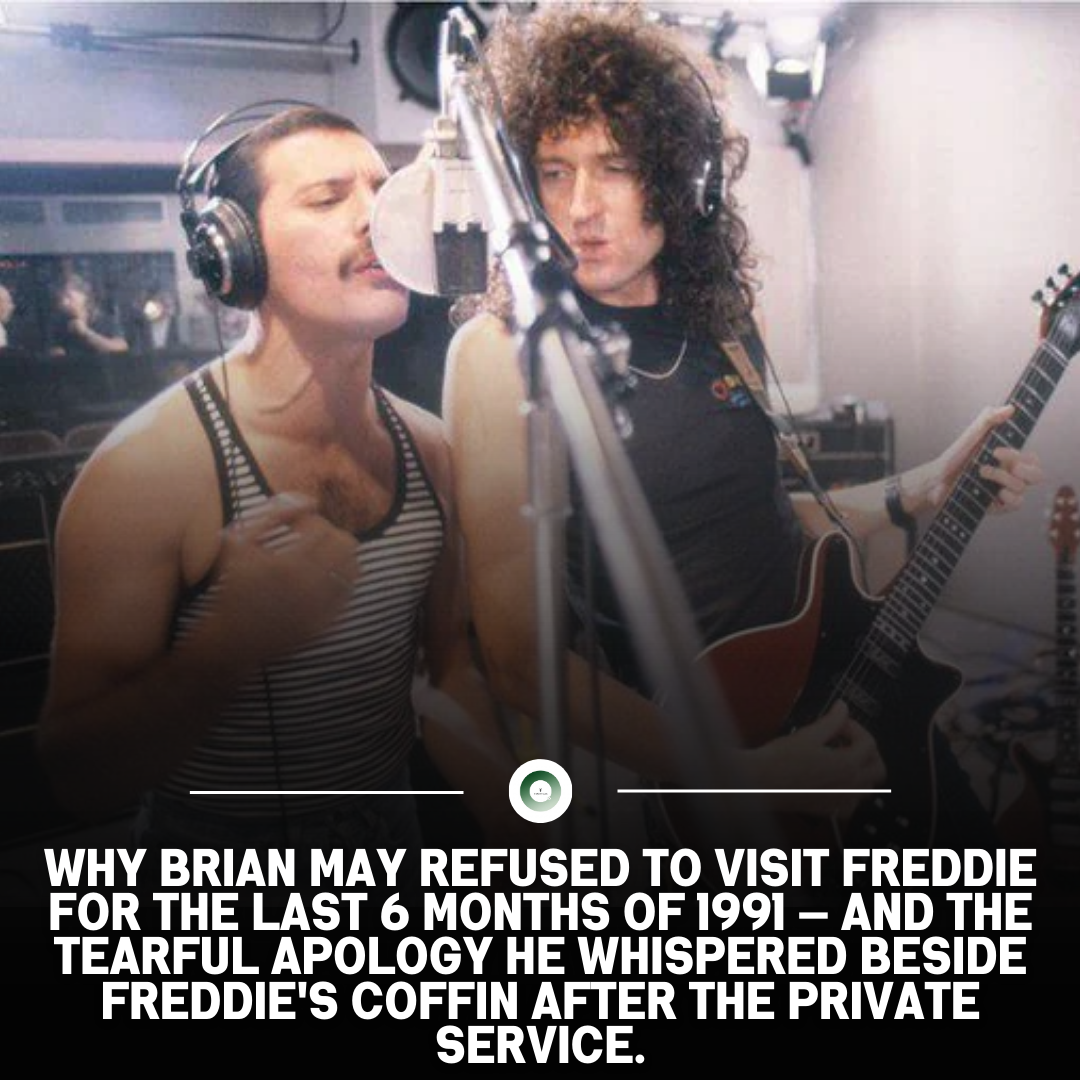
Despite his deteriorating condition, Freddie Mercury refused to surrender to it. Inside Mountain Studios in Montreux, he worked with a level of urgency that stunned everyone around him. His body was weakening, but his voice—his identity—remained intact. He knew what was coming. And he was determined to leave something behind.
Brian May would later recall Freddie’s quiet but unwavering request: “Just write me stuff. Anything. Just give me something to sing.”
It wasn’t a demand. It was a mission.
Freddie wasn’t recording for the present anymore. He was recording for the future.
One of the final pieces born during this period was “Mother Love,” a song Freddie began recording with May in May 1991. He completed most of the vocal before quietly stepping away from the microphone, telling the band he needed to rest. He never returned to finish it. The final verse would later be completed by May himself—not as a replacement, but as a continuation.
Another defining moment was “The Show Must Go On,” a song that now feels less like performance and more like declaration. Freddie sang it knowing exactly what it meant.
And yet, despite standing only feet away from him in the studio, May later admitted there was an emotional distance he could never forgive himself for.
He was present.
But he wasn’t fully there.
The Private Goodbye the World Never Saw
On November 24, 1991, just one day after publicly confirming his illness, Freddie Mercury died peacefully at his home in London. The announcement shocked the world—but the true goodbye happened in silence.
Freddie’s funeral was small, private, and deeply personal, honoring his Zoroastrian faith and his lifelong desire for privacy. There were no cameras. No public statements. No performances.
Only absence.
For Brian May, the moment wasn’t about public grief. It was about everything he never said. Everything he never found the strength to express while Freddie was still there. The apology he never spoke out loud became something he would carry privately, long after the world had moved on.
Because legends don’t prepare you for losing the person behind them.
Made in Heaven: The Final Promise Fulfilled
In the years that followed, Brian May, Roger Taylor, and John Deacon returned to the recordings Freddie had left behind. Each fragile vocal line became something sacred. They weren’t just finishing songs. They were finishing a conversation Freddie had started.
The result was Made in Heaven, released in 1995—a posthumous album built around Freddie’s final voice. Every arrangement, every instrument, every decision was guided by one purpose: to honor the friend they had lost.
For May, the album became something more than music.
It became reconciliation.
Not through words—but through completion.
Because in the end, Brian May didn’t get to say goodbye the way he wanted to.
So he said it the only way he could.
Through the music they created together.
And through the promise he refused to break.