The Cost No One Sees
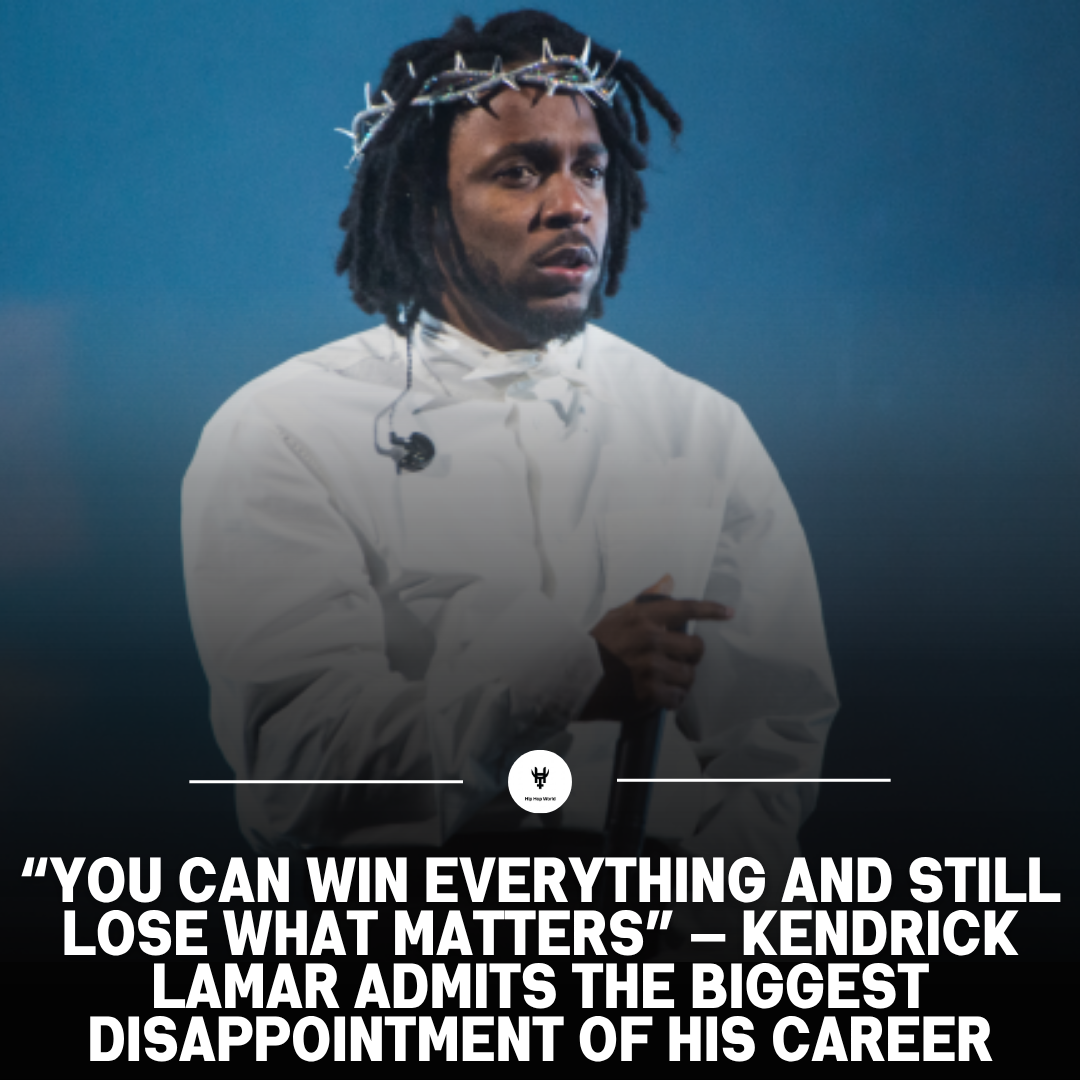
The room is quiet. No stage lights. No crowd. Just a conversation—measured, deliberate. Kendrick Lamar sits across from Rick Rubin, not as a performer, but as a man reflecting on the weight of everything he’s built.
There are no headlines in this moment. No numbers. No awards.
Just a question—and an answer that shifts the entire narrative.
When Kendrick speaks about disappointment, it isn’t tied to albums or accolades. It isn’t about rivalries or reception. Instead, he turns inward, toward something far less visible but far more permanent.
The things he missed.
The Life Behind the Work
From the outside, Kendrick Lamar’s career appears almost untouched by failure. His releases arrive with precision, his presence is controlled, and his impact on culture feels intentional at every step. Each album is treated like an event. Each appearance feels calculated.
But that level of control comes with a cost.
The work doesn’t stop when the music is finished. It extends into late nights in the studio, into global tours, into the constant pressure to maintain a standard that very few artists have ever reached. There is no clear boundary between creation and obligation. One leads directly into the other.
And somewhere within that cycle, time begins to slip.
Birthdays pass. Family moments happen without him. Ordinary experiences—ones that never make headlines—are left behind.
For Kendrick, those are the moments that stay with him the most.
A Realization That Doesn’t Bring Relief
What makes the confession heavier isn’t just the loss—it’s the awareness of it.
Kendrick acknowledges that he understands what he’s missing. He knows the cost. But knowing doesn’t change the reality. It doesn’t slow the pace. It doesn’t give those moments back.
Instead, it creates a different kind of pressure.
He describes a tension between recognition and inability. A sense that even when he sees the impact of his absence, he can’t fully correct it. The career continues forward, demanding the same level of focus, the same level of sacrifice.
It isn’t denial.
It’s acceptance without resolution.
The Silence Around Absence
Behind that reality is something even more complex—the people closest to him.
Kendrick explains that his family understands the nature of his work. They support him. They stand behind what he’s built. But that doesn’t mean they’re unaffected. It doesn’t mean they don’t feel the absence.
What makes it harder is that they don’t always express it.
Not because the feeling isn’t there—but because they don’t want to add to the weight he’s already carrying. That silence becomes its own form of distance. A gap that exists without confrontation, without conflict, but still exists all the same.
And over time, that distance can reshape perspective.
Kendrick admits that fame has a way of narrowing focus. The scale of the world expands, but the closeness of personal relationships can quietly fade. Not through intention, but through momentum.
For an artist whose work constantly examines accountability, that realization carries its own weight.
Success That Doesn’t Replace Time
By every measurable standard, Kendrick Lamar’s career stands at the highest level. Awards, recognition, influence—his place in hip-hop is firmly established. Few artists have reached that level of consistency and impact.
But none of it replaces what’s been lost.
There is no equivalent exchange for time. No achievement that fills the absence of a missed moment. No recognition that brings back what wasn’t experienced.
And that’s where the contrast becomes unavoidable.
The success is undeniable. The cost is irreversible.
The Tension Within the Art
This conflict isn’t new to Kendrick’s work. His music has always moved between themes of identity, responsibility, and self-examination. But what this moment reveals is that those themes aren’t abstract.
They’re lived.
The same drive that pushes his artistry forward is the one that creates distance. The same discipline that defines his legacy is the one that limits his presence elsewhere. His career and his personal life aren’t separate forces—they’re connected, constantly pulling in different directions.
And neither side fully wins.
A Different Kind of Disappointment
When Kendrick speaks about disappointment, it reframes what that word means at the highest level.
It’s not about falling short.
It’s about what was sacrificed in order to succeed.
His confession strips away the idea that greatness exists without consequence. It challenges the perception of control, revealing that even the most calculated careers carry uncontrollable costs.
Because in the end, the most significant loss isn’t public.
It’s personal.
And what Kendrick reveals, without exaggeration or defense, is something far more difficult than failure—the reality that even at the peak of success, there are moments you can never get back.