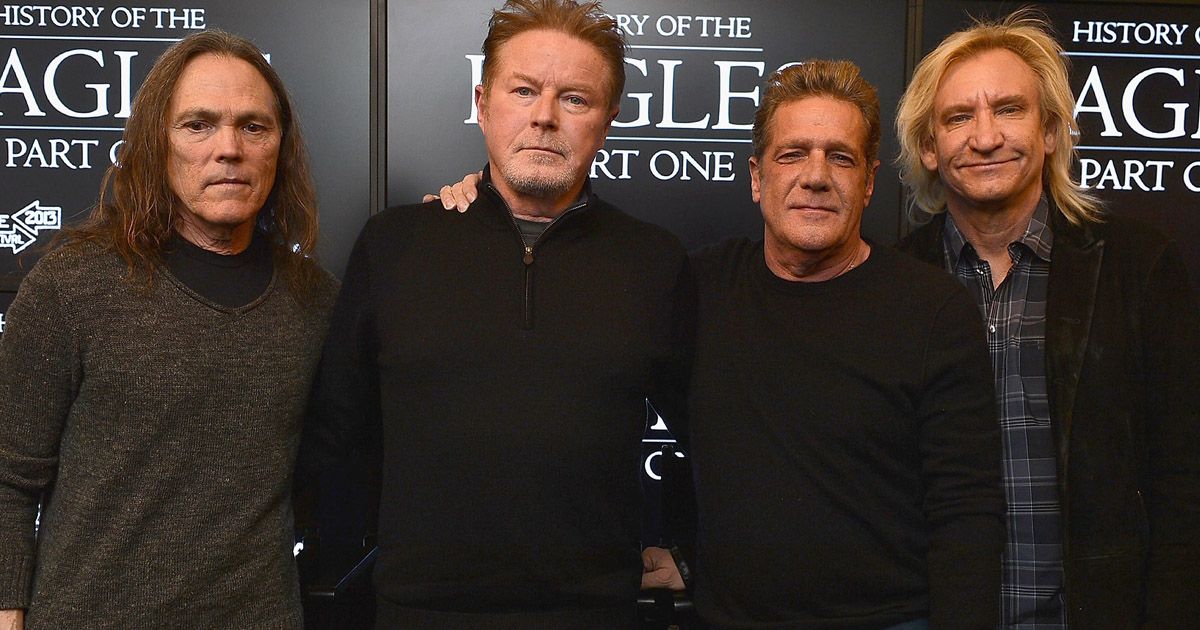
When Glenn Frey passed away in January 2016, it felt like the end of an era. The heart and soul of the Eagles—the band that defined a generation with harmonies that painted desert skies—was gone. Don Henley himself declared, “I don’t think you’ll see us performing again. I think that was the final farewell.” And the world believed him.
But what happened next stunned fans, critics, and the music world alike.
In 2017, at the Classic West and Classic East concerts in Los Angeles and New York, the impossible became reality: the Eagles returned to the stage. Don Henley, Joe Walsh, and Timothy B. Schmit walked into the spotlight—but they weren’t alone. Standing beside them were two figures who would reignite the band’s flame in the most unexpected and moving way.
One was Vince Gill—an acclaimed country artist with a voice that could glide as smooth as an LA breeze. The other was Deacon Frey, Glenn’s son, barely 24 years old at the time, with his father’s look, tone, and quiet presence. It wasn’t just a reunion—it was a resurrection.
As the crowd roared, the opening chords of “Take It Easy” rang out across the stadium. But when Deacon stepped forward to sing the lines his father made famous, something extraordinary happened: tens of thousands of people fell silent. Phones lowered. Hands over hearts. And then tears.
Because in that moment, Glenn wasn’t gone. He was there—in Deacon’s voice, in the chords that Joe Walsh bent into magic, in the steady beat of Don Henley’s drum. The music wasn’t a memory. It was alive.
The decision to bring in Vince Gill and Deacon Frey hadn’t come easy. Henley had long insisted that the band wouldn’t continue without Glenn. But time—and the power of legacy—changed his heart. “The only way it felt right,” Henley later said, “was to bring in someone who could carry the spirit forward, not replace it. No one can replace Glenn.”
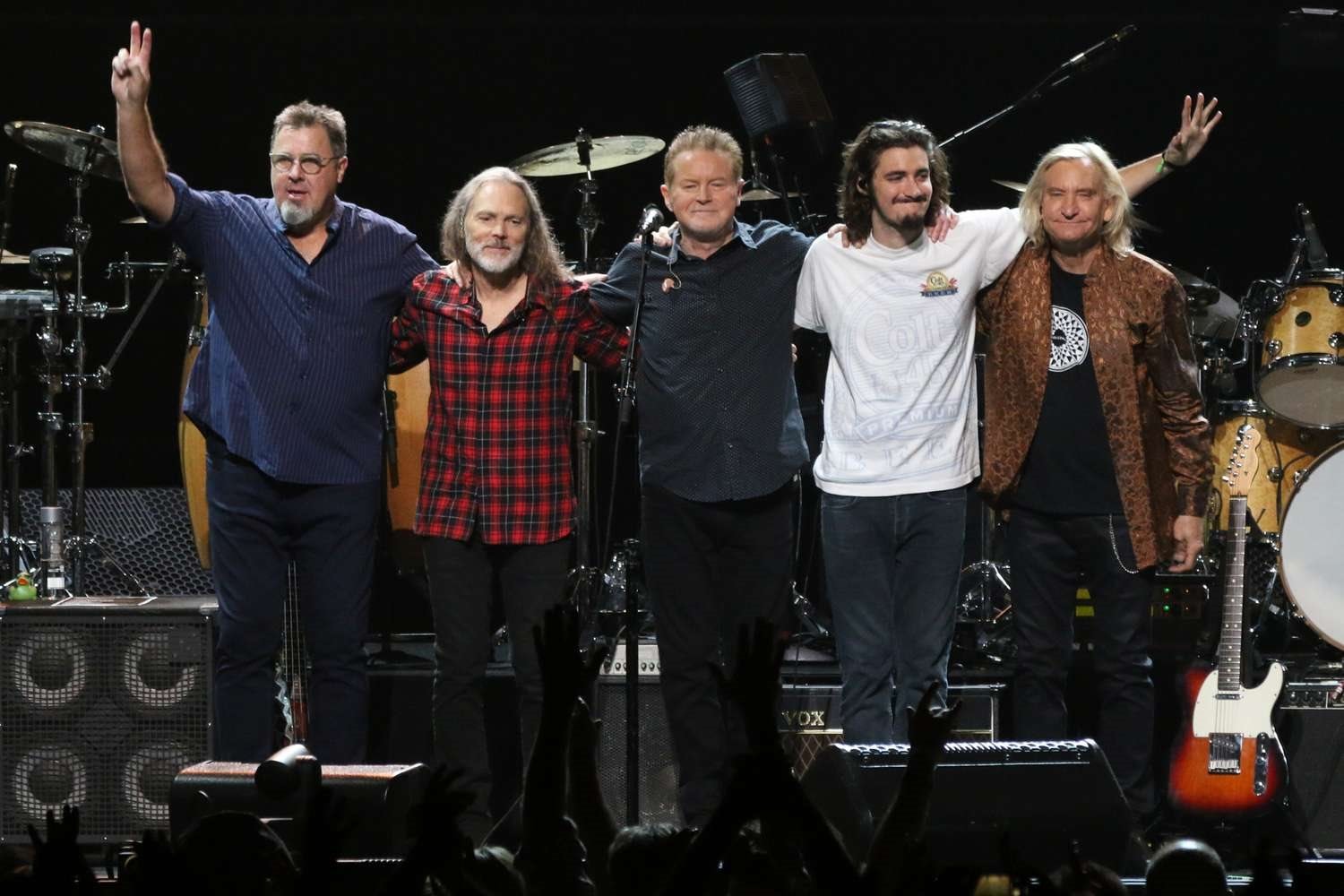
Vince Gill brought more than just a velvet voice. He brought humility, reverence, and decades of musical mastery. Deacon, meanwhile, brought something that couldn’t be taught: a bloodline connection to the band’s soul. He didn’t try to be his father—he simply honored him, every night, with grace.
Critics were skeptical at first. But as the new lineup toured stadiums across the U.S., the reaction was universal: the Eagles were not only back, they were reborn. Audiences who had once feared they’d seen the last of “Hotel California” and “Peaceful Easy Feeling” now found themselves transported, heart-first, into a revival neither corporate nor contrived.
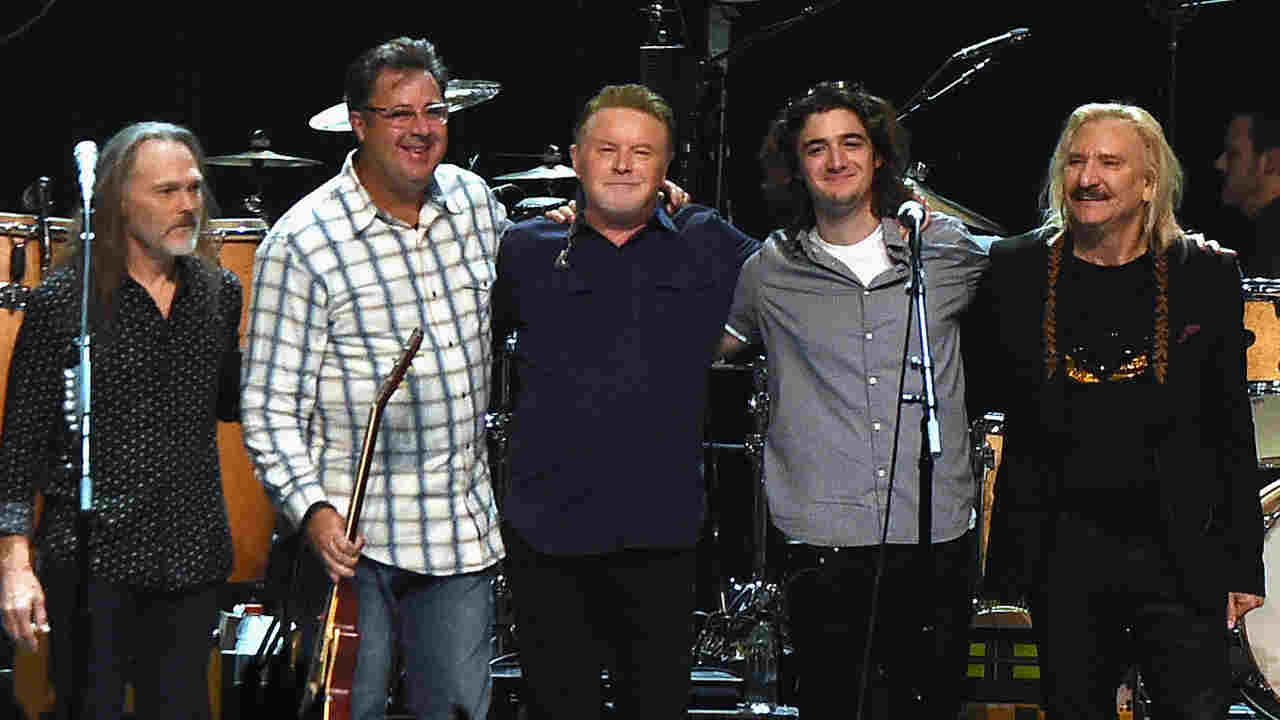
It was personal. And it was powerful.
In interviews, fans spoke of healing. Of closure. Of witnessing a son keep his father’s voice alive in the most sacred way possible: on stage, under the lights, with 50,000 people singing along. “I brought my dad to see the Eagles in the ’70s,” one man said in Chicago. “Now I’m bringing my son. And Deacon’s up there… it’s come full circle.”
The Eagles’ unexpected second chapter isn’t just about music—it’s about time, legacy, and what happens when grief turns into tribute. In a world that moves too fast and forgets too easily, their return was a reminder that some songs never truly fade. They echo, they evolve, and sometimes, if we’re lucky—they come back.
Not as ghosts. But as gifts.