
The Voice is heading into one of its most important stages, but this time, the biggest question isn’t simply which singer has the strongest voice. A major change to the competition has created a completely different path to the Live Shows, and it could make the race for the Season 30 title far less predictable than viewers are accustomed to seeing.
For the first time in the show’s history, NBC introduced a new elimination stage called Cut Week, replacing the traditional Knockouts. Instead of watching contestants compete in familiar head-to-head battles before advancing, viewers saw coaches make some of their toughest decisions of the season, dramatically reducing their teams ahead of the live competition.
The November 2 episode marked the beginning of this new format, and the consequences were enormous. With 28 artists still competing, more than half would have to leave the competition before the next stage. For the contestants who survived, however, the opportunity was about to become even more exciting because the decisions would no longer belong exclusively to the coaches.
Each of the four coaches began Cut Week with seven remaining artists. They were allowed to select two singers to advance automatically, while the other five had to perform for the final available position on their respective teams. That meant every coach had to make three selections, leaving just 12 artists guaranteed places in the Live Shows.

But there was another twist that made the new format particularly interesting. Viewers were given the opportunity to vote for one additional contestant from the remaining artists, potentially bringing the competition’s Live Show lineup to 13 singers.
That final opportunity introduced an element of uncertainty that could completely change the direction of the season. A contestant who failed to secure a coach’s selection was not necessarily out of the running. Instead, viewers had the power to give one more artist an opportunity to continue.
For longtime fans, this is a significant change in how The Voice builds its finalists. Coaches have traditionally played a major role in deciding which singers survive the early stages, but the new arrangement gives the audience an opportunity to influence the competition before the Live Shows even get underway.
And that is where Season 30 becomes particularly interesting.
The new format also arrives during a milestone season featuring a refreshed coaching panel. Adam Levine and Kelly Clarkson have returned to familiar territory, but two major personalities have joined them in the red chairs: country star Riley Green and entertainment icon Queen Latifah.
Both newcomers bring different perspectives to the competition, creating an interesting combination of musical backgrounds and coaching approaches.
Green’s arrival is particularly notable for country music fans. Known for his country recordings and songwriting, he has an opportunity to guide artists who share his musical influences while also discovering singers from completely different genres. Queen Latifah, meanwhile, brings decades of experience across music, acting, and entertainment.
Their presence alongside Levine and Clarkson gives the show a different dynamic, particularly when the coaches have to make difficult decisions about which artists deserve another opportunity.
The Season 30 lineup has already demonstrated how varied the competition can be. From country singers to pop performers and rock-influenced vocalists, the artists are bringing different musical identities to the same stage. That diversity makes the coaching decisions even more complicated because the strongest performance is not necessarily the one that fits every coach’s musical vision.
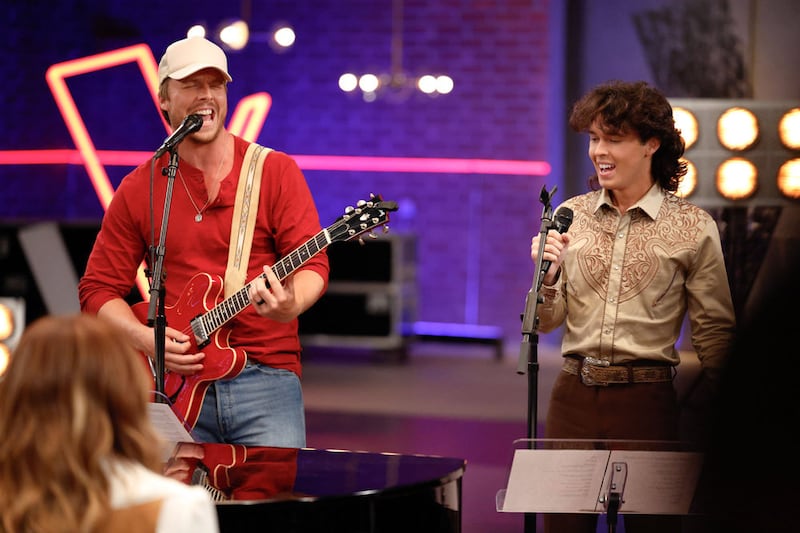
Team Riley Green provided one particularly interesting example during Cut Week. Green selected Cade Mower and the sister duo Ferryn and Brinkley for automatic advancement before choosing Joe Henley as his third artist.
Henley’s performance of Keith Whitley’s “Don’t Close Your Eyes” earned a standing ovation from all four coaches, making his selection a memorable moment of the episode. His advancement also demonstrated how quickly a contestant can change the conversation with one important performance.
Meanwhile, Mower’s automatic selection meant that one of the season’s early standout country artists was guaranteed a place in the next stage. The Bluffdale, Utah, singer had previously attracted attention during his Blind Audition, when his rendition of Zach Bryan’s “Something in the Orange” earned a four-chair turn.
That audition was especially memorable because the coaches responded almost immediately. Adam Levine turned after hearing only a few seconds, followed by Kelly Clarkson and Queen Latifah, before Green also turned his chair. All four coaches wanted the opportunity to work with him.
His journey is just one example of how much can change between the Blind Auditions and the Live Shows. An impressive first appearance might introduce a contestant to viewers, but surviving multiple rounds requires something more: consistency, adaptability, and the ability to make the right musical choices when the pressure increases.
The other teams also experienced difficult decisions.
Queen Latifah advanced Mia Knight and BigCountry automatically before selecting Lillie Kolich as her third artist. Adam Levine chose Lexi Stephens and Connor Closs before ultimately giving Dakota Cohen the remaining position. Kelly Clarkson selected Koumba Diallo and Anna McElroy, then chose Brianna Cameron after watching the remaining performances.
Each decision reflected a different coaching philosophy, and the variety of artists moving forward suggests that there will be plenty of different musical styles represented in the next stage.

However, the biggest question now concerns the additional contestant who could join the 12 artists selected by the coaches.
That opportunity creates a fascinating situation for viewers. A singer who might have been overlooked during the coaches’ selections could still receive another chance because of audience support. It also means that the competition is beginning to move beyond the traditional coach-versus-coach dynamic.
The Live Shows are scheduled to begin on Monday, November 9, with the audience playing a much more important role in determining who continues. The return of live performances makes that transition especially meaningful because contestants will have to connect with viewers in real time rather than relying solely on the opinions of the people sitting in the red chairs.
That could prove to be the defining challenge of Season 30.
A singer might have an extraordinary voice, receive praise from the coaches, and deliver technically impressive performances, but the Live Shows introduce a different measure of success. Contestants must make viewers feel something. They need memorable song choices, convincing performances, and the ability to establish an identity that audiences want to support.
The new format also raises an interesting question about what makes a successful contestant. Is it the singer with the most technically impressive voice? The artist who consistently delivers the strongest performances? Or the contestant who creates the deepest connection with viewers?
There is no guaranteed answer, and that uncertainty is precisely what makes the upcoming episodes exciting.
Personally, the most interesting part of this season’s changes is the opportunity for viewers to influence the competition earlier than they might expect. Giving audiences an additional vote creates another layer of suspense and gives contestants who missed out on an automatic selection a meaningful opportunity to fight for their place.
It also puts more responsibility on the performers. Once the Live Shows begin, a coach’s confidence can only take a contestant so far. The singers will have to demonstrate why they deserve the audience’s support every time they step onto the stage.
With Season 30 approaching its live competition, the stakes have never felt more interesting. Will the coaches’ early favorites maintain their momentum, or could an unexpected contestant become the season’s biggest surprise?
And with the audience now having a greater say in the outcome, which singer do you think has the potential to win the entire competition?


