The most interesting celebrity return is not always the loudest one.
For decades, pop culture has treated a comeback like a ritual. There has to be a teaser, a stage, a dramatic reveal, a tightly managed interview, and ideally a song that can be clipped, reposted, and endlessly dissected. If a star has been away for a while, the expectation only grows harsher: bring us a new era, prove you still have it, turn private survival into public spectacle.
That is why the idea of Britney Spears appearing on television without singing at all feels so striking. Not because it is flashy, but because it refuses the old rules.
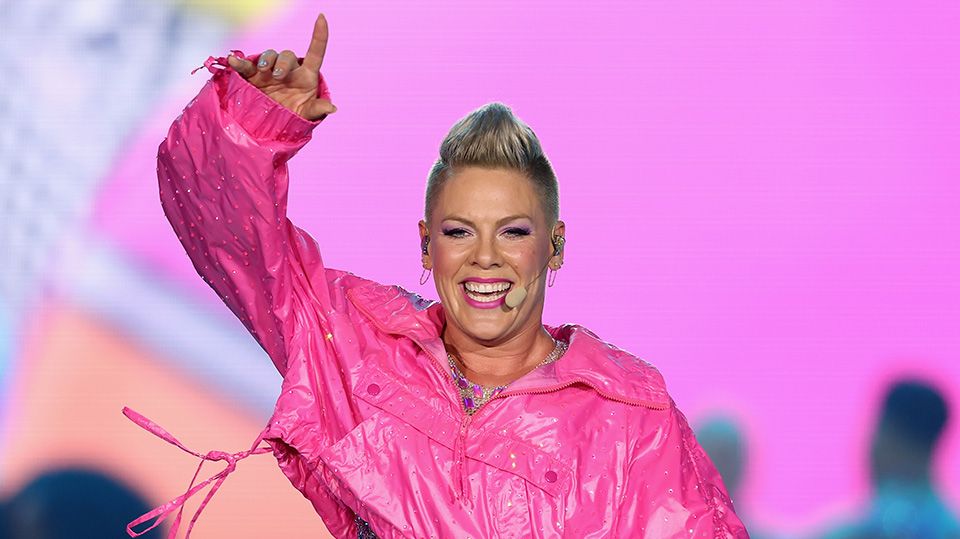
The reported concept is simple: Pink, while stepping in as guest host on The Kelly Clarkson Show, wants a long-form conversation with Spears built entirely around talk, reflection, and presence. No acoustic set. No surprise duet. No pressure to perform. Just a seated conversation designed around comfort rather than demand.
On paper, that sounds almost too minimal for modern television. In practice, it may be exactly why the idea carries so much cultural weight.
The power of taking performance off the table
Music interviews have a built-in script. Even when they are framed as intimate, they usually orbit the same invisible obligations. The artist must entertain. Vulnerability is welcome, but only if it still leads back to content. The story can be painful, but the segment still needs a payoff.
Removing the performance element changes the contract.
A no-music appearance would tell viewers something unusual before Spears even says a word: this is not a transaction. She is not there to deliver nostalgia on cue. She is not being asked to prove worth through stamina, polish, or emotional availability. She is simply being invited to exist in public on her own terms.
That distinction matters more for Spears than for almost any other pop figure. Her career has long been shaped by an intense public appetite for access, reinvention, and control. For years, audiences were conditioned to treat her image as a site of constant consumption. Every appearance was measured. Every gesture was decoded. Every silence was filled in by somebody else.
A conversation with no songs would reject that old framing. It would suggest that a public return does not have to look like a performance review.
Why Pink makes sense for this kind of interview
Not every host could credibly offer that space.
Pink’s public persona has always been built on a certain emotional bluntness. She is funny, skeptical of celebrity theater, and unusually comfortable sounding protective without seeming patronizing. That makes her a compelling bridge figure for an interview like this. She is famous enough to attract attention, but grounded enough to keep the moment from feeling like a trap.
More importantly, she belongs to the same broader pop generation that understands the machinery Spears survived from the inside. That shared context matters. An interview between peers can sometimes surface better questions than one built around journalistic confrontation or fandom-driven awe. A fellow artist can recognize the difference between what makes a good clip and what makes a meaningful conversation.
If Pink truly intends to host the discussion under a strict no-performance condition, that decision would function as more than a production note. It would be an editorial statement: the value here is not in extracting something from Spears. The value is in letting her define what participation looks like.
That kind of framing is rare, and viewers can usually tell when it is real.
The old comeback model no longer fits
Entertainment culture still clings to a very outdated idea of recovery. When a major star steps back from public life, the industry often waits for the “return” as if it were the final act in a neat story arc. The comeback must be triumphant. It must reassure the audience. It must convert hardship into branding.
But real life does not move that cleanly, and neither does healing.
For Spears, a traditional return would carry enormous baggage. A single performance would not be judged as one moment. It would be treated as a referendum on everything: her health, her voice, her confidence, her relevance, even her gratitude for being “back.” That is an impossible burden for anyone, especially someone whose personal boundaries have so often been ignored or contested in public.
A couch conversation offers a different template. It says a person can re-enter public view without reenacting the system that exhausted them. It allows for presence without surrender.
That may frustrate viewers who still crave the old kind of spectacular redemption narrative. But it is also what makes the concept feel contemporary. In 2026, audiences are increasingly aware of the cost of celebrity access. There is more skepticism toward exploitative interviews, more fatigue with overproduced vulnerability, and more interest in authenticity that is not immediately turned into content bait.
A quiet appearance, handled well, could speak to that shift more effectively than any polished performance ever could.
The real story would be identity, not music
Ironically, the most revealing Spears interview might be the one that spends the least time on her discography.
Her music will always be part of the story, but it is no longer the only lens people want. There is deeper curiosity now around identity after survival. What does it mean to be globally recognized and still trying to reclaim an ordinary self? How do you rebuild trust in your own instincts after years of being publicly managed? What does freedom look like when the world keeps trying to translate it back into entertainment?
Those are not tabloid questions. They are human questions.
A thoughtful interview could explore how Spears sees herself now beyond old labels like icon, cautionary tale, victim, legend, or pop princess. It could examine what she values when career ambition is no longer the obvious center of gravity. It could leave room for contradiction, humor, discomfort, even boredom. In other words, it could let her be a person rather than a symbol.
That may not sound like traditional daytime-TV fuel. But it is exactly the kind of conversation that can cut through a crowded media environment: not louder, just more honest.
Why executives would be nervous
From a television standpoint, the no-music condition is a gamble.
Music is the safest kind of star content. It gives producers a clean promotional hook, guarantees social clips, and helps an episode feel event-sized even if the interview itself stays fairly controlled. A duet can be teased in advance, segmented for digital distribution, and replayed across entertainment news cycles. It is familiar, marketable, and easy to sell.
Take that away, and the episode has to stand on conversation alone.
That is a scarier proposition for executives because conversation is unpredictable. If it is overly careful, it can feel flat. If it is too probing, it can feel invasive. If the tone is misjudged by even a little, the audience will notice immediately. The margin for error is smaller because there is nowhere to hide.
And yet that same risk is what gives the idea its upside.
A truly present, emotionally intelligent interview can generate a different kind of attention: the kind built on trust, not spectacle. Viewers remember those moments because they feel rare. They sense when television stops performing intimacy and actually creates it.
If a Spears appearance landed in that register, it would not need a song to justify itself.
This would not be a retreat from entertainment. It would be a redefinition of it.
There is a tendency to describe non-performance appearances as subdued, stripped-down, or low-key, as though they represent a lesser version of celebrity. That misses the point.
Choosing not to sing in a setting where everyone expects a song is not absence. It is authorship.
It reorients the event around choice instead of obligation. It tells the audience that what is happening is not a compromise because the star cannot or will not give more. It is the event itself. The boundary is the concept.
That is what makes the scenario so compelling. If Spears were to appear under those terms, the no-music promise would not be a limitation attached to the booking. It would be the meaning of the booking.
It would say that public visibility no longer requires self-extraction. That a comeback can be measured in comfort, clarity, and control. That sometimes the boldest thing a famous person can do is remain seated and speak in full sentences without trying to turn pain into performance.
What audiences are really hungry for now
Celebrity culture has not become less voyeuristic, but it has become more self-aware. Viewers are better at spotting coercion dressed up as candor. They can tell when an interview exists mainly to generate headlines, force confession, or mine trauma for ratings. And increasingly, they resent it.
That creates space for a different kind of event television.
Not soft-focus confession. Not promotional talking points disguised as vulnerability. Something more deliberate and adult. A conversation that respects privacy while still offering depth. A host who knows when to ask and when to stop. A guest whose boundaries shape the room rather than interrupt it.
The hunger for that kind of exchange is real, especially when the subject is someone as culturally overinterpreted as Spears. People do not just want more access to her. Many want a different relationship to her story altogether.
That is why a seated, performance-free interview could feel so unexpectedly powerful. It would not merely update the public on Britney Spears. It would challenge the public to meet her differently.
The most radical comeback may be the one that refuses the old script
If this television moment ever happens, it will likely be framed as a major booking. A big get. A headline-making return. All of that is true enough.
But the deeper significance would lie elsewhere.
It would show that returning to public life does not have to mean returning to old expectations. It would demonstrate that a star can reappear without reenacting the machinery that once consumed her. And it would remind the industry that not every meaningful moment needs production tricks, live vocals, or a viral crescendo.
Sometimes what people remember most is not the spectacle they were promised, but the humanity they did not expect.
For Spears, that kind of appearance could be more than a TV interview. It could be a rare act of narrative control in a culture that has too often mistaken possession for admiration.
And for television, it would be a useful lesson: when the right guest arrives with the right boundary, the absence of a song is not a missing element.
It is the story.