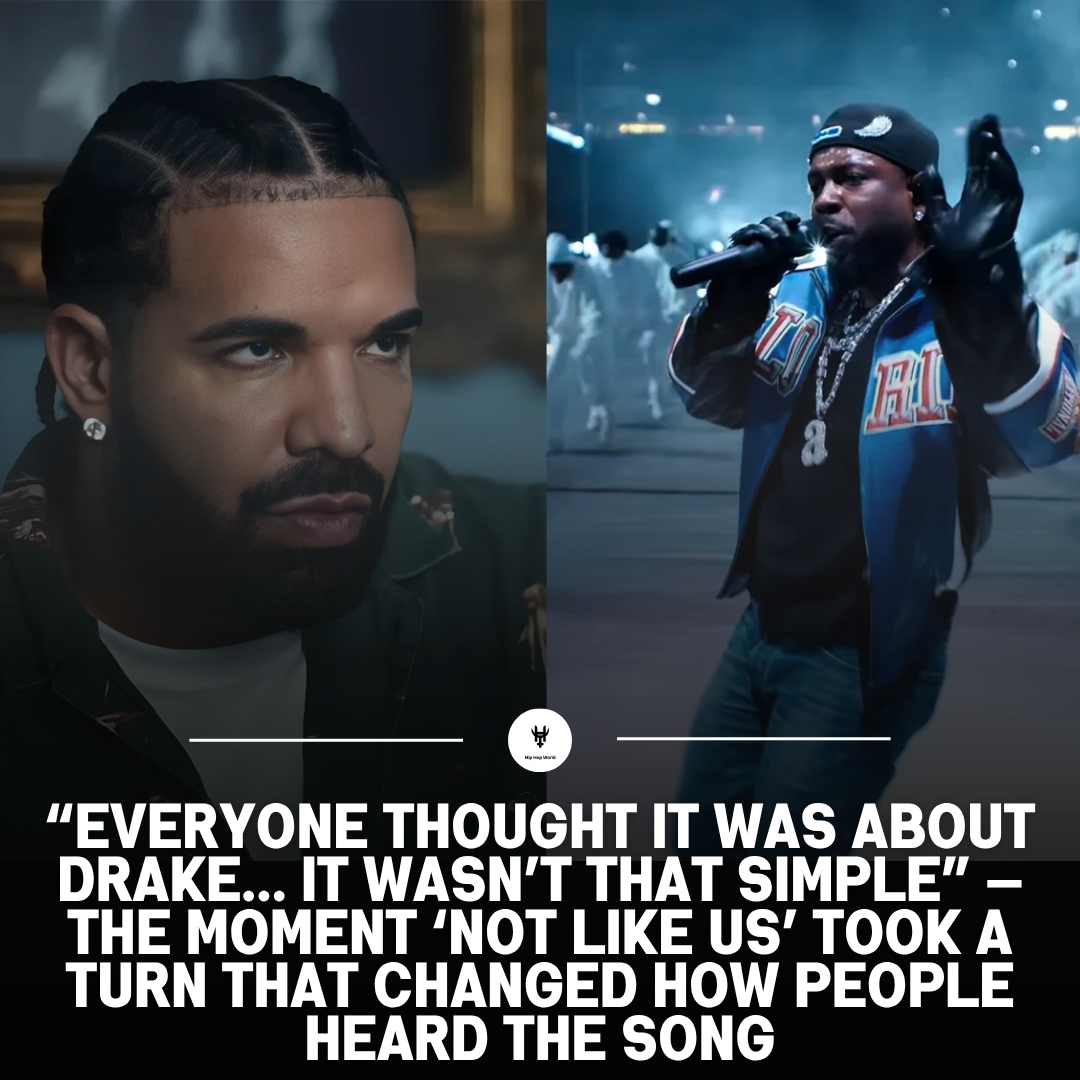
It didn’t begin like a diss track. It felt like a declaration.
When Kendrick Lamar released “Not Like Us” in the summer of 2024, the conversation immediately centered on one thing—his ongoing battle with Drake. Headlines framed it as a final blow, the decisive moment that closed the chapter. But standing inside the record, that narrative felt incomplete. The energy of the track pointed somewhere else, somewhere larger than rivalry.
Before a single lyric took hold, the message was already visible.
A Date That Carried Meaning
The video arrived on July 4th.
On the surface, it aligned with celebration. But the imagery suggested something more deliberate. Independence wasn’t just a national idea here—it was cultural. The visuals moved through Compton and Los Angeles not as backdrops, but as living spaces. Friends, families, familiar streets—everything felt rooted, unfiltered, and intentional.
It wasn’t staged for distance. It was presented from within.
That distinction mattered.
More Than A Response, A Definition
Kendrick didn’t position the track as retaliation. He framed it as something closer to identity. In conversations surrounding the record, he described it as “the energy of who I am,” shifting the focus away from competition and toward self-definition.
That shift changes how the song is understood.
Because if it isn’t about defeating someone, then it becomes about establishing something. The tone, the structure, even the restraint in certain moments all point toward a controlled clarity rather than chaos. The record doesn’t chase reaction—it creates separation.
And that separation is the point.
“They Not Like Us” Means More Than It Sounds
The hook is simple, almost repetitive. But its weight comes from what it implies rather than what it states.
“They not like us.”
It isn’t confined to a single opponent. It extends outward, drawing a line between those who live within the culture and those who orbit it. Kendrick frames that difference not as stylistic, but as experiential. It’s not about how someone sounds. It’s about where that sound comes from.
Within that framing, the criticism of Drake becomes symbolic. Less about one artist, more about a broader idea—the presence of figures who adopt the language of hip-hop without carrying its foundation.
The question shifts from competition to ownership.
A Sound That Feels Like Home
The production reinforces everything the lyrics suggest.
With DJ Mustard behind the boards, the track leans into a West Coast identity that feels immediate and physical. The bounce is unmistakable—handclaps, rolling basslines, sharp whistles. It doesn’t just support the record. It defines its environment.
This isn’t a beat designed for distance or abstraction. It’s built for movement, for presence, for space that feels lived in. The kind of sound that belongs to warm nights, open streets, and gatherings that don’t need explanation.
The music doesn’t carry the message alone.
It embodies it.
The Moment It Became Something Else
What makes “Not Like Us” stand apart is not its impact on a feud. It’s how quickly it moved beyond it.
A diss track can end a rivalry. This record did more than that. It reframed the conversation entirely, shifting focus from who won to what the moment represented. Culture, identity, belonging—these became the center.
And once that shift happens, the original conflict starts to feel smaller.
Because the record no longer needs it.
A Statement That Doesn’t Depend On Opposition
In the end, “Not Like Us” isn’t sustained by who it challenges. It’s sustained by what it stands on.
Kendrick doesn’t just position himself against something. He positions himself within something—anchored, defined, and unwilling to move away from it. That clarity gives the record its weight. It doesn’t need escalation. It doesn’t need explanation.
It simply exists as a statement.
And once that statement is made, everything around it starts to rearrange itself.