Every generation thinks it discovers something new—until it stumbles across something old that feels more honest than anything current.
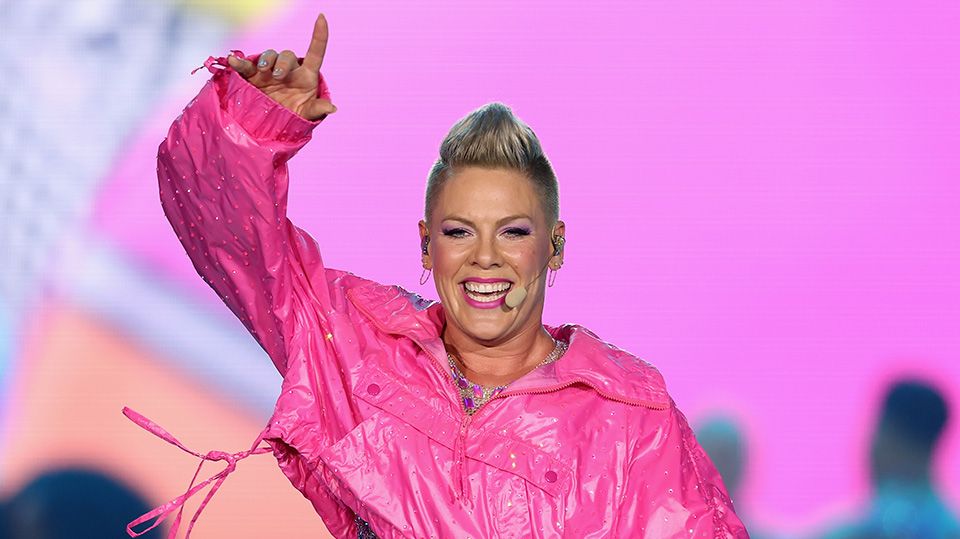
That’s exactly what’s happening with P!nk’s stripped-down 2008 cover of “Me & Bobby McGee.” A grainy, four-minute clip—originally part of an AOL Sessions recording—is now circulating across TikTok and X, pulling in millions of new viewers who weren’t even part of the music conversation when it first aired.
And yet, to them, it doesn’t feel dated.
It feels real.
The Unexpected Power of Imperfection
The video itself is almost aggressively simple.
No cinematic lighting. No heavy production. No layered vocals or digital polish. Just P!nk, an acoustic guitar, and a microphone.
By today’s standards, it looks unfinished.
That’s precisely why it’s working.
In a digital landscape saturated with perfectly edited content—where every note can be tuned and every frame curated—this performance feels like an interruption. A reminder of what music sounds like when nothing is corrected.
It’s not flawless.
It’s alive.
A Classic Song, Reintroduced Without Nostalgia
“Me & Bobby McGee” carries a long musical lineage. Written by Kris Kristofferson and Fred Foster, popularized in different forms, and immortalized by Janis Joplin, the song has always been about freedom, loss, and the emotional cost of both.
P!nk didn’t try to modernize it.
She didn’t need to.
Instead, she stepped into the song’s existing emotional space and let her voice do the work—gravelly, expressive, and slightly unpredictable. You can hear the influence of Joplin, but you can also hear distance from it.
This isn’t imitation.
It’s continuation.
The Moment That Made It Human
Midway through the performance, something small happens—and it’s become one of the most replayed moments online.
She messes up a lyric.
There’s a pause. A quick laugh. Then she keeps going.
No retake. No edit. No attempt to hide it.
That moment has become a focal point for Gen Z viewers, not because it’s dramatic, but because it’s rare. In an era where mistakes are usually erased before they’re seen, watching an artist acknowledge one in real time—and move past it—feels almost radical.
It reminds people that music isn’t supposed to be perfect.
It’s supposed to be felt.
The Chorus That Bridges Generations
When she reaches the chorus—“Freedom’s just another word for nothing left to lose”—the performance shifts.
Her voice opens up. Not in a polished, technically pristine way, but in something more textured. There’s grit. There’s edge. There’s a sense that she’s not just singing the lyric—she’s lived somewhere near it.
That’s the moment most viewers talk about.
Not because it’s the loudest part, but because it’s the most honest.
And honesty, more than anything, is what’s resonating now.
Why Gen Z Is Claiming It
It’s easy to assume that older performances go viral purely because of nostalgia.
This isn’t that.
Most of the people sharing this clip didn’t grow up with it. They’re not revisiting a memory—they’re discovering something that feels different from what they’re used to.
Several factors are driving that connection:
- Lo-fi aesthetics: The raw, unfiltered video aligns with a growing preference for “unpolished” content
- Authentic emotion: The lack of production puts full focus on delivery and feeling
- Human moments: Mistakes, laughter, and spontaneity create relatability
- Timeless songwriting: The song itself carries emotional weight that transcends era
In short, it doesn’t feel like content.
It feels like a moment.
This resurgence says as much about today’s audience as it does about P!nk.
There’s a growing fatigue with overproduction—visually, musically, and emotionally. Audiences are starting to value presence over perfection, texture over clarity, and sincerity over spectacle.
What once might have been dismissed as “rough” is now being recognized as authentic.
And older performances, untouched by modern editing standards, are becoming a kind of goldmine.
P!nk at Her Most Unfiltered
For longtime fans, this clip isn’t surprising.
P!nk has always had a reputation for emotional directness. Even in her biggest productions, there’s an undercurrent of rawness—something slightly unrefined that keeps her performances grounded.
But this particular recording strips everything else away.
No choreography. No staging. No distance.
Just voice and instinct.
It’s not her biggest performance.
It might be her most honest.
Why It Still Matters
Sixteen years later, the performance is doing something it didn’t need to do when it was first released: it’s speaking to a completely different audience, in a completely different context.
Not because it was ahead of its time.
But because it was never trying to belong to any time at all.
Final Thought
Trends change. Technology evolves. Production gets sharper, cleaner, more controlled.
But moments like this remind us of something simple:
The most powerful performances aren’t the most perfect ones.
They’re the ones that feel like they couldn’t be repeated—even by the artist who created them.
And that’s why, all these years later, a four-minute acoustic cover is still finding new hearts to land in.