Some songs are written to be heard. Others are written because they have to be. “Save Me” belongs firmly in the second category—a raw, unfiltered outpouring from Jelly Roll, an artist whose life story doesn’t follow the neat arc of redemption we’re used to packaging and selling. His music has always felt less like performance and more like documentation.
So when Kelly Clarkson stepped in and delivered her own version of the track, something unusual happened. It didn’t just introduce the song to a wider audience. It fundamentally changed what the song meant—especially to the man who wrote it.
A Song Born Without Armor
Jelly Roll didn’t craft “Save Me” with crossover appeal in mind. There’s no calculated hook designed for radio rotation, no lyrical polish meant to smooth out discomfort. The song reads like a late-night confession—one of those moments where honesty outweighs dignity.
It speaks from the perspective of someone who isn’t sure redemption is even on the table. There’s no triumphant resolution, no clean moral ending. Just fatigue. Just truth.
That’s precisely why it resonated.
Listeners recognized something rarely captured in mainstream music: the emotional limbo between wanting to change and not believing you can.
What Kelly Clarkson Heard That Others Didn’t
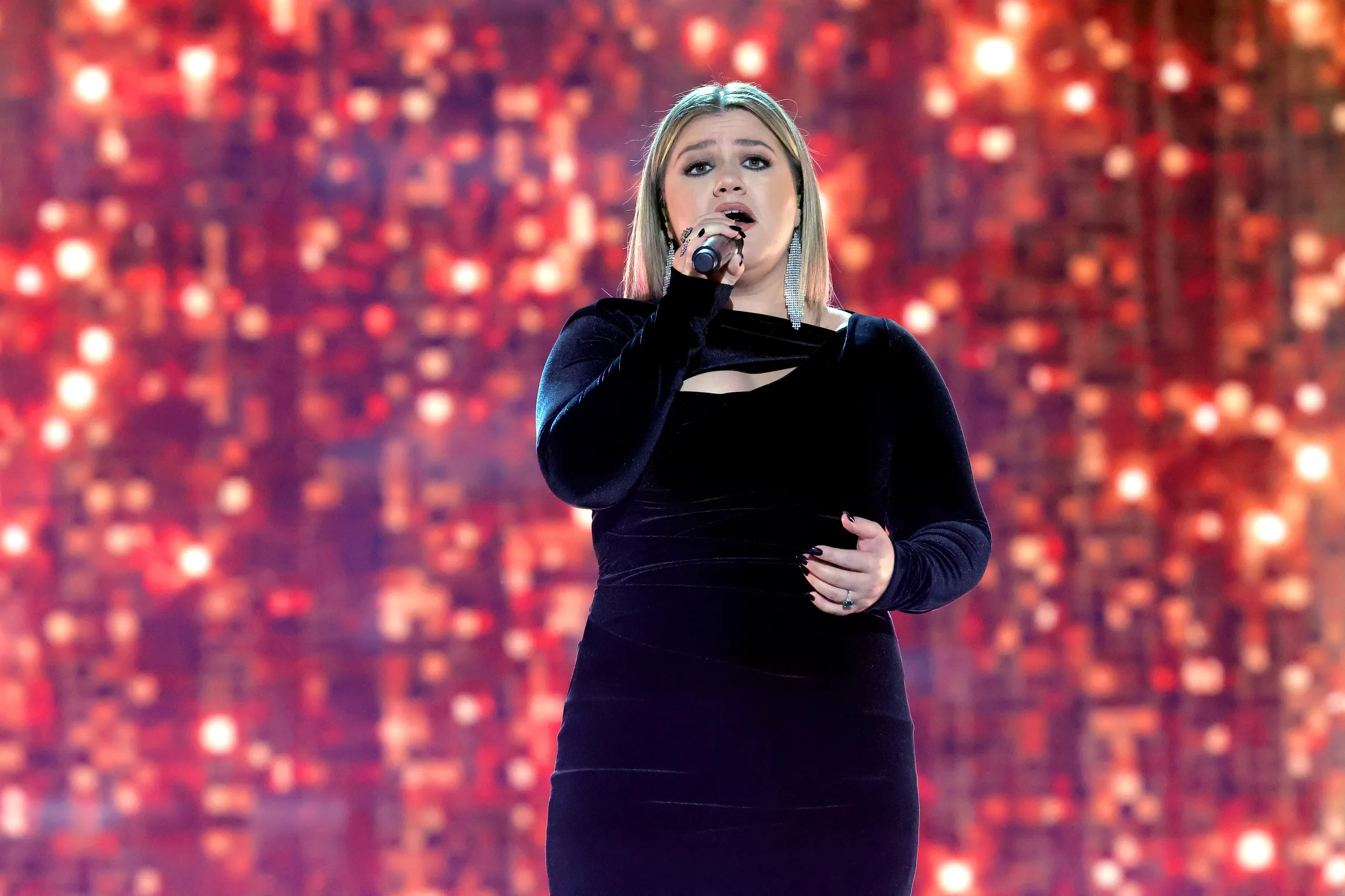
When Clarkson chose to cover “Save Me” on her show, she didn’t approach it as a gritty narrative piece. She approached it as something spiritual.
Her interpretation didn’t dilute the pain—it reframed it.
Where Jelly Roll’s version feels like a man sitting alone with his past, Clarkson’s performance feels like that same man being seen, maybe even forgiven, in real time. Her voice carries a kind of authority that doesn’t argue with the song’s darkness—it absorbs it and transforms it.
The result? The song stops sounding like a dead end and starts sounding like a doorway.
The Power of Being Reflected Back Differently
For artists, there’s a rare and disorienting experience that happens when someone else interprets your work more generously than you ever could.
That’s what made this moment so personal for Jelly Roll.
He didn’t just hear his song sung well. He heard it understood—on a level that challenged his own perception of himself. The same lyrics he wrote from a place of self-doubt were delivered back to him as something worthy, even sacred.
It’s one thing for audiences to connect with your pain. It’s another for someone to elevate it without erasing it.
Crossing Invisible Boundaries
Jelly Roll’s career has never fit neatly into a single genre. He’s moved between hip-hop, rock, and country, often existing in the margins of each. That kind of trajectory can create a constant sense of not fully belonging anywhere.
Clarkson’s decision to cover his song disrupted that narrative.
It wasn’t just validation from a major voice in music—it was a signal that his story had traveled beyond the spaces it was expected to stay in. His experiences, once confined to personal struggle and niche audiences, were now part of a broader cultural conversation.
That shift matters. Not because it changes who he is, but because it changes who gets to see themselves in his story.
When Pain Becomes Purpose
There’s a difference between surviving something and understanding what that survival means.
For years, Jelly Roll’s music has documented survival in its rawest form. But moments like this invite a different interpretation: what if those experiences weren’t just endured—but contributed something meaningful?
Clarkson’s performance didn’t rewrite his past. It reframed its value.
It suggested that pain, when expressed honestly, can become a bridge. That vulnerability isn’t just cathartic—it’s connective. And that stories rooted in struggle don’t need to be cleaned up to be worthy of recognition.
The Quiet Shift From Shame to Significance
What lingered after the performance wasn’t just emotion—it was perspective.
For an artist who built his voice on confronting his own flaws, this moment introduced a subtle but powerful shift: the idea that those flaws weren’t just obstacles to overcome, but integral parts of what made the work resonate.
That’s not redemption in the traditional sense. It’s something more complex.
It’s acceptance—not as an endpoint, but as a foundation.
Why This Moment Resonates Beyond Music
At its core, this story isn’t just about a song or a performance. It’s about what happens when someone sees value in parts of you that you’ve only ever associated with failure.
That experience is rare. And when it happens, it can feel overwhelming—because it forces you to reconsider narratives you’ve carried for years.
Jelly Roll’s reaction wasn’t just about admiration for Clarkson’s voice. It was about recognition. About hearing his own story told back to him in a way that allowed for grace.
The Lasting Impact
There will always be bigger performances, higher chart positions, and more visible milestones. But not all career-defining moments are public victories.
Some are quiet, deeply personal realizations.
For Jelly Roll, this was one of them.
A reminder that sometimes, the most powerful transformation isn’t changing your story—it’s finally believing it was worth telling in the first place.