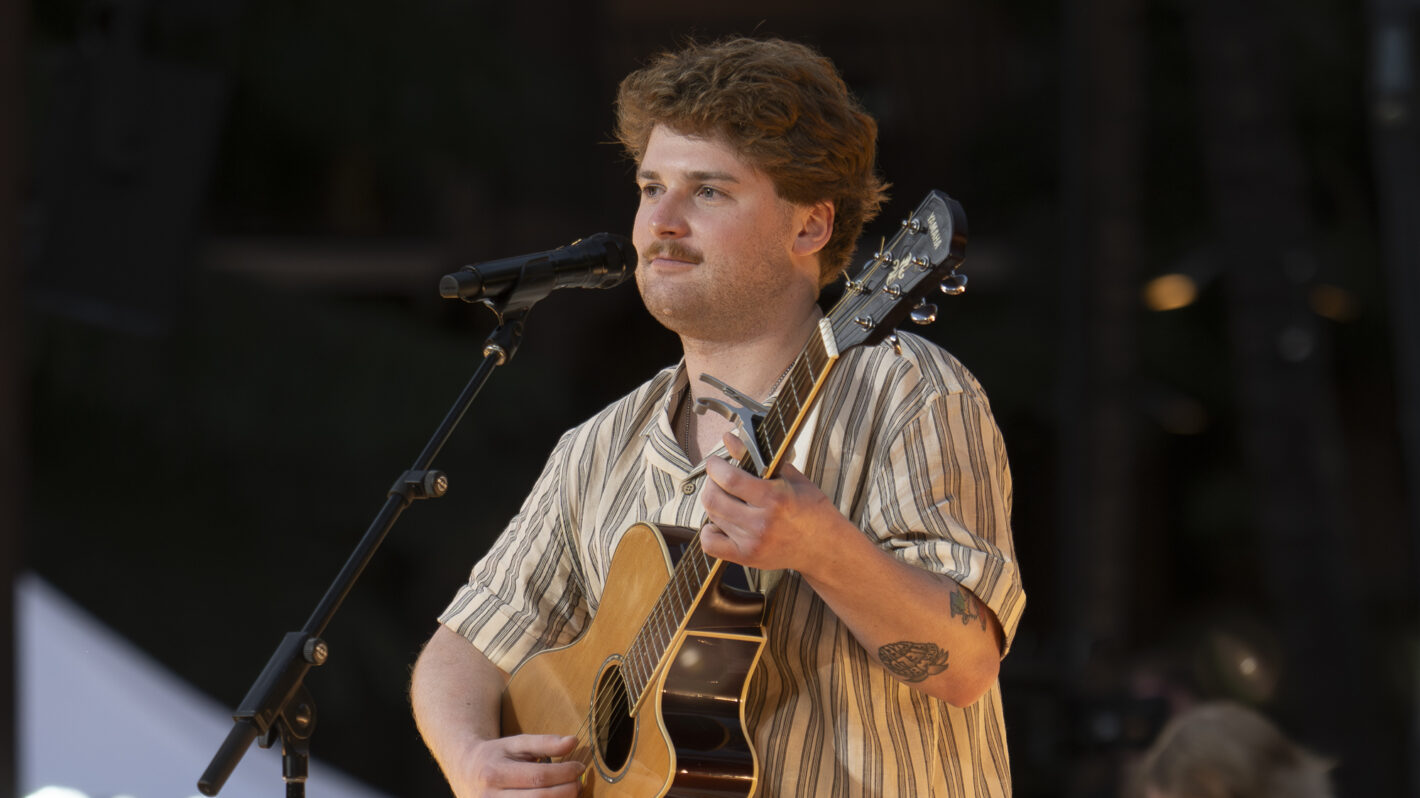
Brooks Rosser’s journey on American Idol Season 24 doesn’t follow the typical path of a polished performer chasing fame. Instead, it begins with someone who never imagined himself in the spotlight — and ends with a contestant now standing among the Top 11, capturing attention with a voice that feels both raw and rare.
A Voice No One Saw Coming
At just 22 years old, the Bel Air, Maryland native stepped into the audition room with minimal performance experience. In fact, before Idol, Brooks had barely sung in public. While he had played guitar occasionally, the idea of being the one behind the microphone was something he hadn’t fully embraced — until recently.
Yet from the moment he performed, judges Lionel Richie, Carrie Underwood, and Luke Bryan recognized something different. His voice carried a tone and texture that didn’t feel trained or manufactured — it felt discovered.
A Life That Changed in an Instant
Long before music entered his life, Brooks had a completely different dream. Soccer wasn’t just a hobby — it was his future. Starting at the age of six, he dedicated himself to the sport with the goal of going professional.
But everything changed during his freshman year of high school.
“I was an athlete, playing soccer my whole life, until I had an injury, I ripped my back in half and then COVID hit. Then I started playing guitar and singing at the same time.”
That moment didn’t just end a career path — it forced him to rebuild his identity from scratch.
Finding Music in Silence
The shift toward music wasn’t immediate or obvious. Brooks had always been shy, more comfortable staying behind the scenes than stepping into the spotlight. Watching his sister perform gave him a glimpse of what it meant to own a stage, but it still felt distant from who he was.
It wasn’t until the isolation of the COVID-19 pandemic that things began to change.
During that time, he picked up both guitar and singing simultaneously — not as a career move, but as a way to explore something new. What started quietly soon turned into something undeniable. For the first time, Brooks realized he didn’t want to stay behind the scenes anymore — he wanted to be heard.
Choosing to Be Seen
Interestingly, Brooks initially pursued audio technology at the Community College of Baltimore County, preparing for a career in recording and production. His plan was to support music, not create it.
But somewhere along the way, that perspective shifted.
Being around music made him realize he wasn’t meant to just mix tracks — he was meant to be part of them. That realization marked a turning point, pushing him to step forward instead of staying hidden.
Purpose Beyond the Stage
Outside of music, Brooks’s life carries a deeper layer of meaning. He works in a dementia care facility — a role he describes as deeply fulfilling. This path was shaped by his personal experience caring for his grandmother, who struggled with the disease.
That connection didn’t just influence his work — it shaped how he sees people and purpose.
Even when memory fades, presence still matters. For Brooks, being there for someone, even if they don’t recognize him, became something profoundly important.
Music as Healing
During his grandmother’s illness, music became more than just expression — it became connection. Brooks would play guitar and sing for her, watching how those moments could bring clarity, comfort, and even fragments of memory back.
At the same time, music helped him process his own loss — not just of his grandmother, but of the life he once planned as an athlete.
“I went for a free kick and I planted my left foot to kick it and I felt a gear switch in my lower left back, couldn’t feel my legs. I snapped my back in half, and that changed everything.”
That moment could have ended his story. Instead, it redirected it.
Learning to Believe in Himself
Despite his growth, Brooks has been open about his struggles with confidence. Even stepping onto the Idol stage came with doubt. He didn’t fully believe he belonged there.
But encouragement from the judges — especially Luke Bryan — helped shift that mindset. Hearing that his voice mattered, that it deserved to be heard, gave him something he hadn’t always had: belief.
For Brooks, self-confidence isn’t just a lesson — it’s something he’s actively building, step by step.
More Than Just a Contestant
What makes Brooks Rosser stand out isn’t just his voice — it’s the story behind it. A life that pivoted unexpectedly, a passion discovered late, and a purpose shaped by both loss and care.
He didn’t grow up chasing stages or preparing for auditions. He found music when everything else fell apart — and somehow turned it into something meaningful.
Now, as he continues his journey on American Idol, Brooks represents more than just another contestant. He represents what can happen when life forces you to start over — and you choose to keep going anyway.