It wasn’t meant to be a music moment—but it became one anyway.
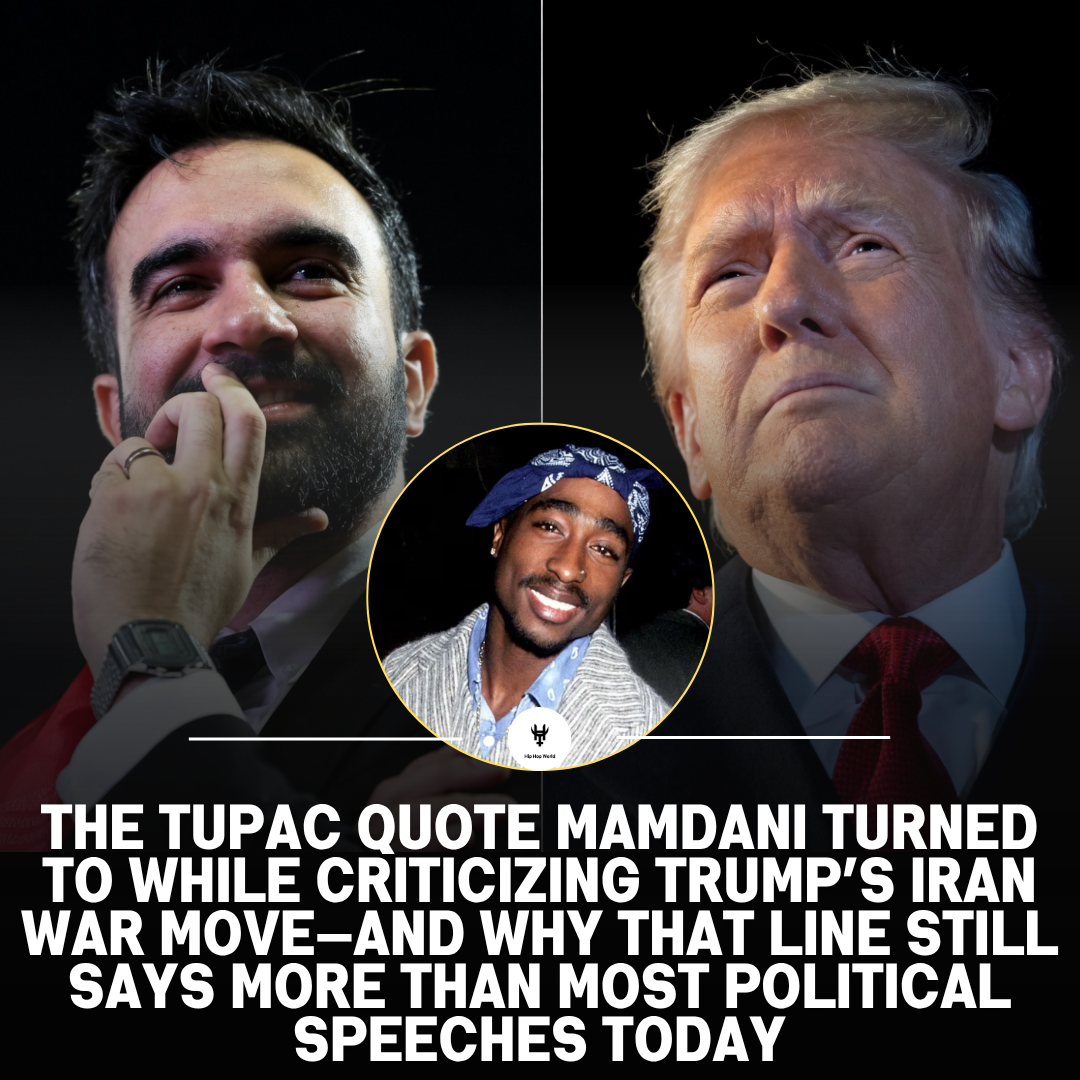
During a recent appearance on the Talk to Al Jazeera interview series, Zohran Mamdani was speaking about war, policy, and the cost of political decisions. The tone was serious, grounded in real-world consequences. But then, in the middle of it, he reached for something unexpected—something decades old, yet still uncomfortably current.
“Tupac said it decades ago, it continues to be true,” Mamdani said, “about the fact that we always seem to have money for war but not to feed the poor.”
For a second, the conversation shifted. Not away from politics—but deeper into it.
A Voice That Never Really Left
Mamdani has never hidden his connection to culture. As a public figure representing New York City, his appreciation for hip-hop feels natural—almost expected. Earlier this year, when asked about his favorite MCs, he named artists who helped define the city’s sound and identity: Nas, Jay-Z, and Biggie Smalls. Alongside them, he also mentioned Chicago voices like Common and Lupe Fiasco, expanding his taste beyond borough lines.
But this moment was different.
This wasn’t about influence or admiration. It was about application.
Because when Mamdani chose to quote Tupac Shakur, he wasn’t referencing legacy—he was using it.
The Line That Still Lands
The quote traces back to “Keep Ya Head Up,” released in 1993 on Strictly 4 My N*GGAZ…. It’s one of Tupac’s most reflective records, a track built on empathy, frustration, and clarity about systemic inequality.
“You know, it’s funny when it rains it pours,” Pac raps on the track. “They got money for wars, but can’t feed the poor.”
Decades later, Mamdani brought those words into a completely different arena—one shaped by modern geopolitics and current conflict. Speaking about the U.S.-Israeli war on Iran, he framed his opposition in moral terms, calling it “a war that has killed thousands of civilians” and pointing to the massive financial cost behind it.
“Tens of billions of dollars to kill people,” he said—money he argued could be redirected toward “making life easier for people” at home.
That’s where Tupac’s line fit in—not as a cultural reference, but as a statement that hadn’t aged.
More Than Just a Quote
What made the moment stand out wasn’t just the lyric itself—it was where it landed.
Hip-hop has always been political, but it doesn’t always cross into political spaces like this. And when it does, it’s often reduced to symbolism. Here, it felt more direct. Less like a nod, more like a continuation.
Mamdani wasn’t trying to reinterpret Tupac. He didn’t need to.
The message was already clear.
And that might be the point.
When Old Words Start Sounding New Again
Mamdani ended the segment by questioning the broader direction of politics, arguing that decisions like these don’t reflect what people actually want. The disconnect, in his view, is growing—between leadership and lived reality, between spending and need.
But what lingered wasn’t just the policy critique.
It was the realization that a lyric written in 1993 could still describe the present without needing to change a single word.
And in that moment, Tupac wasn’t just part of the conversation.
He was still leading it.