Backstage, the difference wasn’t subtle.
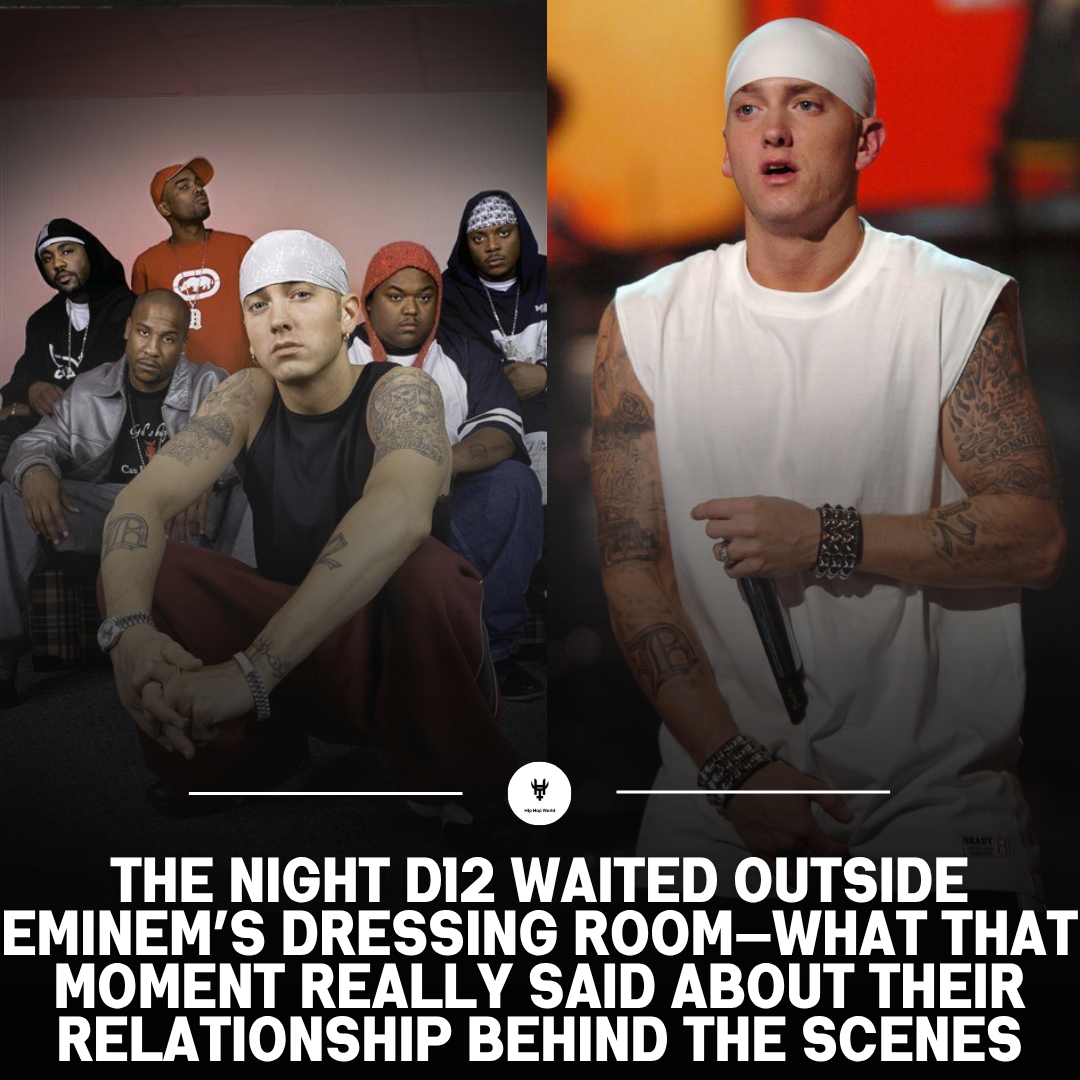
The door was closed. Inside, Eminem had his own space. Outside, the rest of D12 stood together, passing time the way they always did—talking, drinking, waiting. It wasn’t a complaint. It was just how things were.
“We hanging out in front of Em’s dressing room like it’s a corner store,” Kuniva recalled, “Chilling out, drinking in front of Marshall’s dressing room, and we ain’t have one”.
It sounds like the kind of moment that could create tension. But for D12, it never really did.
Before The Spotlight Shifted
The group had existed before Eminem became the global figure he would soon turn into. Formed in 1996 by Proof, D12 was built from Detroit’s underground—Eye-Kyu, Bizarre, Kon Artis, Kuniva, and Bugz. Their first EP came a year later, with Eminem appearing only as a guest.
Then everything changed.
After Bugz was shot and killed in 1999, Eminem joined as a full-time member. Swifty McVay stepped in, and the group entered a new phase—one shaped by both tragedy and opportunity. By the time Devil’s Night dropped in 2001, followed by D12 World in 2004, D12 had become a major force.
But there was no hiding it.
Eminem wasn’t just part of the group anymore—he was the center of attention.
The Joke Everyone Understood
That imbalance became impossible to ignore, and eventually, it became something they leaned into. On “My Band,” D12 flipped the narrative into comedy, exaggerating jealousy for effect. The song painted a picture of frustration, of being overshadowed, of living in someone else’s spotlight.
But behind it, the reality was different.
“We were just poking fun of ourselves and how the media portrayed us as Eminem’s homeboys and his background singers and all the rest of the shit and we just threw it back to their faces,” Kuniva explained.
The frustration people heard in the song wasn’t real resentment—it was awareness. They knew how they were seen. And instead of pushing back against it, they turned it into something they controlled.
What It Actually Meant
If anything, the dynamic was understood from the start.
Eminem’s rise had changed everything—not just for himself, but for the group. His fame opened doors that might not have existed otherwise. And while that came with an obvious imbalance, it also came with opportunity.
According to Kuniva, there was never a deeper conflict beneath it. The group saw Eminem as their “big bro,” someone who had reached a level they hadn’t—but hadn’t left them behind.
There was no illusion about the hierarchy. Just an acceptance of it.
A Different Kind Of Loyalty
In hindsight, “My Band” says less about jealousy and more about perspective.
It captured how outsiders saw D12. Not how they saw themselves.
Because behind the scenes—outside that dressing room door—the reality was quieter. Less dramatic. Built more on familiarity than frustration.
They were still a group. Still moving together. Still tied by something that didn’t depend on equal spotlight.
And maybe that’s why the joke worked.
Because everyone thought they understood it.
But the truth was… they didn’t need to explain it.