At some point in the early ’90s, in the middle of a party, a tape started playing.
It wasn’t a major release. Not something polished or widely known. Just a demo—one of many that could have easily blended into the noise of the room. But this one didn’t. The voice on it moved differently. Smooth, unhurried, almost effortless in the way it rode the beat.
Dr. Dre noticed.
He didn’t know the artist yet. But he knew enough to pay attention.
A Connection That Didn’t Take Long to Form
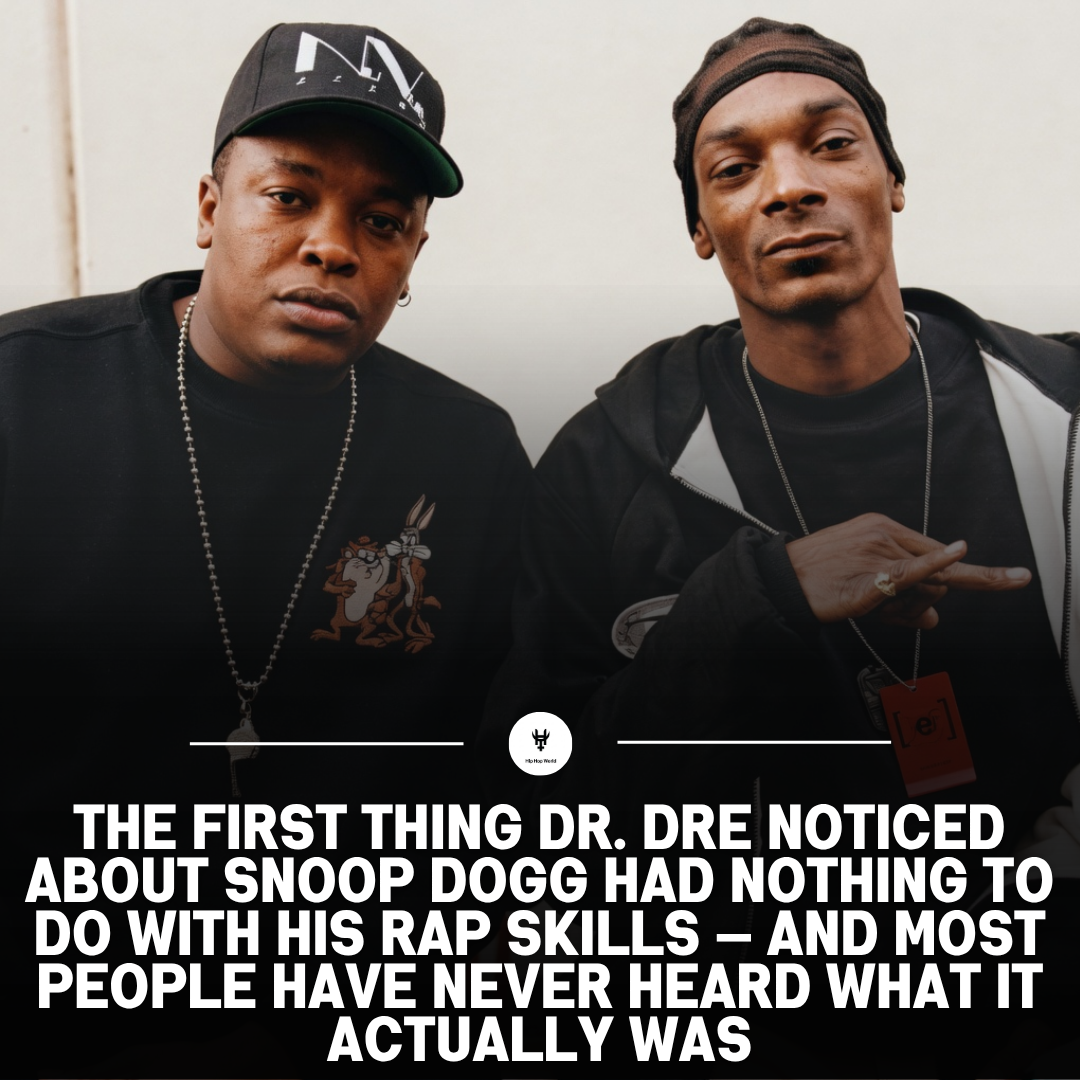
That voice belonged to Snoop Dogg—still going by Snoop Doggy Dogg at the time, still unknown outside a small circle. What followed wasn’t instant fame, but it was something just as important: an introduction.
Through Warren G, the two were brought into the same space.
And from there, things moved quickly.
Dre saw more than just talent. He saw someone who could fit into the way he worked—someone who didn’t just have a voice, but understood how to use it. That mattered more than anything else.
The Test That Defined the Partnership
As Dre would later explain, skill alone was never enough.
“I was mainly interested in how he responded to directions,” Dre told the LA Times in 2007, looking back on his early working relationship with Snoop, “That’s always an important test with me”.
It wasn’t about whether Snoop could rap. That part was obvious. The real question was whether he could adapt. Whether he could take feedback. Whether the collaboration would actually work once they were in the studio.
Dre’s standard was simple, and strict.
“If not,” he said, “I’d rather work with someone else”.
Snoop passed that test.
Building a Sound That Didn’t Exist Before
What followed wasn’t just a collaboration—it was alignment.
Snoop became a central presence on The Chronic, Dre’s first solo album, bringing that same laid-back delivery into a sound that was still taking shape. In return, Dre stepped in as the architect behind Snoop’s debut, Doggystyle.
Together, they refined what would become known as G-funk—slower grooves, melodic synths, and a vocal style that didn’t rush to prove anything.
It wasn’t just successful. It was defining.
The early ’90s West Coast scene didn’t just grow around them—it took its shape from them.
What Stayed the Same After Everything Changed
Decades passed. The industry shifted. Sounds changed. But the working relationship between Dre and Snoop never fully disappeared.
They didn’t need to prove anything anymore.
And yet, they still found their way back into the studio.
When Dre produced Snoop’s 2024 album Missionary, it wasn’t about recreating the past. The edge of the ’90s wasn’t there in the same way. But the connection was.
A Moment That Could Have Been Missed
Looking back, the entire trajectory of West Coast hip hop rests, in part, on something that almost didn’t happen.
A tape playing at a party.
A voice that could have gone unnoticed.
And a producer who didn’t just hear talent—but paid attention to how it responded.
Because that’s what made it last.