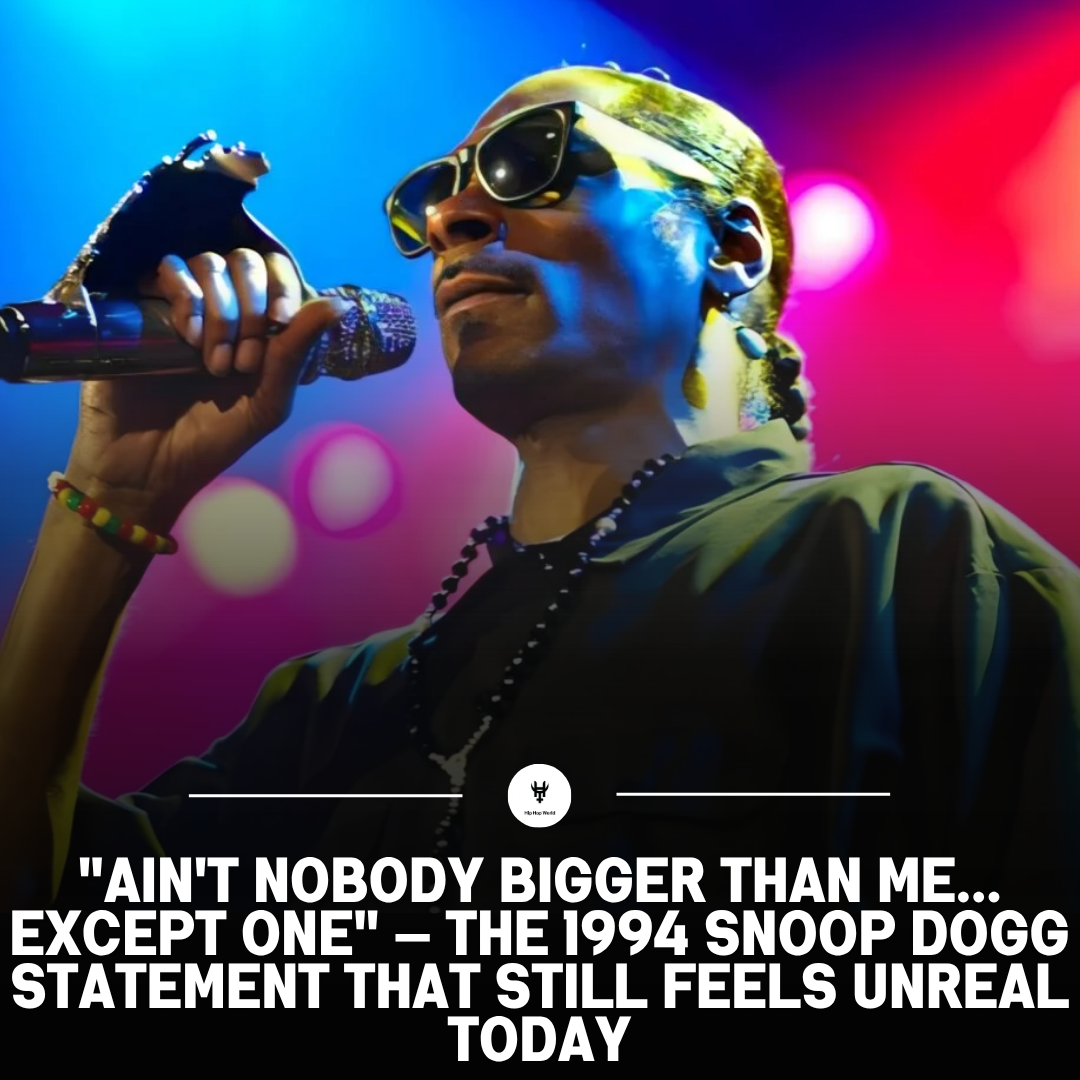
It didn’t come out like a boast. Not exactly.
In 1994, sitting in the middle of a meteoric rise that few artists ever experience, Snoop Dogg was asked to reflect on what had just happened to his life. The fame. The noise. The speed of it all.
“That shit is kinda crazy,” he said.
It was an understatement.
Because just a year earlier, he wasn’t just another rapper coming up—he was the voice reshaping West Coast hip-hop, fresh off his unforgettable presence on The Chronic by Dr Dre. And then came his debut.
Doggystyle didn’t just succeed—it exploded.
Context Expansion
Released in 1993, Doggystyle debuted at number one and moved hundreds of thousands of copies in its first week. That kind of impact wasn’t normal, even in a booming era for hip-hop.
Snoop’s voice was instantly recognizable. His delivery—laid-back but precise—felt effortless. His presence? Magnetic. He wasn’t just part of the culture anymore. He was the culture.
And yet, even at that peak, he was still measuring himself against something bigger.
Not other rappers.
Icons.
Names he had grown up listening to. Voices that had shaped him long before fame found him.
Turning Point
“Cuz at school I always used to listen to Michael Jackson, Marvin Gaye, Al Green, whatever,” he said.
Then he paused—and drew a line that few artists would ever dare to draw so clearly.
“Now I look at it like: he’s the biggest — he’s bigger than me — but ain’t nobody else bigger than me but Michael Jackson.”
That name wasn’t random. Michael Jackson wasn’t just a star—he was the global standard for fame, influence, and cultural dominance. To place yourself anywhere near that level meant you weren’t just confident—you believed you had arrived.
And in that moment, Snoop wasn’t guessing.
He was observing reality as he saw it.
Because in the early ’90s, there were very few artists who could match the reach, the attention, and the impact he was generating. Hip-hop was expanding fast, and Snoop was at the front of that expansion.
Still, his words weren’t just about ego.
They carried something deeper.
Aftermath / Meaning
Later in that same conversation, Snoop shifted from talking about success to talking about pressure—the kind that comes with visibility, especially for Black artists in America.
“When we get too powerful,” he said, “they gotta pump our brakes, cuz there’s never been a Black president.”
At the time, that idea felt distant. Almost theoretical. This was more than a decade before Barack Obama would make history.
But Snoop was already connecting the dots.
He saw success not just as personal achievement, but as something that challenged the system around it. The bigger you got, the more attention you attracted—and not all of it supportive.
And then, almost casually, he added something that sounded like a joke… but didn’t quite feel like one.
“And the thing is, as big as this rap shit is, who knows: maybe I could run for president one day.”
At the time, it was easy to laugh that off.
Today, it lands differently.
Final Reflection
Looking back now, what stands out isn’t just the confidence—it’s the clarity.
Snoop Dogg understood his moment while he was still inside it. He didn’t wait for history to tell him where he stood. He made that call himself.
And he was right about at least one thing.
Decades later, his presence hasn’t faded. It’s evolved.
From music to business, from television to culture, he’s remained visible in ways few artists ever manage. Football club owner, entrepreneur, entertainer—his identity has expanded far beyond rap.
But that original truth still holds.
At the center of it all is the same thing that built everything else.
A voice.
A presence.
And a moment in time when he looked at the entire landscape—and genuinely believed there was only one name above his.
And he said it out loud.