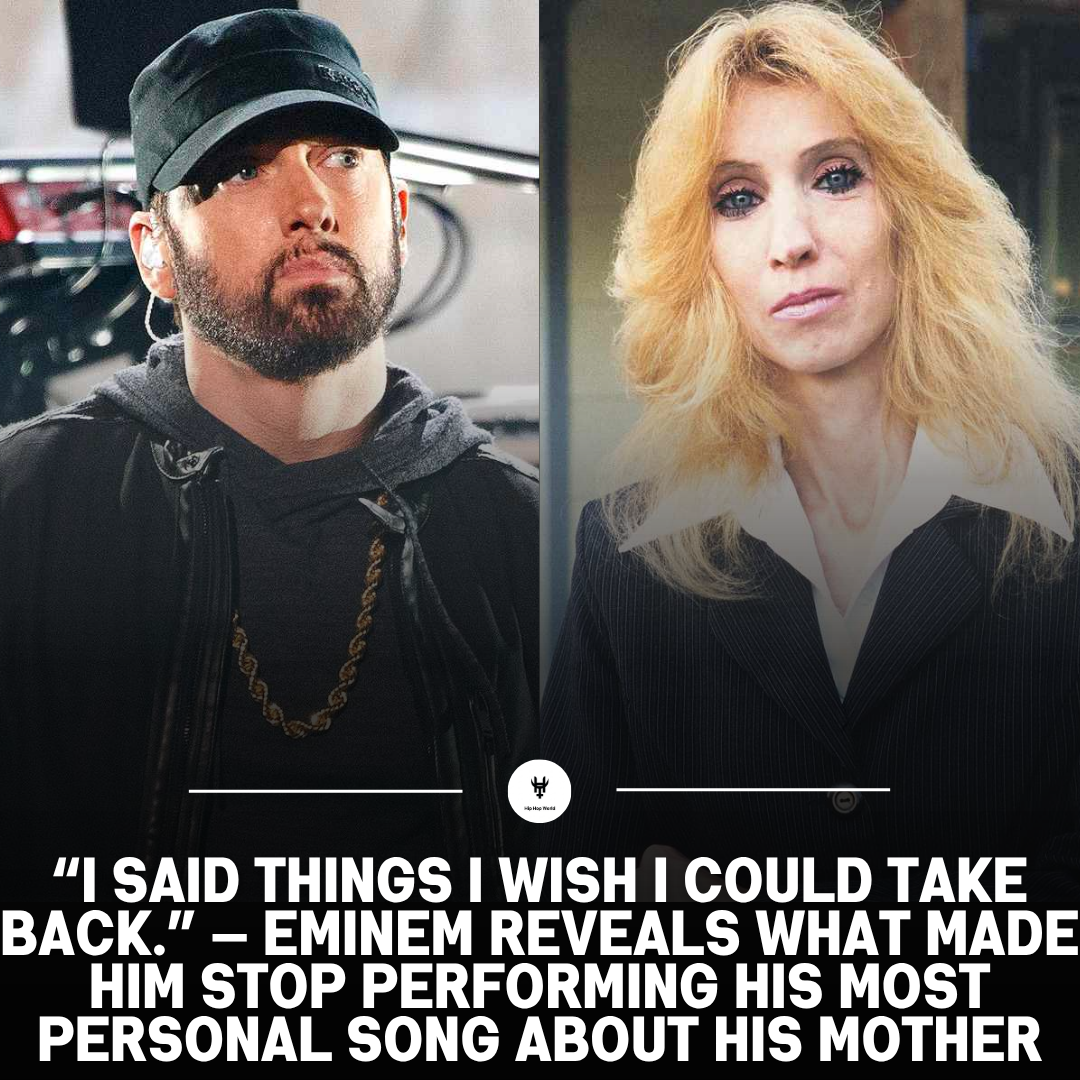
The crowd was loud. The beat dropped. And for years, one song would trigger the same reaction every time—pure energy, pure release. When Eminem performed “Cleanin’ Out My Closet,” the audience didn’t just listen—they erupted. It was one of those moments where music and emotion collided in a way that felt almost uncontrollable.
But behind that reaction was something heavier.
The Anger That Built a Career
Early in his rise, Eminem didn’t filter much. His music was sharp, direct, and often deeply personal. Few tracks captured that more than “Cleanin’ Out My Closet,” where he publicly confronted his relationship with his mother, Debbie Nelson. The song wasn’t subtle—it was raw, filled with accusation, sarcasm, and unresolved pain.
It became a defining moment in his career.
Fans connected with the honesty. The controversy only made it bigger. And every time he performed it, the reaction reinforced the same idea: this was real, and that’s why it worked.
For a long time, that was enough.
The Shift No One Expected
More than a decade later, something changed.
In 2013, on The Marshall Mathers LP 2, Eminem released “Headlights.” The tone was completely different. There was no anger driving it. Instead, it felt measured—almost quiet in comparison. The lyrics didn’t deny the past, but they didn’t attack it either.
They reflected on it.
In that song, he addressed his mother again. But this time, the focus wasn’t blame—it was acknowledgment. Growth had shifted the way he saw things, and more importantly, the way he wanted to express them.
That shift didn’t stay on the record.
The Decision That Changed the Stage
By 2014, Eminem made a choice that caught people off guard.
He stopped performing “Cleanin’ Out My Closet.”
It wasn’t because the song lost its popularity. If anything, it remained one of his most recognizable tracks. But performing it no longer felt right. Over time—especially as a father—he began to see the impact differently.
His daughters would hear those lyrics. They would see the way he spoke about his own mother, in front of millions.
And that changed everything.
The anger that once felt justified no longer matched the person he had become. The energy from the crowd didn’t outweigh the meaning behind the words anymore. What once felt like release began to feel like repetition—reopening something that didn’t need to stay open.
A Different Kind of Strength
With time came perspective—not just about himself, but about his mother as well. The situation that once felt one-sided became more complicated. He acknowledged that the pain was real, but continuing to broadcast it didn’t serve a purpose anymore.
What the audience experienced as catharsis… he started to see as something else.
Collateral damage.
“Headlights” became more than just a song. It was a response. Not dramatic, not performative—just honest in a different way. It didn’t erase the past, but it reframed it. It showed that growth doesn’t always mean changing your story. Sometimes it means choosing how much of it you keep repeating.
What He Chose to Leave Behind
For an artist built on confrontation, this was a quiet pivot.
Eminem had always been known for saying what others wouldn’t. But stepping away from “Cleanin’ Out My Closet” wasn’t about silence—it was about control. It was about recognizing that truth can evolve, and that holding onto an old version of it isn’t always necessary.
The song still exists. The moment still matters.
But he chose not to relive it.
And in doing that, he showed something different—something that doesn’t get the same reaction as a loud chorus or a controversial lyric. The kind of growth that isn’t performed, but practiced.
Sometimes, the most defining move an artist makes isn’t what they release.
It’s what they decide to leave behind.