By the time Straight Outta Compton was ready for the world, everything about it looked like a victory. The film carried momentum—critical praise, box office success, even an Academy Award nomination. But long before that outcome was guaranteed, the people closest to it weren’t celebrating. They were uncertain whether it would survive at all.
A Story That Had to Be Told Right
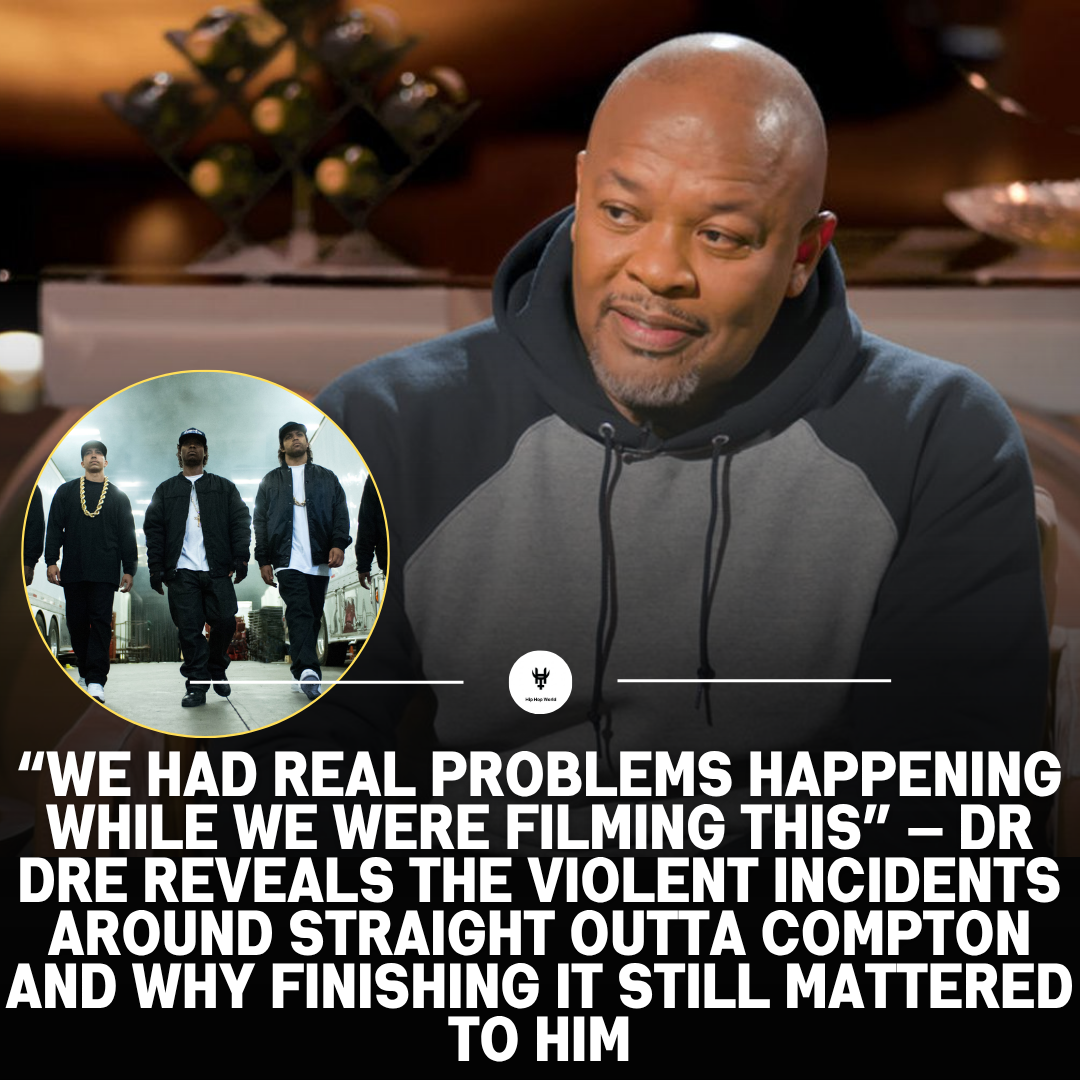
During the final stretch before release, Dr. Dre stepped into interviews with a clear message: this wasn’t just a movie—it was a responsibility. Speaking on Big Boy’s radio show, he described the intention behind the project as something deeper than entertainment. It was about showing the “heart” of N.W.A and capturing “everything we went through” before the group fractured.
But even as he spoke confidently, he didn’t hide the hesitation that came earlier. He admitted he had been “nervous” about the film—worried it might leave a “blemish on our legacy.” That concern wasn’t about small details. It was about whether telling their story on such a large stage could distort it instead of preserving it.
“The story had to be told right,” he said. “And it’s incredible, man. I’m really excited about it.”
That confidence didn’t come from a smooth process. It came after surviving one that nearly spiraled out of control.
Chaos Behind the Camera
What Dre described as “ups and downs” turned out to be something much heavier. Behind the scenes, the production struggled to find stability. According to reports from crew members, including a costume designer who spoke to Film Doctor, the script wasn’t steady—it kept shifting “the entire time.” For those working on set, that meant constantly adjusting to a story that was still being rewritten as it was being filmed.
But the instability didn’t stop at creative challenges.
At one point during production, a drive-by shooting occurred near the set, leaving an unrelated individual injured. Not long after, the situation escalated even further when Suge Knight—a figure deeply tied to the real-life history being portrayed—was involved in a fatal hit-and-run incident that ultimately led to a 28-year prison sentence.
As if that wasn’t enough, tensions spilled directly into the filmmaking process. It later surfaced that Knight had allegedly threatened the film’s director, F. Gary Gray, over concerns about how he was being depicted on screen.
These weren’t typical production setbacks. They were real-world events colliding with a film that was trying to recreate that same world.
The Turning Point: Finishing What Almost Broke
Despite everything—the shifting script, the violence, the outside pressure—the film kept moving forward. It didn’t collapse under the weight of its own story or the chaos surrounding it. It reached completion.
And somewhere in that process, Dre’s perspective shifted. The fear of damaging a legacy gave way to belief in what they had created. By the time he was promoting the film, he wasn’t just hopeful—he was convinced people would connect with it, especially those who understood its roots in Los Angeles.
When the Outcome Spoke for Itself
When Straight Outta Compton finally arrived, the response confirmed that belief. Audiences showed up. Critics responded. The film didn’t weaken the legacy it represented—it reinforced it.
What makes that outcome stand out isn’t just the success itself. It’s how unlikely it felt during production. A project that could have easily fractured under pressure instead held together long enough to tell its story.
And in the end, that might be the most fitting reflection of N.W.A itself—a group that came from chaos, operated within it, and still managed to leave something lasting behind.