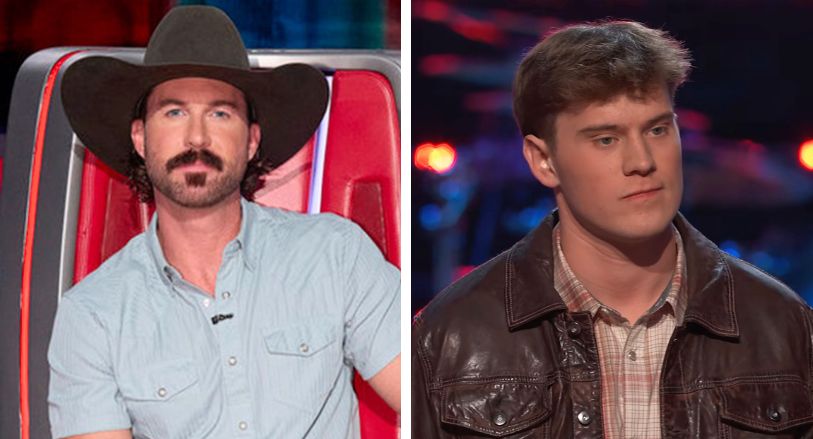
Joe Henley’s powerful country voice may sound like it belongs to someone who has spent years chasing a career in music. But the 19-year-old Alabama singer’s path to The Voice has been anything but conventional. Before earning a place on Team Riley Green and securing a spot in the Live Shows, Henley was largely performing in church settings, with music playing a very different role in his life.
That background makes his rapid rise on Season 30 especially interesting. His recent performance of Keith Whitley’s “Don’t Close Your Eyes” earned a standing ovation from all four coaches, but the moment was more than another successful country cover. It offered a glimpse of how a young singer whose musical experience developed outside the traditional entertainment industry is now finding his place in front of a national audience.
Henley grew up in Grand Bay, Alabama, surrounded by family, faith, and country music. According to his contestant biography, his grandparents ran a small ministry in the back room of a truck stop. That was where he first sang alongside his grandfather. After his grandfather died, Henley continued helping his grandmother with the worship ministry.
It was a very different introduction to performing from the one many aspiring singers experience. Rather than spending his teenage years working through a conventional schedule of auditions, showcases, and professional gigs, Henley developed his voice in a setting where singing was closely connected to family and worship.
That distinction helps explain why his journey onto a major television competition feels like such a significant step. His biography says he had performed almost exclusively in worship settings until recently and had not seriously considered becoming a professional singer. The Voice has therefore given him an opportunity to explore a possibility that, for much of his life, was not necessarily part of the plan.
Basketball was another major part of Henley’s life while he was growing up. His contestant biography explains that the sport dominated much of his youth, making his eventual turn toward music a change in direction rather than an obvious career move. A serious back injury and the long rehabilitation that followed became a turning point, bringing him closer to his faith, his guitar, and the music he loved.
There is an important difference between being able to sing and believing that singing could become your future. Henley appears to have had the first for a long time, while the second took longer to imagine. In an interview with Deepest Dream, he admitted that nerves and the fear of putting himself out there had made him question whether people would actually want to watch him perform.
The experience on The Voice has started to change that thinking. Henley said the competition has helped him see that the thing he has wanted to do may genuinely be possible. Getting through multiple rounds, performing in the Battles, and reaching Cut Week has given him something beyond television exposure: the confidence to consider music as a realistic path.
That personal shift may be one of the most meaningful parts of his Season 30 story. The show is designed to test singers under pressure, but it can also push contestants to confront doubts they have carried long before stepping onto the stage. For Henley, each round has offered another opportunity to find out what happens when he gives himself permission to take music seriously.
His connection with Riley Green has also helped make that process less intimidating. The two singers share Alabama roots, an interest in sports, and a similar laid-back way of communicating. Henley told Deepest Dream that those common points made it easier to relax around his coach and feel as though they were already on the same page.
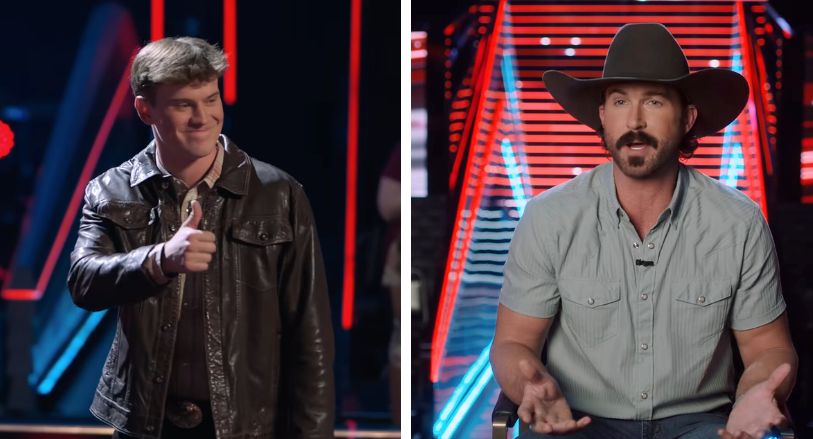
That comfort matters. A contestant who feels at ease with a coach may be more willing to take creative risks, ask questions, and focus on the music instead of worrying about every detail of the competition. Henley said working with Green allowed him to breathe a little more, which is especially valuable for someone who is still getting used to performing outside familiar settings.
Their connection first became a talking point during the Blind Auditions. Henley performed Travis Tritt’s “Anymore,” prompting Green and Kelly Clarkson to turn their chairs. When Henley revealed that Green’s “My Way” was his favorite song, the coach picked up a guitar and joined him onstage for an impromptu duet. Henley ultimately chose Team Riley.
The moment made for memorable television, but it also gave Henley an early glimpse of what it might feel like to share music with someone whose career he admired. Green was not simply a famous coach trying to recruit a contestant; he was another Alabama country singer who understood some of the cultural references and experiences that shaped Henley.
That shared background does not mean their musical journeys have been identical. Green had already established himself in country music, while Henley was only beginning to explore whether a professional future in the genre was possible. But having a coach who understands where he comes from may help the younger singer navigate the unfamiliar parts of the industry.
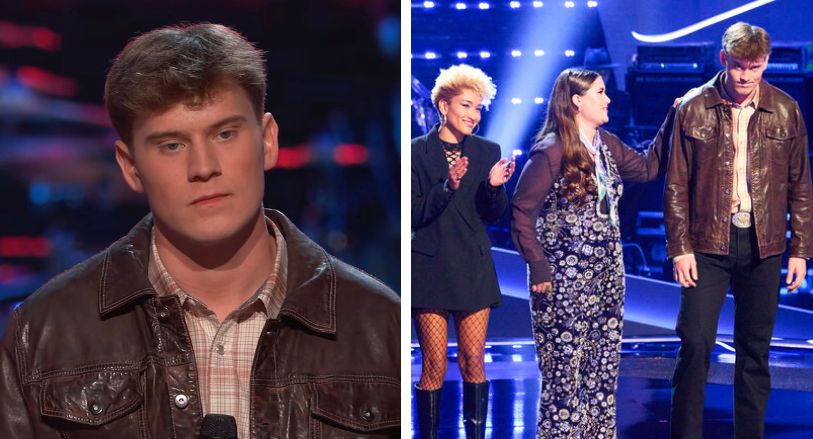
Henley’s progress has also involved learning from fellow contestants. During the Battle Round, he faced Kenna Elpers in a performance of Green and Ella Langley’s “Don’t Mind If I Do.” In his later interview, Henley spoke warmly about Elpers, praising her as both a singer and a person. He also credited her with helping him work on the harmonies, describing the experience as a blessing and an opportunity to learn.

That generosity is another revealing detail. Competition shows can make every pairing feel like a battle for survival, but Henley’s comments suggested he recognized the value of working alongside another artist, even when they were competing for the same place. He even recalled telling Elpers that he felt she deserved the win.
And then came Cut Week. Taking on Keith Whitley’s “Don’t Close Your Eyes” brought Henley back to the traditional country sound that has defined much of his journey so far. His rich voice earned a standing ovation from all four coaches, while Clarkson praised his natural tone and said she would be surprised if he did not reach the finale. Green, meanwhile, joked that he would be rich and famous if he could sing like his contestant.
Green ultimately chose Henley for one of Team Riley’s three Live Show places, alongside Cade Mower and Ferryn and Brinkley. The decision means the Alabama singer will get another chance to perform, this time with the competition moving into its live stage.
But the bigger question surrounding Henley may be what happens after the cameras stop rolling. He has already experienced the difference between singing in familiar worship settings and performing for a national television audience. He has also begun to see that the music career he once hesitated to pursue might not be out of reach after all.
The Live Shows will bring new pressure, bigger expectations, and another test of his ability to connect with an audience. Yet Henley’s story is not simply about a young country singer collecting impressive reactions from the coaches. It is about someone discovering the confidence to take a long-held passion seriously, one performance at a time.
If he continues to grow, The Voice could become the place where his musical future truly begins. Do you think Joe Henley has what it takes to turn this unexpected opportunity into a lasting country music career?