For the first time in its history, The Voice has taken a dramatically different route to its Live Shows, and the biggest surprise might not be which contestants survived. Season 30 has introduced a competition format that gives coaches unprecedented elimination power while handing viewers an opportunity to bring one previously rejected singer back into the spotlight.
The new approach, called Cut Week, arrived on November 2, replacing the traditional Knockouts and Playoffs with a single, high-pressure elimination round. Instead of gradually narrowing down their teams over several episodes, Kelly Clarkson, Adam Levine, Queen Latifah, and Riley Green suddenly faced some of the toughest decisions of the season.
And this wasn’t a minor adjustment. The competition entered Cut Week with 28 artists, seven representing each coach. By the end of the two-hour episode, only 12 had secured places in the Live Shows, while one additional position was left entirely in America’s hands.
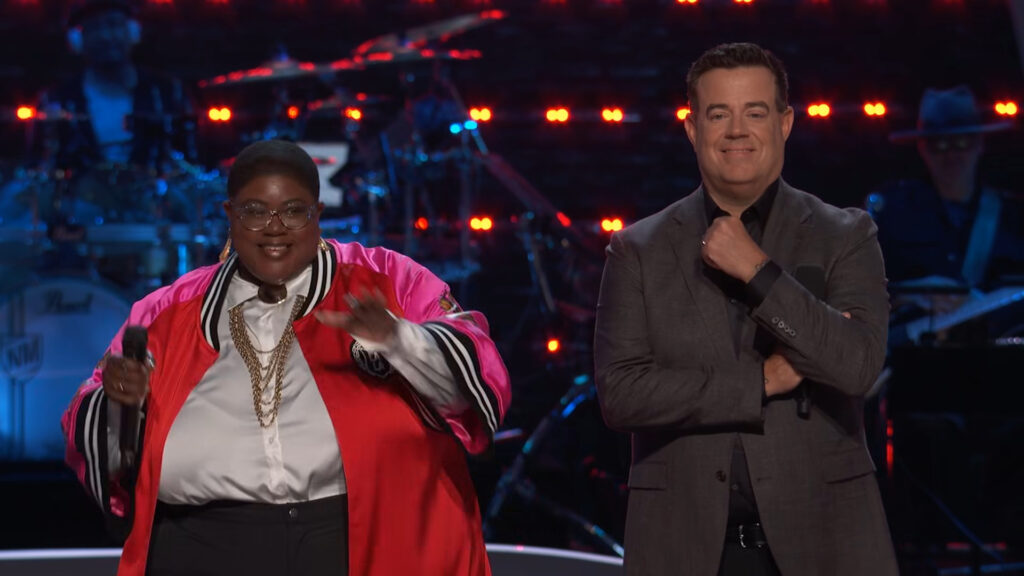
That change creates a very different kind of excitement for viewers. In previous seasons, contestants generally had to survive a series of performance rounds and coaching decisions before reaching the stage where audience voting became central. This time, viewers were given a meaningful opportunity to influence the competition before the Live Shows even began.
According to NBC’s Season 30 format announcement, each coach had to send two artists directly through to the Live Shows. The remaining five singers on each team then competed for one final position, meaning that even talented performers who had impressed throughout the earlier rounds could find themselves fighting for survival in a matter of minutes.
The format also made the coaches’ responsibilities considerably more complicated. Rather than simply deciding which contestant performed better in a traditional head-to-head battle, they had to evaluate several artists competing for a single remaining place on their team.
For the contestants, that meant the pressure was enormous. A strong performance could make the difference between continuing toward the championship and leaving the competition without the opportunity to perform in the regular Live Shows.
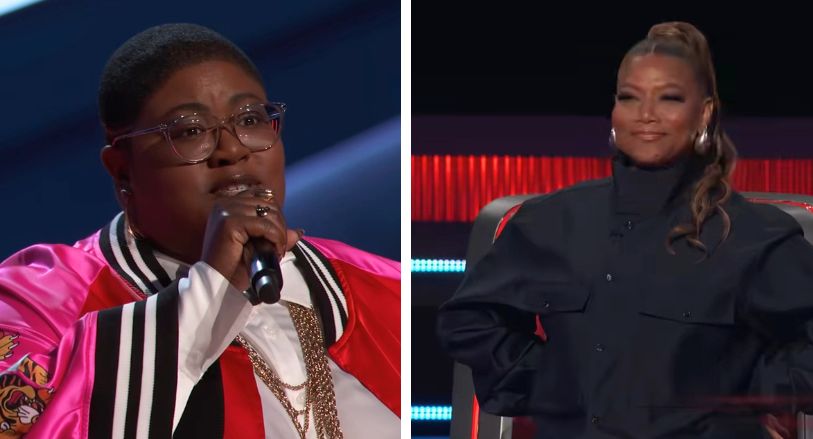
The four teams ultimately settled on three artists apiece. Queen Latifah advanced Mia Knight, BigCountry, and Lillie Kolich. Adam Levine selected Lexi Stephens, Connor Closs, and Dakota Cohen, while Riley Green moved forward with Cade Mower, Ferryn & Brinkley, and Joe Henley.
Kelly Clarkson completed the confirmed group with Koumba Diallo, Anna McElroy, and Brianna Cameron.
Those 12 singers now have the advantage of knowing their Live Show journeys are secure. But the competition has another twist that makes this season particularly interesting.
Instead of treating every contestant who missed a coach’s final selection as permanently eliminated, The Voice opened a public vote for one additional place in the Top 13. That means an artist who did not receive the support needed from their coach still has an opportunity to earn another shot through the audience.
The unusual part is that the additional artist does not have to come from a particular coach’s team. The public vote gives viewers the chance to select someone from the group of 16 contestants who missed out on a guaranteed place, potentially creating a fourth member for one coach while the other three teams begin the next stage with three artists each.
That distinction could have a major impact on the competition. A coach’s decision is normally the final word when an artist fails to advance, but Season 30 has created an exception that allows viewers to challenge those decisions through their support.
It also gives contestants a reason to keep believing in their chances even after a disappointing result. For someone who has spent weeks building a connection with viewers, that public vote could become an unexpected lifeline.
The change is particularly interesting because NBC is not simply experimenting with eliminations. The network has reworked several aspects of the season to put greater emphasis on audience participation and the Live Shows.
Season 30 introduced a First In Button during the Blind Auditions, giving the first coach to turn around during a multi-chair turn an opportunity to claim an artist before that singer makes a final decision. The new Cut Week followed that change, making this anniversary season feel noticeably different from the familiar competition format.

And the biggest audience-focused changes are still ahead.
NBC has confirmed that the Live Shows will run for six weeks, with performances and special theme nights planned around Dolly Parton, Y2K music, and TikTok. The network is also introducing live simulcasts on NBC and Peacock across all time zones, making it easier for viewers to follow the competition as it happens.
Perhaps the most significant adjustment concerns voting. Rather than relying exclusively on the traditional process of watching performances and waiting for a separate results episode, viewers will have new ways to support their favorites through text messaging and TikTok.
Even more importantly, the results will be announced on the same night as the performances. Executive producer Audrey Morrissey described the approach to TV Insider as real-time voting, explaining that viewers will see the artists perform and discover that evening who advances.

That could completely change the atmosphere of the competition.
In previous seasons, the period between a performance and its results gave viewers time to discuss their favorites and consider their choices. With results arriving during the same broadcast, the emotional highs and disappointments could become much more immediate.
For contestants, that means every performance during the Live Shows could carry even greater pressure. There will be less separation between delivering a memorable performance, earning audience support, and finding out whether that support was enough.
The new format also introduces an interesting question about what makes a successful Voice contestant. Is it enough to impress a coach with technical ability and musical interpretation, or does an artist need the kind of personality and connection that convinces viewers to vote?
The answer could become clearer as the Top 13 begins competing.
The 13th artist is expected to be revealed when the first Live Show arrives on Monday, November 9, at 9 p.m. ET on NBC. That broadcast will mark the beginning of a six-week stretch that takes the competition toward its December 14 finale.
There is also an exciting opportunity for the show to discover a different kind of frontrunner. An artist who narrowly missed a coach’s selection might have a particularly strong connection with the audience, while someone who appeared to be a safe choice could discover that winning over viewers is a completely different challenge.
In my view, this is one of the more interesting experiments The Voice has introduced in recent years. The traditional format gives coaches considerable influence over contestants’ journeys, but allowing America to restore one artist creates a genuine opportunity for viewers to influence the direction of the competition before the regular voting even begins.
Of course, whether the changes ultimately make the season more exciting will depend on how well the format works once the pressure of the Live Shows begins. The new voting system could produce some memorable moments, but it could also make every elimination more difficult for contestants and coaches alike.
One thing is certain: Season 30 is giving viewers more influence than ever, and the competition is entering a stage where a coach’s approval is no longer the only way forward.
Do you prefer this new Cut Week format, or would you rather see The Voice return to its traditional Knockouts and Playoffs? And should America have the power to bring back a singer who didn’t make the cut?