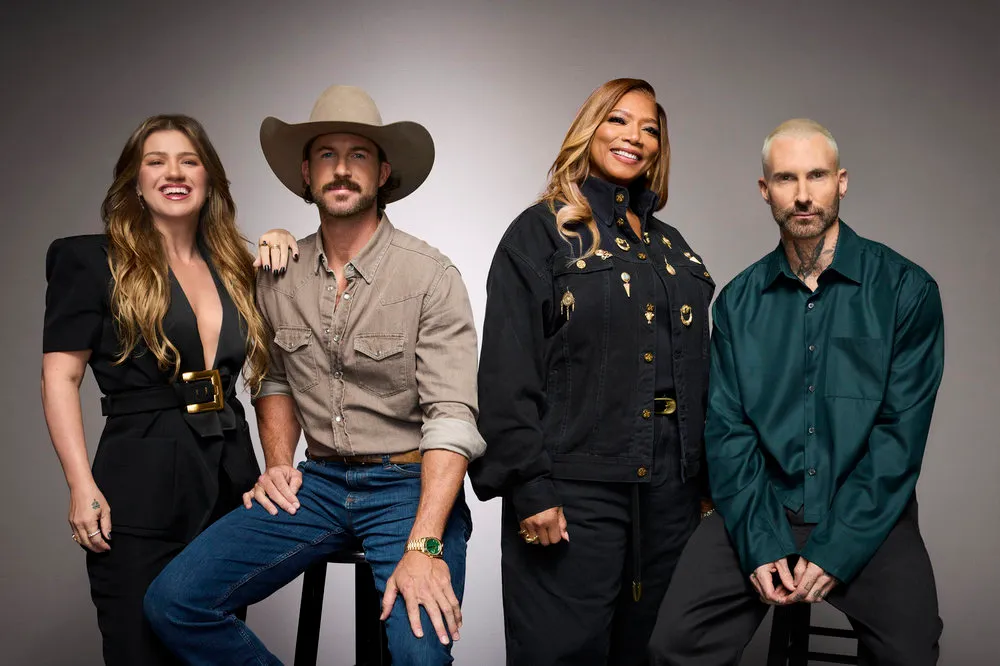
Riley Green has found an entertaining way to prepare for The Voice. Before stepping into the spotlight, the first-time coach enjoys giving Adam Levine a hard time. But behind the playful rivalry is a much more serious challenge, and Green is discovering that being responsible for another singer’s future brings a different kind of pressure.
With Team Riley preparing to perform during the second half of Season 30’s Y2K-themed Live Shows on November 16, the country star is approaching an important moment in his debut season as a coach.
For weeks, Green has helped determine which artists deserve to advance. Now, as the competition enters its live voting stages, the audience becomes an increasingly important part of that decision.
And Green has already revealed something about his coaching philosophy that could prove particularly valuable once the television cameras stop rolling.
Rather than encouraging contestants to wait until their music is perfect, he believes they should share their work, listen to their audiences, and allow listeners to help determine which songs connect.
It is an approach rooted in his own experience as a country artist, and it raises an interesting question about what aspiring singers really need from a coach.
The Voice has always offered contestants the opportunity to work with established performers. But there is a difference between helping someone deliver a memorable television performance and preparing them to build a career after the competition.
Green appears particularly interested in that second challenge.
During the first week of Season 30’s Live Shows on November 9, the 38-year-old singer spoke about his experience joining the coaching panel alongside fellow newcomer Queen Latifah.
The two are competing against returning coaches Kelly Clarkson and Adam Levine, both of whom bring previous experience navigating the show’s demanding format.
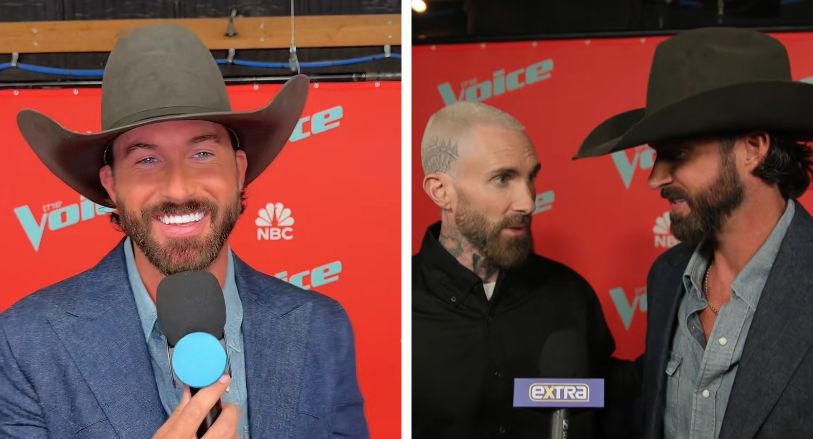
That difference in experience could have created an opportunity for Green to seek advice from his fellow coaches.
Instead, he has discovered that The Voice is not necessarily an environment where competitors are eager to share their strategies.
Green explained that the other coaches had not offered him much guidance, suggesting that their determination to win might explain why.
It was a lighthearted observation, but it also reflected the competitive reality of the programme.
Each coach wants to develop a winning team, and every decision can influence which artists remain in the competition.
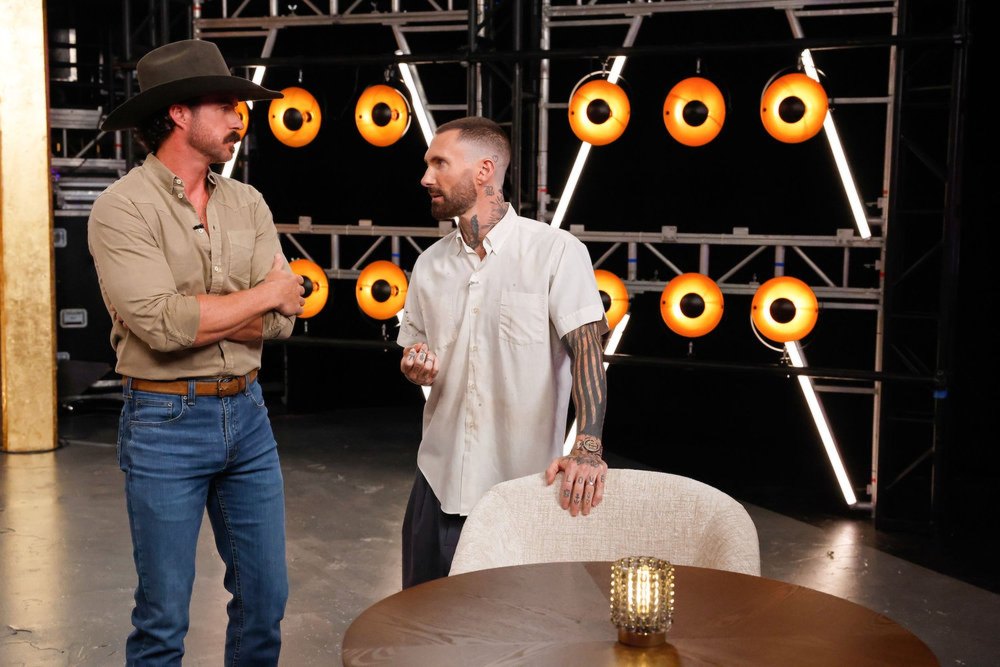
Green’s relationship with Levine has become one of the more entertaining elements of that dynamic.
The country singer revealed that teasing the Maroon 5 frontman has become part of his preparation before each show.
The exchange suggests a comfortable relationship between the two musicians despite their different backgrounds.

Levine built his career primarily in pop and rock as the frontman of Maroon 5, while Green established himself in country music with a style connected to traditional storytelling and contemporary Nashville sounds.
Those differences could make their coaching approaches particularly interesting to compare.
Levine brings years of experience performing for international audiences and navigating mainstream pop success. Green offers a perspective shaped by country music, songwriting, and the relationship between performers and their listeners.
Neither background automatically produces a better coach.
What matters is whether their experience helps contestants develop the skills needed to succeed.
For Green, one of the most rewarding parts of joining The Voice has been spending time with his artists during rehearsals.
He has described getting to know the contestants, working on their performances, and helping them demonstrate the abilities they brought into the competition.
That involvement has also introduced an unfamiliar emotional responsibility.
As a recording artist, Green is accustomed to being judged on his own performances. As a coach, he must watch other people take the stage knowing that he cannot control what happens once they begin singing.
He acknowledged feeling nervous because he wants his team to succeed.
That admission reveals an important distinction between performing and coaching.
A singer can prepare, rehearse, and make decisions about their own delivery. A coach can offer guidance, but ultimately the contestant must execute the performance in front of the audience.
And when live voting becomes involved, even an excellent performance cannot guarantee advancement.
Green’s team now faces that reality as the competition approaches its second Y2K-themed episode.
The November 9 broadcast featured artists from Team Adam and Team Queen, with Queen Latifah’s contestant Lillie Kolich leaving the competition.
On November 16, Team Riley and Team Kelly are scheduled to take their turn.
The Y2K theme introduces an additional challenge because contestants must work with music associated with a particular period rather than simply selecting material without that restriction.
For country singers, that could mean finding a way to make songs from the era feel natural within their own musical identities.
For performers with other influences, the challenge may be demonstrating originality while respecting songs that audiences already recognize.
But Green’s advice suggests that he is thinking beyond any single themed performance.
One of his most revealing comments concerned social media and the role it can play in developing a musical career.
He encouraged contestants to treat online platforms as opportunities to share their art, connect with listeners, and introduce their music to people who might not otherwise discover them.
His perspective is particularly interesting because he does not believe every song needs to be exhaustively evaluated before audiences are allowed to hear it.
Green explained that his own experience taught him important lessons through trial and error.
Rather than keeping unfinished musical ideas entirely private, he has been willing to share songs and observe how listeners respond.
The underlying principle is simple: artists cannot always predict which songs will resonate most strongly with an audience.
A composition that initially seems ordinary to its creator might become meaningful to listeners. Another song that feels especially promising during the writing process may not generate the same response.
That uncertainty makes audience feedback valuable.
It also challenges the assumption that emerging performers should wait until they have a fully developed recording project before beginning to build a following.
For contestants on The Voice, the opportunity is especially relevant.
The programme introduces singers to a national audience, but that attention may not last indefinitely. Once a contestant leaves the competition, maintaining contact with listeners becomes their own responsibility.
Social media offers one way to continue that relationship.
A singer can share acoustic performances, introduce original material, announce local appearances, and give supporters a reason to remain interested between major releases.
Of course, online popularity does not automatically translate into a successful music career.
Building a sustainable audience requires consistent work, strong material, and the ability to turn initial curiosity into lasting engagement.
But Green’s advice addresses an important problem that many television contestants face: how to make the most of an opportunity that may be brief.
It also reveals something about his understanding of success.
Winning The Voice would undoubtedly be an achievement for any member of Team Riley. Yet a contestant who leaves the programme with a clearer musical identity and an engaged audience may still have gained something valuable.
That is why Green’s emphasis on sharing music feels particularly relevant.
He is encouraging artists to think like working musicians rather than treating the television competition as the final destination.
There is also an interesting contrast between his relaxed pre-show behaviour and the responsibility he feels for his team.
The jokes with Levine suggest someone comfortable enough to enjoy the experience, while his comments about rehearsals and nerves reveal that he takes his coaching duties seriously.
My view is that this combination could become one of Green’s strengths as a first-time coach.
He does not need to imitate the approach of more experienced panel members. His value lies in offering contestants practical lessons from his own career while helping them remain confident in their musical identities.
Whether that approach produces the Season 30 winner remains uncertain.
The November 16 performances will offer another opportunity to assess how successfully Green has prepared his artists for the pressure of live television.
And with the semifinals and finale approaching in December, the stakes will only increase.
But even if Team Riley does not ultimately claim the title, Green’s advice about sharing music could remain useful long after the season ends.
After all, winning a singing competition is one moment in an artist’s journey. Building a career requires finding reasons for people to keep listening.
So, as Riley Green prepares to watch his contestants perform, the most important question may not be whether his team can defeat Adam Levine’s.
It may be whether his artists are developing the confidence and identity they will need when The Voice is over.
Do you think Riley Green’s experience as a country singer gives him an advantage as a coach, or will Adam Levine and Kelly Clarkson’s previous experience on The Voice prove more valuable as Season 30 approaches its finale?