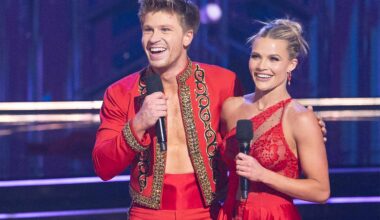
Joe Henley once imagined a future built around basketball courts, not country music stages. Now, at just 19 years old, the Alabama singer has reached the Live Shows on The Voice Season 30, turning a lifelong love of singing into an opportunity he might never have imagined.
What makes Henley’s journey particularly fascinating is how little professional performance experience he had before stepping into the national spotlight. Unlike contestants who spend years performing in bars, building audiences, or pursuing recording contracts, Henley came into the competition with a musical background rooted largely in church, family gatherings, and his grandparents’ truck stop ministry in southern Alabama.
That is a remarkable starting point for someone now competing alongside artists with very different musical experiences. And it raises an interesting question: Could Henley’s lack of professional experience actually be part of what makes him such an intriguing contestant?
Before The Voice entered the picture, Henley had another ambition. Standing 6-foot-5, he played varsity basketball and graduated from Cottage Hill Christian Academy in 2026. His athletic background was serious enough that he considered continuing basketball in college or potentially pursuing opportunities overseas.
For a teenager weighing those possibilities, music could easily have remained something he enjoyed privately. Instead, Henley found himself pursuing a very different kind of competition, one where his height and basketball experience would matter far less than his ability to connect with listeners.
His Blind Audition became an important turning point.
Henley chose Travis Tritt’s “Anymore,” a song that requires more than simply hitting the right notes. Its emotional weight and traditional country character demand a singer who can communicate the story without overwhelming it. For someone whose musical experience had developed outside professional venues, it was a revealing choice.
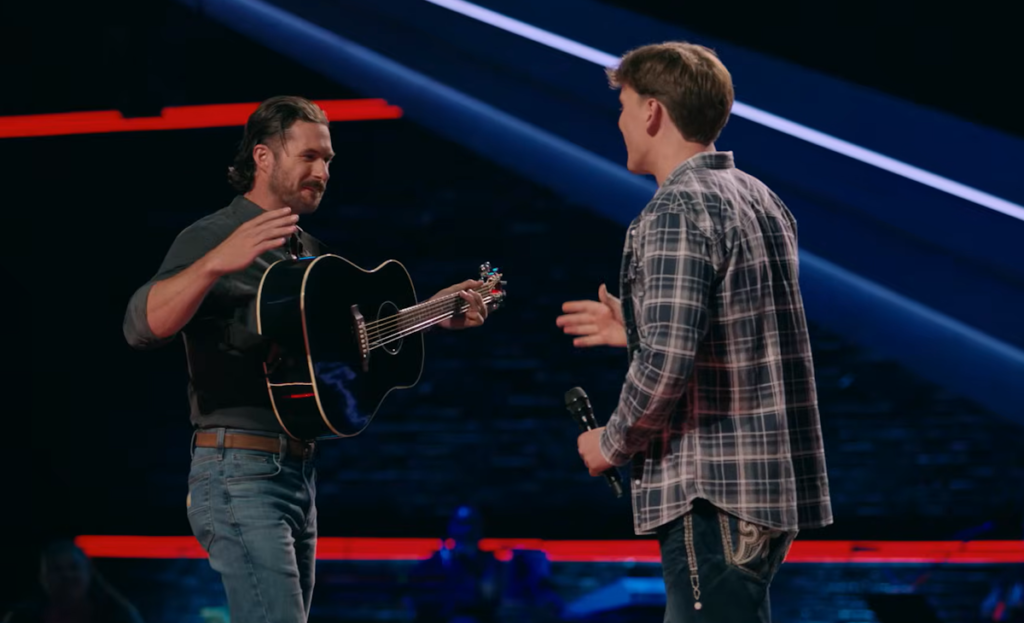
The performance earned chair turns from Kelly Clarkson and Riley Green, giving Henley an immediate decision to make.
Clarkson brought the perspective of a successful singer and an experienced Voice coach. Green, meanwhile, offered a particularly natural connection to Henley’s country music interests. Both coaches saw enough potential in the young Alabama performer to want him on their teams.
Henley ultimately chose Team Riley.

That decision was significant because it placed him with a coach whose own musical identity is closely associated with country storytelling and a traditional sound. For a young singer still developing his artistic direction, that kind of alignment could prove valuable.
But earning a place on a team was only the beginning.
Henley went on to compete in the Battle Rounds and Cut Week, facing the pressure of proving himself beyond his initial audition. These stages present a different challenge from the Blind Auditions. A memorable first impression is no longer enough; contestants must demonstrate that they can continue developing while navigating increasingly difficult decisions.
Green eventually selected Henley as one of his three artists moving forward into the Live Shows.
For a teenager who had never performed a professional gig before joining the competition, that achievement represents a substantial change in circumstances. He was no longer simply a promising singer who had impressed two coaches. He had earned a place among the artists his coach wanted to take into the next major stage.
There is also something interesting about the kind of music Henley continues to choose.
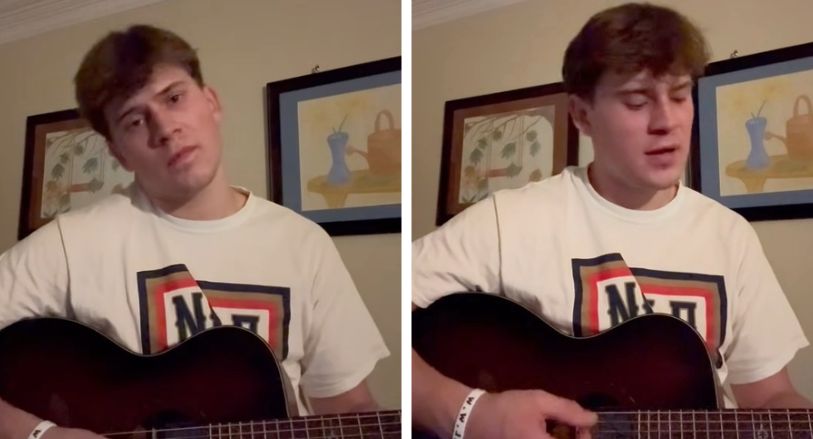
Rather than moving entirely toward contemporary country-pop or elaborate vocal arrangements, he has shown an interest in songs connected to traditional country and Americana songwriting. His recent acoustic performance of Guy Clark’s “Magnolia Wind” offers another example of that direction.
Written by Clark and Shawn Camp, the song was released in 2002 and reflects a storytelling tradition in which emotion comes from the relationship between the melody, the lyrics, and the singer’s delivery.
It is not necessarily the most obvious selection for a young artist hoping to attract a broad audience. Yet that is precisely what makes Henley’s musical direction worth examining.
At a time when television singing competitions often reward dramatic vocal moments, Henley appears interested in a style that leaves considerable room for restraint. His acoustic performances put the emphasis on the song rather than elaborate staging.
That approach carries its own challenges. A stripped-back performance offers fewer distractions, meaning the singer’s phrasing, tone, and interpretation become especially important.

It also gives listeners an opportunity to hear what an artist might sound like outside the controlled environment of a television competition.
For Henley, that distinction could matter as he begins thinking about what a musical career might look like beyond The Voice.
Winning a television competition and establishing a lasting career are not necessarily the same achievement. Contestants may attract attention through a spectacular audition, but sustaining that interest requires a musical identity audiences can recognize.
Henley already has several elements that could help him establish one: his Alabama roots, his background singing in church and family settings, and his apparent affection for traditional country material.
His basketball history adds another unexpected dimension.
There is a compelling contrast between the athletic future he once considered and the musical opportunities now opening before him. Basketball and singing demand very different abilities, but both require preparation, discipline, confidence, and the capacity to perform under pressure.
Henley’s experience in competitive sport may offer some useful preparation for the demands of live television, although succeeding onstage presents challenges that even a seasoned athlete would have to learn.
Perhaps the most intriguing part of his story is that he is still at such an early stage of his musical development.
At 19, Henley has time to experiment with different songs, strengthen his stagecraft, and discover how his voice fits into the wider country music landscape. His current preferences suggest an appreciation for older songwriting traditions, but his long-term artistic direction remains an open question.
And that is where Riley Green’s influence could become particularly important.
A coach can help a contestant make choices that reveal different sides of their ability. For Henley, the challenge may be finding the right balance between preserving the natural country qualities that have attracted attention and demonstrating enough versatility to remain competitive.
There is no guarantee that a traditional country approach will carry him to the final stages of The Voice. Other contestants may bring greater professional experience, different vocal strengths, or performances that connect more immediately with viewers.
Yet Henley’s story offers something beyond the usual competition narrative.
He represents a young performer whose musical ambitions have developed quickly, moving from informal singing environments to a national television stage without the years of professional gigs that many aspiring artists accumulate.
My view is that Henley’s most promising quality may not be any single performance, but the possibility that he is beginning to establish a recognizable musical identity before his professional career has truly started.
Whether that identity ultimately leads to a recording career, regular live performances, or further opportunities remains to be seen.
For now, the former basketball player has already achieved something significant: he has given himself a genuine opportunity to pursue music on a much larger scale.
The next question is whether he can turn that opportunity into lasting success.
Do you think Joe Henley’s traditional country style gives him an advantage on The Voice, or will he need to show a different side of his voice to compete with the strongest singers?