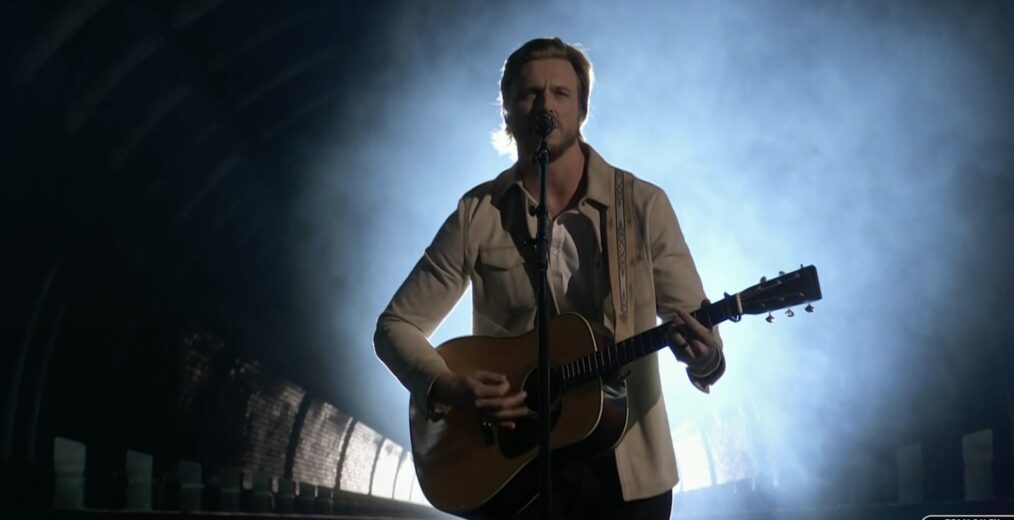
Four coaches wanted Cade Mower during his Blind Audition. Weeks later, the 35-year-old Utah singer was leaving The Voice before the Top 10, despite having started Season 30 as one of its most promising country-influenced performers. What makes his elimination particularly interesting is that Mower had already identified the challenge that could affect his journey: finding the right songs and arrangements for his distinctive voice.
His November 16 elimination marked the end of a journey that began with extraordinary encouragement. A four-chair turn is one of the strongest endorsements a contestant can receive during the Blind Auditions, signalling that every coach sees enough potential to want that artist on their team.
For Mower, that early recognition established considerable expectations. His natural vocal character, emotional approach and preference for straightforward storytelling gave him an identifiable musical personality. Rather than building performances around elaborate vocal runs, he approached songs with an emphasis on communicating their meaning.
That identity would become increasingly important as the competition progressed.

During the Battle Rounds, Mower faced Brayden Howell in a performance of “Wondering Why.” The arrangement had been lowered to accommodate both singers, but Mower later acknowledged that the adjustment did not showcase his strongest vocal range.
It was a revealing admission because it demonstrated how even a relatively small musical decision could affect a contestant’s confidence.
Mower explained that he had struggled mentally during the performance, admitting, “I got in my head.” For a singer who had impressed all four coaches during his audition, the experience represented an uncomfortable reminder that talent alone does not guarantee a successful performance under competitive conditions.
Fortunately, his coach Riley Green continued to believe in him.
Green selected Mower to advance from the Battle Round, giving him another opportunity to demonstrate the qualities that had attracted so much attention during his audition. Mower subsequently secured an automatic place in the Live Shows during Cut Week.
By that stage, the singer had begun describing his upcoming performance as an opportunity for redemption.
His comments before the Live Shows offered an especially interesting insight into his artistic philosophy. Mower acknowledged that he was not a performer who relied on vocal acrobatics and instead wanted to concentrate on delivering songs in a way that suited his natural abilities.
It was a statement of musical self-awareness rather than an admission of limitation.
Some singers build their appeal around extraordinary vocal range and technically demanding arrangements. Others create their strongest moments through phrasing, tone and emotional honesty. Both approaches can produce compelling performances, but they require different material to achieve their full potential.
For Mower, recognising that distinction appeared to be an important part of his development.
That makes his eventual elimination during Y2K Night particularly poignant.
On November 16, Mower performed the Goo Goo Dolls’ “Iris” while competing for a place in the Top 10. The song, originally released in 1998, is one of the band’s most recognisable recordings and has remained a popular choice for artists seeking to deliver an emotionally charged rock ballad.
Its appeal comes partly from the intensity of its lyrics and the gradual emotional build of the arrangement. For a singer with Mower’s emphasis on storytelling, it was understandable material to explore, although performing such a familiar recording also invites comparisons with the original.
Adam Levine praised Mower’s emotional performance, but the positive feedback was not enough to secure his advancement.
When the results were announced, Mower and Team Kelly’s Anna McElroy were eliminated, leaving ten contestants to continue competing for the Season 30 title.
For Mower, the result was undoubtedly disappointing. Yet the most intriguing development came after he had already left the competition.
In an Instagram message thanking supporters for their encouragement, Mower revealed that “Iris” had not been his original choice for Y2K Night. He had wanted to perform Johnny Cash’s interpretation of “Hurt,” a song written by Trent Reznor and originally released by Nine Inch Nails.
According to Mower, his preferred selection was rejected because it was considered inconsistent with the episode’s Y2K theme.
The revelation introduced a fascinating connection between his final performance and the difficulties he had experienced earlier in the season.
During the Battle Rounds, an altered arrangement had left him feeling that he could not demonstrate his strongest vocal qualities. During the Live Shows, his preferred song was not approved, meaning audiences never had the opportunity to hear the interpretation he originally envisioned.
Those situations were not identical, and there is no evidence that either decision directly caused his elimination. Nevertheless, both illustrate the importance of artistic fit in a competition where every performance carries significant consequences.
The history of “Hurt” adds another dimension to the story.

Nine Inch Nails released the original recording in 1994, but Johnny Cash’s version appeared in 2002. Cash transformed the industrial rock composition into a stark, deeply personal performance that became one of the defining recordings of his later career.
His interpretation demonstrated how dramatically a song’s meaning and emotional impact can change when performed by an artist with a different voice, perspective and musical identity.
That is precisely what makes the selection so intriguing for Mower.
A stripped-back interpretation of “Hurt” might have allowed him to concentrate on the understated storytelling he had previously identified as his strength. Its emotional weight and relatively restrained approach could have offered an alternative to the soaring rock intensity associated with “Iris.”
Of course, that remains a hypothetical possibility. Nobody can know how Mower would have performed the song on the live stage, how the arrangement would have developed or whether viewers would have responded differently.
It would be unfair to claim that the rejected selection cost him a place in the Top 10.
Still, the situation highlights a broader reality of televised singing competitions. Contestants are not judged solely on their natural abilities. Their performances are shaped by arrangements, song selections, weekly themes and production decisions that can influence how effectively their individual strengths are presented.
Mower’s experience is a particularly clear example because he had spoken openly about understanding his own musical identity.
The fact that he did not reach the Top 10 does not erase the significance of his four-chair audition, the confidence Riley Green showed in him or the progress he made during the competition.
His post-elimination message also suggested that he was choosing gratitude rather than resentment. He thanked the people who supported him, reflected positively on the relationships he had developed and expressed appreciation for the opportunity to return home to his family.
That response may prove important as he considers what comes next.
Reality television offers artists exposure, but the opportunity to develop a sustainable career often depends on what they do after the cameras stop rolling. Mower now has the chance to select material independently, develop his own arrangements and explore the musical direction he believes suits him best.
In my view, the most interesting part of his journey is not the rejected song itself. It is the consistency of his artistic instincts. From the Battle Rounds to his final Instagram message, Mower repeatedly demonstrated an awareness that his strongest performances depend on choosing material that complements his voice.
The Voice audience may never know whether “Hurt” would have changed his competition result. But his journey raises a question worth discussing: when a contestant already knows the kind of music that brings out their best, should that artistic instinct carry more weight than the demands of a themed television episode?