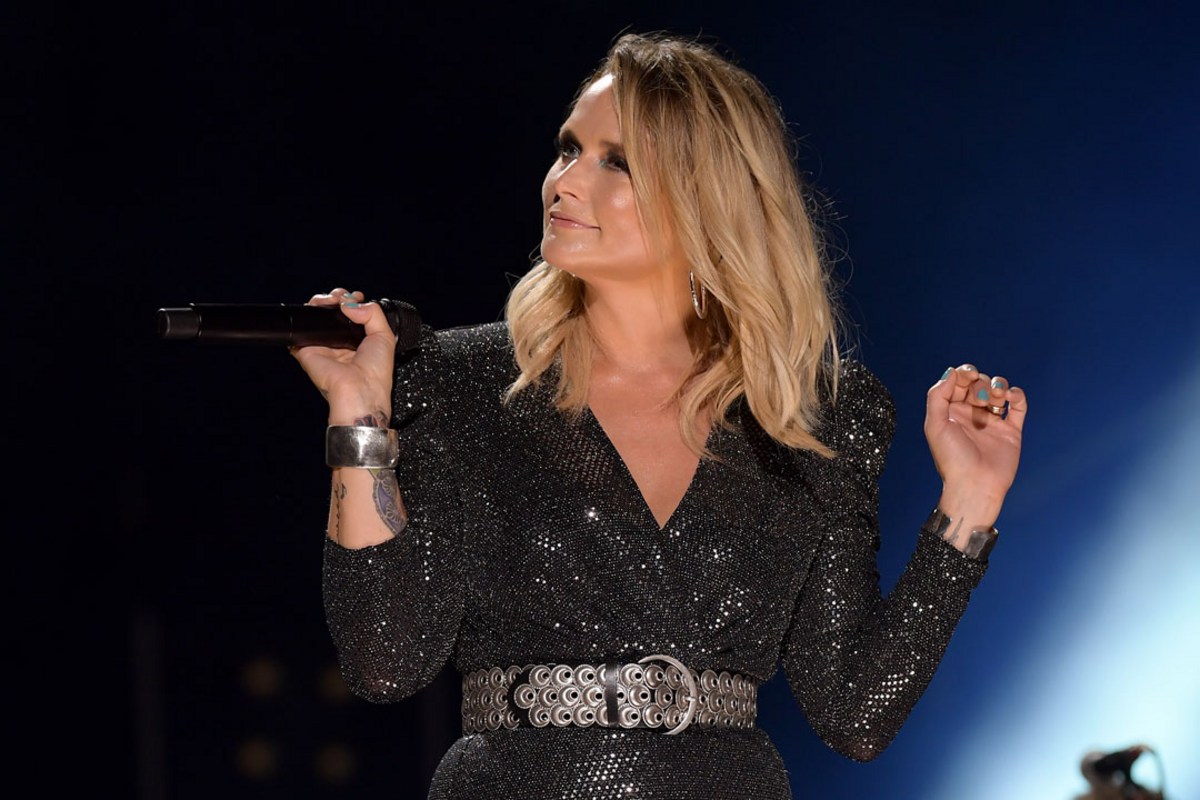
For years, Miranda Lambert and Kacey Musgraves were two of country music’s most celebrated stars who couldn’t seem to find common ground. But at the 2026 CMA Awards, something remarkable happened. The women who once had a genuine falling-out over a hit country song stood side by side, laughed about their complicated history, and ended their performance with a hug that carried far more meaning than the lyrics themselves.
Their November 18 performance of “Horses and Divorces” at Nashville’s Bridgestone Arena was entertaining, playful, and occasionally interrupted by television censorship. Yet the real story wasn’t the words ABC decided viewers shouldn’t hear. It was how two successful artists managed to turn a disagreement that had lasted for years into a musical collaboration built around their shared experiences.
And perhaps the most surprising detail is that the reconciliation began with something as ordinary as an Instagram video of a horse.
Musgraves had been watching a clip of Lambert riding one of her horses when an unexpected thought occurred to her. Despite their differences, the two singers had something in common beyond country music. Both loved horses, and both had experienced divorce.
The phrase “Horses and Divorces” immediately struck Musgraves as the foundation for a song. But writing about those similarities was one thing. Convincing someone she hadn’t been friendly with for years to record it with her was an entirely different challenge.
That meant reaching out to Lambert and acknowledging a complicated history neither woman had publicly discussed in much detail.

The tension between them reportedly dated back to “Mama’s Broken Heart,” Lambert’s 2011 hit that Musgraves co-wrote with Brandy Clark and Shane McAnally. Musgraves had originally intended to record the song herself before it ultimately became associated with Lambert.
The recording was a major success, reaching the Top 10 on Billboard’s Country Airplay chart and becoming one of Lambert’s most recognisable songs.
But behind that success was a disagreement that apparently affected the relationship between the two artists for years.
In April 2026, Musgraves openly acknowledged the feud, describing it as “grass-fed, grade A” beef. The humorous description made clear that the disagreement had been genuine, even if she could now discuss it with a sense of perspective.
She also confirmed that their new collaboration reflected a real change in their relationship rather than an invented storyline designed to attract attention.
“We’ve come together after years of really, honestly, not being friends,” Musgraves explained.
That admission gave “Horses and Divorces” an unusual authenticity. Unlike many duets that bring together artists simply because their voices complement each other, this song was rooted in the performers’ actual history.
Its humour came from acknowledging that two people who once struggled to get along could eventually recognise their similarities.
And the lyrics made no attempt to pretend the past hadn’t happened.
During their CMA performance, Musgraves acknowledged having said things about Lambert, while Lambert responded by admitting that she had participated in the criticism too.

The exchange was delivered with a playful tone, transforming what might once have been a source of resentment into something the singers could laugh about together.
ABC muted part of Lambert’s response because of explicit language. Another interruption came during a lyric referencing their mutual admiration for Willie Nelson.
Those brief moments of silence became noticeable features of the broadcast, but they also highlighted how unusual the performance was for a major televised country music awards ceremony.
Rather than presenting a carefully polished story of friendship, the song allowed the women to acknowledge their disagreements with humour and some deliberately unfiltered language.
That approach arguably made the collaboration more compelling.
For longtime fans familiar with their history, hearing both artists sing about their past tension was a reminder that relationships within the music industry can be complicated, even between people who share similar artistic backgrounds.
Lambert and Musgraves have each built careers around distinctive songwriting, strong musical identities, and a willingness to explore subjects that don’t always fit neatly into conventional country music expectations.
Yet their similarities had not prevented them from experiencing a personal disagreement.
The new collaboration suggested that those same similarities could eventually help them reconnect.
There is also something significant about the fact that Musgraves initiated the reunion.
After seeing Lambert’s Instagram video, she recognised the potential for a song that could address their history without turning the reconciliation into an overly serious public declaration.
Instead of arranging a formal conversation about their differences, she approached Lambert with a creative idea.
The result was a track that acknowledged the awkwardness of their past while celebrating the possibility of moving beyond it.
For Lambert, agreeing to participate meant embracing a song that openly referenced a disagreement associated with one of her biggest hits.
For Musgraves, it meant revisiting a chapter of her career that had remained unresolved for years.
Neither artist needed the collaboration to establish her credibility. Both already had substantial careers, devoted audiences, and major industry recognition.
That independence made their decision to work together particularly interesting.
“Horses and Divorces” appeared on Musgraves’ album Middle of Nowhere and subsequently earned a nomination for Musical Event of the Year at the 2026 CMA Awards.
The award ultimately went to “McArthur,” a collaboration featuring HARDY, Eric Church, Morgan Wallen, and Tim McGraw.

Although Lambert and Musgraves did not win the category, their performance offered something an awards trophy cannot necessarily capture: a public demonstration of two artists finding common ground after years of distance.
The moment that perhaps best illustrated that change came at the end of the duet.
After sharing the stage and singing about their past, the two women embraced.
For viewers who knew the background, the hug carried an obvious symbolic significance. It was a visible contrast to the years when a collaboration between the singers might have seemed unlikely.
Some viewers responded enthusiastically to the pairing, while others found the moment unexpectedly emotional.
Those reactions reflected an important aspect of the performance. The entertainment value came not only from the music, but from knowing that the relationship behind it had genuinely changed.
Country music has always placed considerable importance on storytelling, particularly songs about heartbreak, regret, forgiveness, and personal growth.
What made this duet different was that the performers were telling a story they had experienced together.
Their shared experiences with divorce provided the song’s central joke, but the underlying message extended beyond romantic relationships.
It suggested that even long-standing disagreements can look different with time, maturity, and a willingness to reconsider another person’s perspective.
That doesn’t mean every past conflict disappears simply because two people share a stage. The full details of their private reconciliation remain their own.

But Musgraves’ public acknowledgement of their history, combined with Lambert’s participation in the song, provides a meaningful indication that both were comfortable moving forward.
In my view, that is what made the performance more memorable than the censorship surrounding it.
The muted lyrics may have created an amusing television moment, but the real achievement was turning an uncomfortable chapter of their careers into something creative, funny, and unexpectedly warm.
And the collaboration raises an intriguing possibility for the future.
Both singers have distinctive musical approaches, and their willingness to record together suggests there could be opportunities for further creative work.
Nothing has been confirmed about additional collaborations, but “Horses and Divorces” demonstrates that their musical chemistry can produce something audiences find compelling.
For now, the performance stands as a reminder that some of country music’s most interesting stories happen between the songs, not just inside them.
Miranda Lambert and Kacey Musgraves spent years on opposite sides of a disagreement. At the 2026 CMA Awards, they stood together and turned that history into entertainment.
But what do you think? Was their reunion one of the most meaningful moments of the ceremony, or would you rather see the two stars take their renewed friendship even further with a full collaborative album?