For years, earning a Golden Ticket on American Idol meant taking the next step toward Hollywood Week. But when Season 25 arrives in February 2027, contestants will face a dramatically different journey, and one of the biggest changes could completely reshape who gets a chance to become the next American Idol.
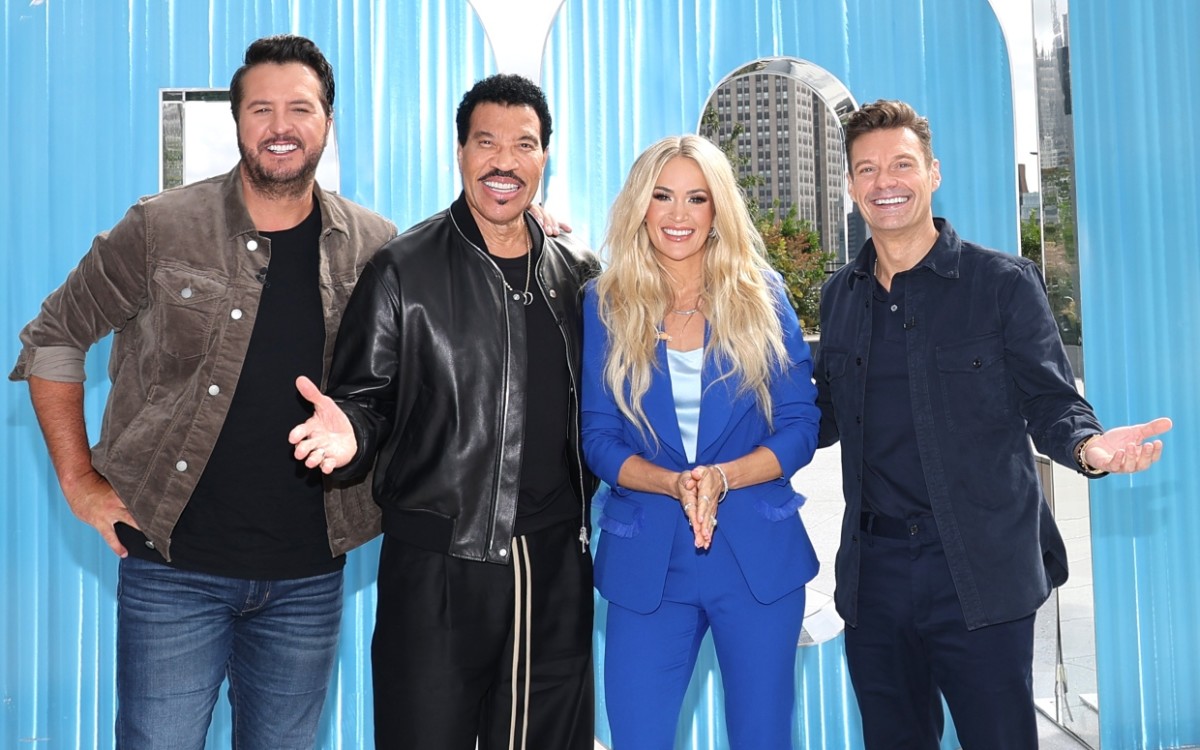
The competition is eliminating Hollywood Week, sending its selected singers toward America’s vote much earlier than before. And while that change puts enormous pressure on judges Luke Bryan, Lionel Richie, and Carrie Underwood, it also introduces a fascinating opportunity for viewers: the chance to rescue a contestant who initially failed to earn a Golden Ticket.
Three singers who were unsuccessful in securing that coveted ticket will compete for an additional opportunity through a social media vote. The hopefuls are Joe Fraone, 23, from North Easton, Massachusetts; Vin Zeal, 26, from Houston, Texas; and Oriyah Derrickson, 25, from Pendleton, Oregon.
Only one will receive the opportunity to join the Top 25.
That decision creates one of the most intriguing questions surrounding the upcoming season. Could America’s choice reveal something the judges overlooked during the auditions?
American Idol has always relied on a delicate balance between professional judgment and public opinion. The judges identify promising performers, offer feedback, and help shape the competition, but viewers ultimately play a decisive role in determining which contestants advance.
Season 25 appears designed to bring those two forces into direct contact much sooner.

Previously, Hollywood Week provided contestants with an additional opportunity to demonstrate their abilities after their initial auditions. Singers could face demanding performance situations, receive further feedback, and reveal qualities that might not have been apparent during their first appearance.
Removing that stage changes the significance of the audition process.
A contestant who delivers an impressive first performance may benefit from making an immediate impact. Another singer who might have developed considerably through additional rounds will no longer have Hollywood Week as an opportunity to demonstrate that growth.
That distinction matters because the ability to impress during an audition is not necessarily identical to the ability to sustain a successful run through a televised singing competition.
Some performers arrive with years of stage experience and a clearly established musical identity. Others possess remarkable natural ability but need time to develop confidence, experiment with arrangements, or discover which songs best suit their voices.
Hollywood Week traditionally gave the competition another setting in which to evaluate those differences.
Without it, the judges must make significant decisions using a more compressed selection process.
Luke Bryan acknowledged that challenge while discussing the changes during the 2026 CMA Awards. He explained that the judges had already completed auditions and selected the singers who would make up the Top 25.

“When we are done with the audition process, the first time we leave the auditions, America will have the Top 25, and will start voting immediately,” Bryan said.
He described the selection process as “stressful,” reflecting the increased importance of decisions that previously could have been informed by additional competitive performances.
Nevertheless, Bryan also expressed confidence in the contestants selected for the upcoming season, saying the judges were “really, really happy” with their Top 25.
That confidence will soon face its most important test when viewers begin evaluating the singers for themselves.
And the social media vote could make the relationship between judges and audiences particularly interesting.
Fraone, Zeal, and Derrickson have already experienced the disappointment of missing out on a Golden Ticket. Under the new arrangement, however, their journeys are not necessarily finished.
Instead, they have an unusual opportunity to build support directly among viewers.
The significance goes beyond simply offering another contestant a place in the competition. It introduces a second route into the Top 25, one determined by public preference rather than the original audition decision.
For aspiring artists, that distinction could be important.
A performer who fails to connect with the judges during a single audition might still appeal strongly to viewers. Musical taste is subjective, and audiences do not always respond to the same qualities that professional performers or industry veterans prioritize.
One listener might value technical precision and vocal range. Another might be drawn to an unusual tone, emotional authenticity, or a distinctive interpretation of a familiar song.
Neither perspective automatically guarantees that a singer will succeed.

But allowing viewers to select one additional contestant creates an opportunity to test whether public enthusiasm can identify potential that the original audition process did not reward.
There is also an interesting strategic dimension to the vote.
Fraone, Zeal, and Derrickson will not simply be competing against one another as singers. Their ability to attract attention and encourage public participation could influence which of them receives another chance.
That raises a broader question about modern music competitions: How much should an artist’s ability to connect with an audience outside a traditional performance setting matter?
For contemporary recording artists, audience engagement can be a meaningful part of building a career. Social media allows musicians to introduce themselves, share performances, and establish relationships with listeners without relying exclusively on conventional industry gatekeepers.
American Idol’s new voting opportunity reflects that reality, even though the outcome of this particular contest remains unknown.
The wider Season 25 format reinforces the emphasis on reaching audiences more quickly.
Showrunner Megan Michaels Wolflick explained that the auditions and live shows are central to the programme’s appeal. Hollywood Week, she indicated, had largely served as a means of narrowing the field before public voting began.
By removing that intermediate stage, producers are placing greater emphasis on the parts of the competition where viewers first discover singers and then help determine their futures.
The upcoming season will feature three audition episodes before the Top 25 travel to Hawaii for two episodes. The competition will then move into its live-show phase.
Production is also shifting from Hollywood to the Atlanta, Georgia, area, adding another significant change to the show’s established traditions.
Even one of American Idol’s most recognizable phrases is being replaced.

For generations of contestants, hearing “You’re going to Hollywood!” represented a defining moment. It signaled that their audition had earned them a place in the next major stage of the competition.
Bryan joked that the new version would be “You’re going through to America’s vote.”
Although the change may sound like a small adjustment to the show’s vocabulary, it represents a fundamental difference in what successful contestants are being promised.
They are no longer advancing toward the traditional Hollywood Week experience. Instead, they are moving more directly toward the judgment of the viewing public.
That could make the opening episodes feel more consequential for both performers and audiences.
Viewers will have less time to observe contestants progressing through multiple preliminary stages before being asked to support them. Singers, meanwhile, may need to establish memorable identities quickly enough to stand out in a crowded field.
The result could be a competition that rewards immediate connection more heavily than previous formats.
Whether that produces stronger finalists remains to be seen.
In my view, the most exciting element of Season 25 is the opportunity for the public to challenge an early audition decision. The social media wildcard introduces an unpredictable variable into a process that might otherwise become more dependent on the judges’ initial assessments.
Imagine the significance if the contestant selected through public voting eventually outperformed several singers who received Golden Tickets. Such an outcome would not automatically prove that the judges made a mistake, but it would demonstrate how differently audiences and industry professionals can assess musical potential.
Of course, the opposite outcome is equally possible. The wildcard contestant could struggle against singers who impressed the judges from the beginning.
Either scenario would offer an interesting test of the new format.
American Idol’s 25th season is therefore about more than removing a familiar round or changing production locations. It is experimenting with how quickly viewers should become involved in choosing the next generation of singing talent.
The judges have already made their selections. Soon, audiences will have the opportunity to make one of their own.
So who deserves that additional chance: Joe Fraone, Vin Zeal, or Oriyah Derrickson? And could the singer America chooses ultimately become the biggest surprise of Season 25?