From the very first notes, the audience was reminded of what Neil Diamond had always understood: songs are not just melodies. They are memory, they are love, they are grief. On stage, the music was reimagined not as a jukebox of greatest hits but as a journey — one that threaded his Brooklyn beginnings through the glittering highs of fame, the wreckage of failed relationships, the weight of loneliness, and the redemption of finding peace in his art.
Diamond, though absent from the stage, was present in every line. He worked with the creative team to ensure the story did not polish his past into something unrecognizable. Instead, the musical leaned into the cracks, the flaws, the moments where success could not erase sorrow. Audiences expecting the bright chorus of “Sweet Caroline” found it, of course — but they also found “I Am… I Said” aching in its honesty, and “Solitary Man” reframed not as a hit single, but as a diary entry of a man caught between ambition and heartbreak.
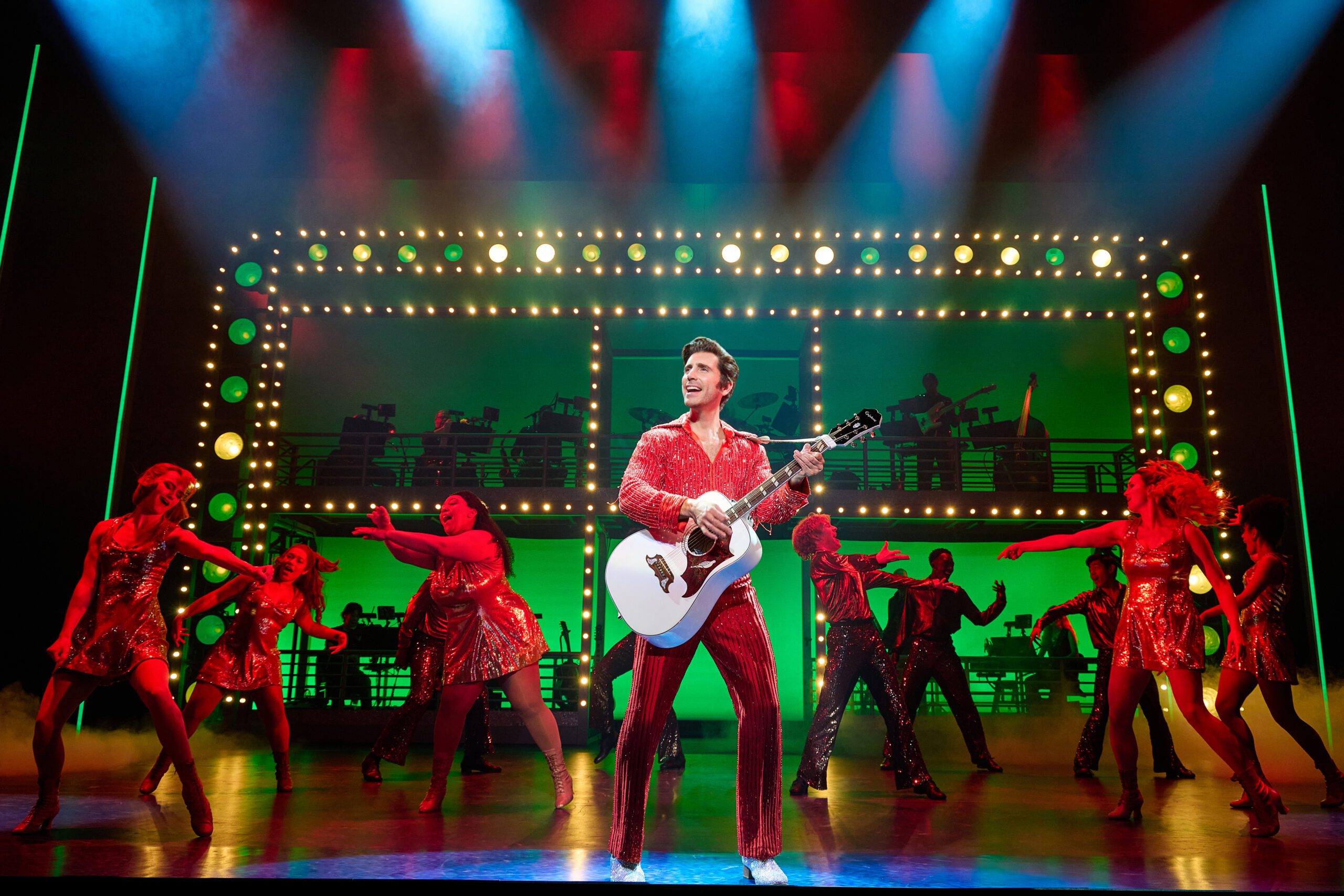
The staging was intimate yet cinematic, pulling spectators into Neil’s childhood home, the smoky folk clubs of his youth, and the vast arenas that later trembled with thousands singing his words back to him. But it also pulled them into quiet rooms, where marriages frayed and self-doubt whispered louder than applause. This balance — the grandeur of legend with the vulnerability of man — was what made the production feel less like theater and more like truth.
What startled many was the way the musical became interactive. When “Sweet Caroline” swelled in Act II, the audience did what audiences always do: they sang. But here, on Broadway, it was not a party trick. It was a ritual. A reminder that Diamond’s songs belonged not just to him, but to the millions who had stitched them into their own lives. One woman in the front row wept openly, mouthing every word. A man in the balcony held his partner’s hand, swaying to the refrain. In that chorus, Diamond’s legacy was alive, breathing, defiant of time.
Critics noted how rare it was for a legend to allow his own life to be dramatized while still alive to see it. But Neil Diamond had always lived between paradoxes — private yet public, vulnerable yet strong, humble yet iconic. By helping to shape A Beautiful Noise, he gave fans not a polished statue of himself, but a living portrait, one that dared to include shadows.
In many ways, the timing could not have been more poignant. Since announcing his Parkinson’s diagnosis in 2018, Diamond had stepped away from touring, leaving a void for audiences who had long found themselves in his voice. The musical filled that space — not as a substitute, but as a continuation. It allowed Neil’s songs to keep breathing in new voices, new contexts, reminding the world that art outlasts illness, outlasts the artist himself.
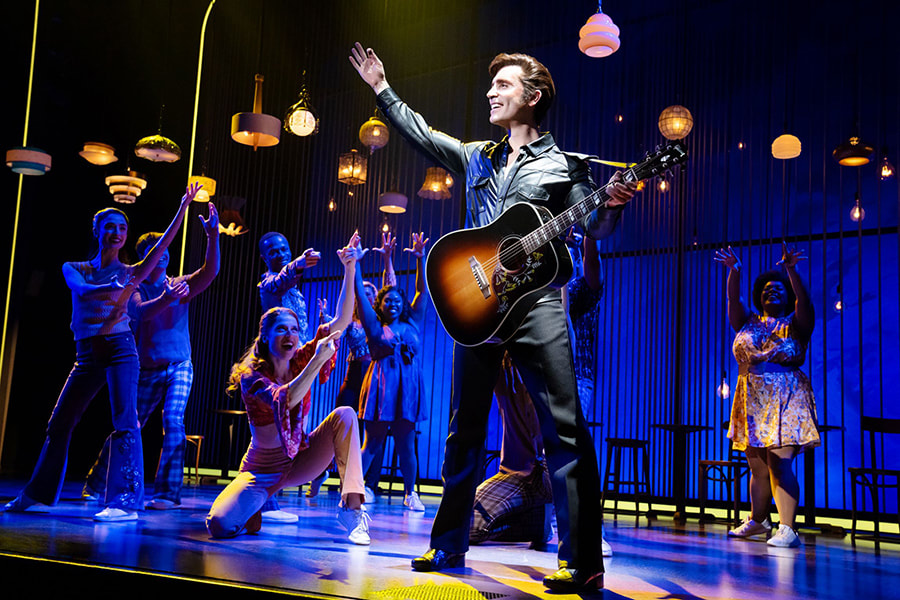
The emotional core of the show came not in its biggest numbers but in its quietest scenes. A young Neil, played with raw intensity, writing songs in solitude. An older Neil, reflective and weary, listening to his own words echo back through decades. The structure itself became a dialogue between past and present, between ambition and reflection, between who Neil was and who he became.
By the time the curtain fell, A Beautiful Noise had done something rare: it had turned an icon into a man again, and in doing so, it had deepened his iconography. Neil Diamond was not simply the legend of stadium anthems and platinum records. He was a son, a lover, a husband, a solitary man who had poured his truth into music so that others might feel less alone.
As the final applause thundered through the theater, some swore they felt Neil’s presence, even if he was not there in person. It was in the way the crowd lingered, reluctant to leave, humming melodies into the night air as they stepped out onto Broadway. It was in the way strangers turned to each other with smiles, still caught in the glow of a song that had been shared.
In the end, A Beautiful Noise was not just a title. It was a statement. The noise of a life fully lived, the noise of mistakes and triumphs, the noise of music that refuses to fade. It was Neil Diamond’s gift back to the world — proof that even when the voice falters, the songs remain eternal.