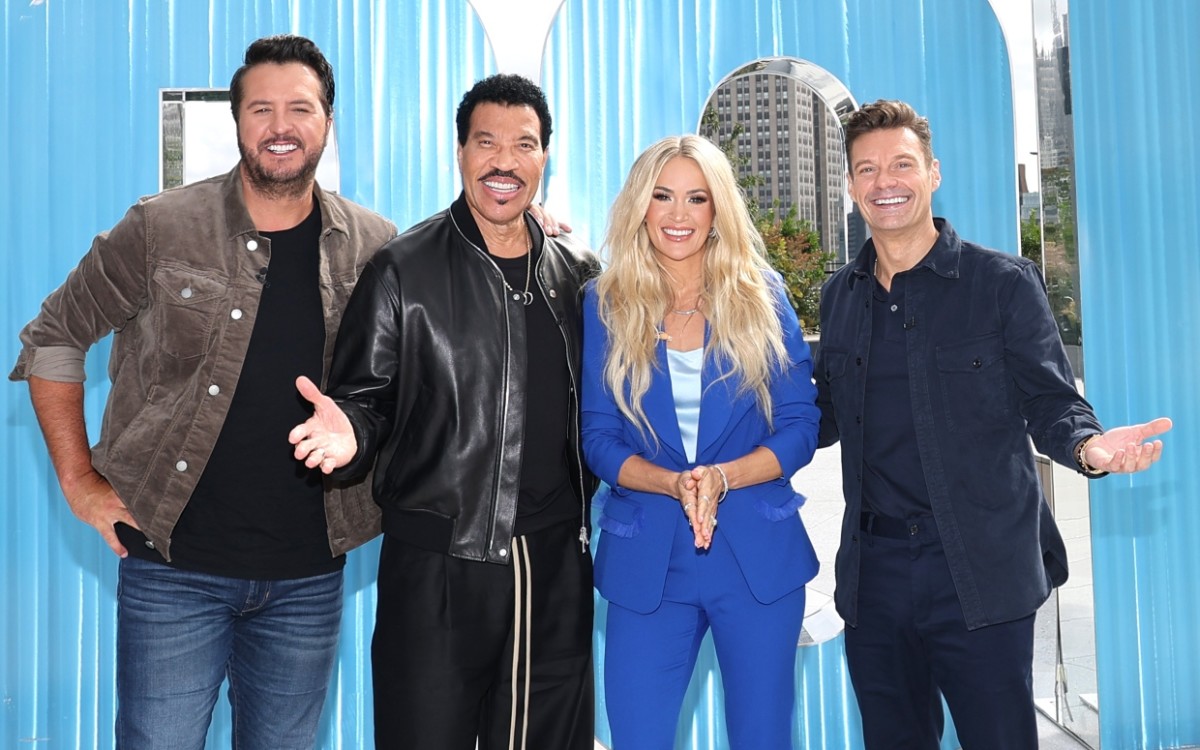
Over the years, several high-profile American Idol judges have not held back when sharing their personal views on former President Donald Trump. From Simon Cowell’s early professional encounters to more recent outspoken comments by Lionel Richie, Katy Perry, and others, the Idol panel has repeatedly described Trump’s style and behavior in strikingly similar terms: aggressive, intimidating, and bullying.
Simon Cowell, the original sharp-tongued judge who helped define the show’s no-nonsense reputation, worked directly with Trump when The Apprentice and American Idol aired in overlapping primetime slots in the mid-2000s. Cowell later reflected on their interactions in interviews, noting that Trump was “very tough” and enjoyed putting people in uncomfortable positions on camera. While Cowell never used the word “bully” explicitly in most public remarks, he described Trump’s approach as deliberately provocative and domineering—traits many viewers would later recognize in his political rallies and debate performances.
Katy Perry, who joined the judging panel in 2018, has been far more direct. During and after the 2016 and 2020 election cycles, Perry used her large social media platform to criticize Trump’s rhetoric and policies. In multiple posts and interviews she referred to his communication style as bullying, particularly toward women, immigrants, and political opponents. “There’s a difference between being strong and being a bully,” Perry said in one widely circulated comment, drawing a clear line between confident leadership and what she saw as mean-spirited intimidation.
Lionel Richie, who has sat alongside Perry since Season 16, has echoed similar sentiments off-camera and in select media appearances. While Richie tends to keep his public persona warm and diplomatic, he has privately and in small-group settings described Trump’s public persona as that of “a classic bully”—someone who uses personal attacks and humiliation to dominate conversations. Richie’s comments gained renewed attention after clips resurfaced in which he urged younger voters to reject “that kind of energy” in leadership.
Even earlier judges weighed in over time. Paula Abdul, known for her kinder judging style, avoided direct political commentary for most of her career but later expressed discomfort with what she called “mean-spirited” public discourse, a phrase many interpreted as a subtle reference to Trump-era politics. Randy Jackson, the long-time “dawg” commentator, has mostly stayed neutral, though he once joked in an interview that Trump’s debating style reminded him of “the toughest auditions we ever had—except nobody gets a golden ticket.”
The recurring theme across these judges’ opinions is a rejection of personal attacks as a leadership tool. They argue that while constructive criticism is essential (a core part of American Idol’s DNA), there is a clear line between honest feedback and deliberate humiliation. In their eyes, Trump repeatedly crosses that line.
Whether these views stem from genuine ideological differences, personal encounters, or simply a distaste for confrontational public behavior, the American Idol judges have consistently framed Donald Trump as embodying the archetype of a bully—one who thrives on putting others down rather than lifting them up.
As Season 23 of American Idol continues to air, fans can’t help but notice the irony: the same panel that routinely tells nervous contestants to “be yourself” and “stand tall” has collectively expressed concern about a public figure who, in their estimation, does exactly the opposite when the spotlight is on him.