The FIFA World Cup 2026 didn’t gently begin—it detonated into emotion.
Before a single match could be played or a single whistle blown, the opening ceremony delivered a moment so powerful that fans inside the stadium were left visibly stunned within seconds. When Andrea Bocelli, David Guetta, and EJAE united on stage for the official anthem “DNA,” the atmosphere shifted instantly from anticipation to something far more intense.
It felt less like an opening ceremony and more like a global event announcing its own arrival.
A Legendary Voice Takes Center Stage
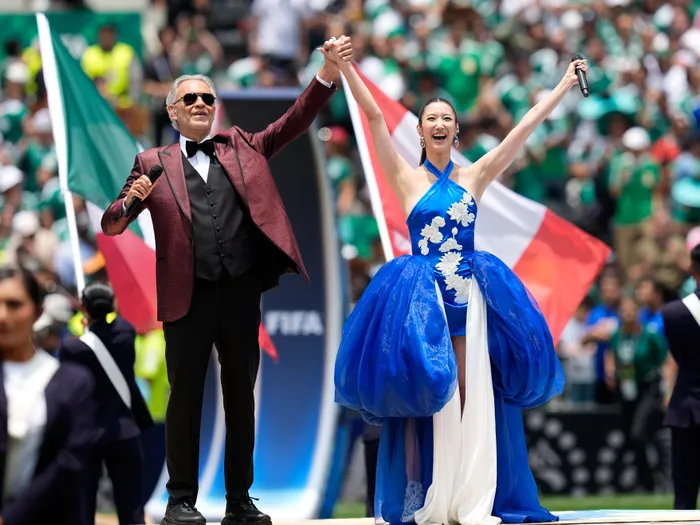
At 70 years old, Andrea Bocelli proved once again why his voice remains one of the most recognisable and emotionally commanding in modern music.
The moment he began to sing, the stadium seemed to change character. Conversations stopped. Movement slowed. Attention locked in. His vocals—controlled, soaring, and unmistakably classical—cut cleanly through the noise of production and crowd energy, creating a sense of stillness in the middle of a massive spectacle.
It wasn’t just performance.
It was presence.
David Guetta Turns the Stadium Into a Pulse

If Bocelli provided the emotion, David Guetta supplied the heartbeat.
The world-renowned DJ and producer built “DNA” with a steady, driving foundation that gradually intensified, turning the stadium floor into a vibrating wave of rhythm and anticipation. Each layer of production added pressure and momentum, pushing the performance toward something cinematic in scale.
The result was a fusion of sound that felt engineered for a global stage—electronic energy meeting orchestral grandeur.
EJAE Bridges the Modern Sound
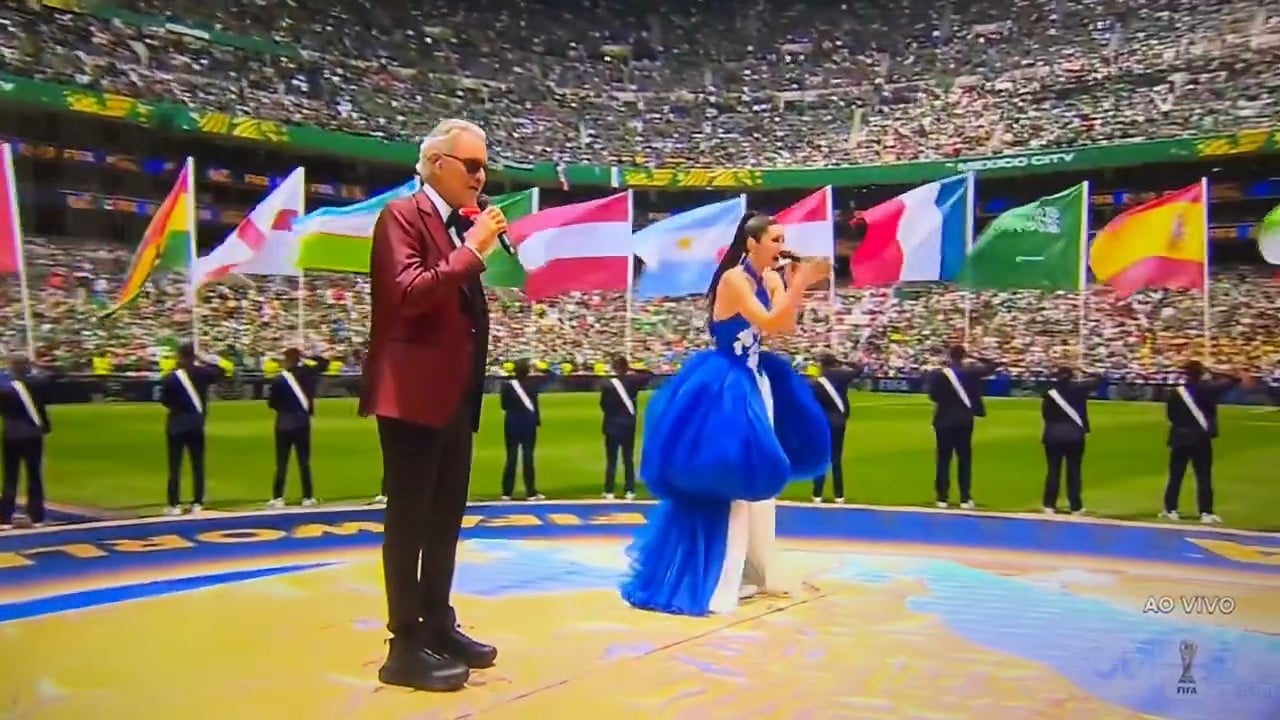
Adding another dimension to the anthem, EJAE brought a contemporary edge that tied the entire performance together.
Her vocals blended seamlessly with both Guetta’s production and Bocelli’s operatic power, creating a contrast that elevated the song into something larger than a standard anthem. It was modern pop intensity layered over classical emotion and stadium-scale production.
As the song built, so did the reaction inside the arena.
A Stadium United in a Single Moment
By the time “DNA” reached its peak, thousands of fans were on their feet. Phones rose into the air. Voices joined instinctively. The performance had moved beyond ceremony and into something closer to collective experience.
One attendee described it simply: the entire stadium felt like it was breathing as one.
Then Bocelli’s voice returned with full force, cutting through the crescendo and locking the moment into place. It was the kind of musical peak that doesn’t just entertain—it overwhelms.
The Internet Reacts Instantly
Within minutes, clips from the performance began circulating worldwide, sparking immediate reactions across social media.
Fans praised the opening as breathtaking, emotional, and cinematic in scale.
Comments poured in describing “goosebumps from start to finish,” while others called it “the perfect way to open a World Cup.” Bocelli’s contribution, in particular, drew widespread admiration, with many stunned that his voice still carries such clarity and power on a stage of this magnitude.
The consensus forming online was simple: this wasn’t just an anthem—it was an event.
A Statement Opening for a Global Tournament
World Cup opening ceremonies are often remembered for spectacle, but “DNA” appears to have added something different: emotional weight.
The combination of Bocelli’s timeless vocals, Guetta’s high-energy production, and EJAE’s modern performance created a layered soundscape that matched the scale of football’s biggest stage.
Even before the first match began, the 2026 World Cup had already delivered a defining moment.
Not through a goal.
Not through a highlight.
But through music that turned a stadium into a shared emotional experience.
And if this opening performance is any indication, the tournament has only just begun making history.