The final days didn’t begin with silence—they began with movement.
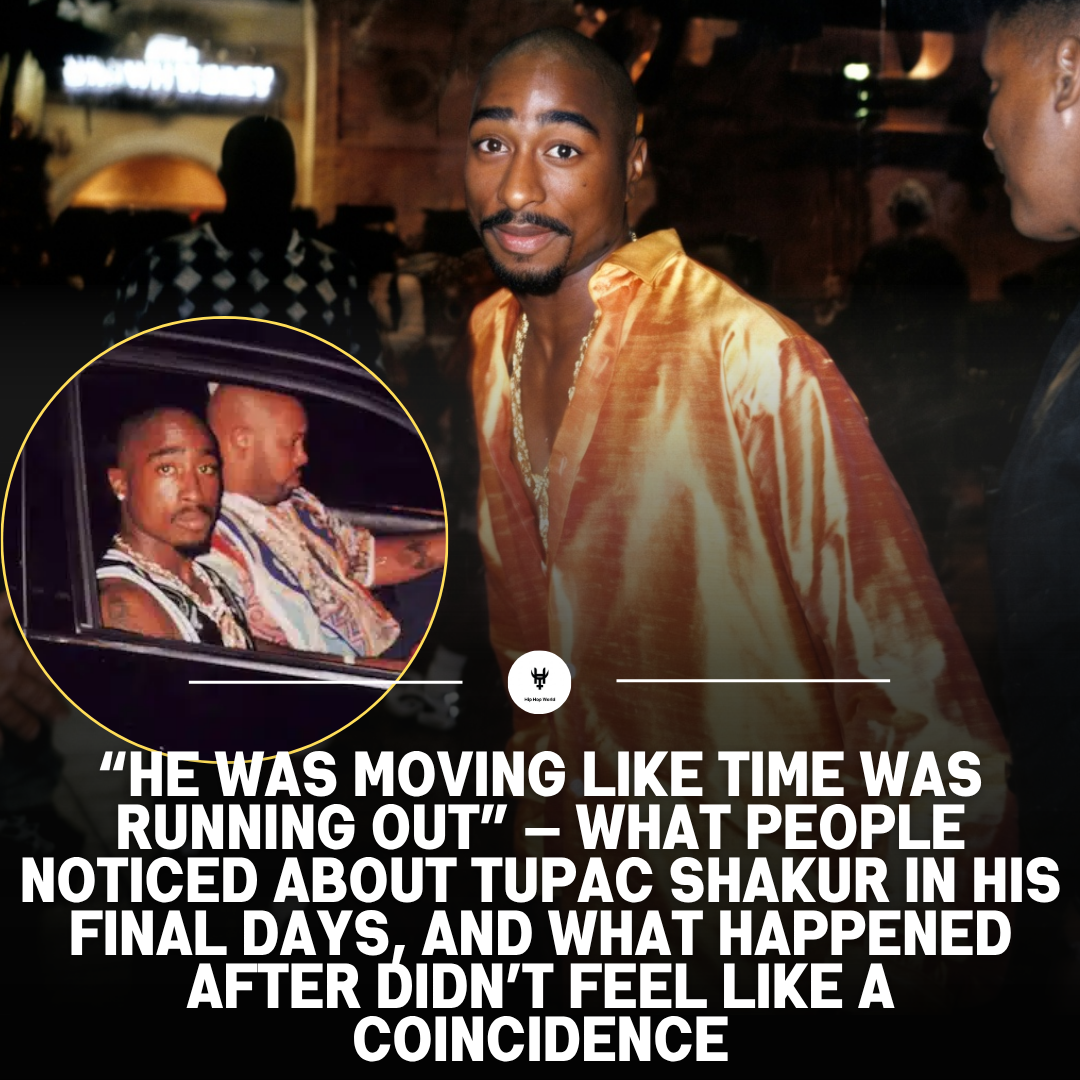
In early September 1996, Tupac Shakur was everywhere at once. Studios, hotel suites, late-night conversations, crowded rooms filled with energy and expectation. At 25, he was living at a pace most couldn’t survive, let alone sustain. But for Tupac, this wasn’t unusual. It was who he had always been—restless, driven, and unwilling to slow down, even when everything around him suggested he should.
There was a sense of urgency in the air, though it wasn’t always spoken out loud.
Pressure Beneath the Momentum
By that point, Tupac had already lived several lives in one. Prison had nearly silenced his voice, but his release under Death Row Records pushed him right back into the spotlight—only this time, the stakes were higher. The success was undeniable, but it came with weight. Financial pressure, contractual expectations, and the constant demand to produce at an elite level.
Reports at the time pointed to significant debt tied to his deal. Whether exact numbers mattered or not, the pressure was real. And Tupac didn’t respond by stepping back—he leaned further in.
Work became his answer.
In those final days, he wasn’t easing into anything. He was accelerating.
The Studio as a Battlefield
The studio became his center of gravity.
Not just a workspace, but a place where everything could be turned into something permanent. Frustration, ambition, loyalty, paranoia—he poured it all into his music. Those who were around him during that week described a level of output that felt almost impossible. Track after track, verse after verse, as if he was racing something no one else could see.
There was no hesitation in his delivery. No second-guessing. Every line carried weight, not because it was polished, but because it felt immediate—like it needed to exist right then.
Some of that work would never fully surface. Some would appear years later, fragmented, reassembled, interpreted. But in that moment, it wasn’t about legacy. It was about expression.
And he wasn’t holding anything back.
Las Vegas: Energy and Instability
Las Vegas wasn’t just a location. It matched his state of mind.
Bright, loud, unpredictable. A place where celebration and conflict could exist within the same hour. Tupac moved through it with confidence, surrounded by familiar faces, industry power, and the constant presence of attention. There were moments of laughter, flashes of normalcy—but underneath, tension lingered.
Not everything was resolved.
Conversations carried weight. Interactions weren’t always simple. The environment around him wasn’t built for reflection—it was built for momentum. And Tupac thrived in motion, even when that motion carried risk.
People close to him later described that week as intense in a way that felt different. Not necessarily chaotic, but heightened. As if everything—his energy, his emotions, his presence—had been turned up.
A Mind Divided Between Future and Reality
Despite everything, Tupac was still looking ahead.
He talked about plans. About evolution. About where he wanted to take his music next. There was ambition in his voice, but also something else—something more complicated. A kind of exhaustion that didn’t slow him down, but existed beneath the surface.
He wasn’t unaware of the pressures around him. He spoke openly about them at times, not always in detail, but enough to show that he understood the weight he was carrying.
That contradiction defined him.
He was building something lasting while navigating something unstable. Creating at full speed while existing in an environment that offered little room for pause.
And he never chose to step away from either.
When Everything Stopped
Then, suddenly, it ended.
The momentum that had defined his life—cut off in an instant. The work, the conversations, the plans—frozen in place. What remained wasn’t just loss, but absence. Questions without answers. Direction without continuation.
The final week became something else entirely.
Not just a timeline, but a lens. A way of understanding who Tupac was at his core. Not through one moment, but through how he lived all of them.
Fast. Fearless. Unfiltered.
What That Final Chapter Revealed
Looking back, those seven days weren’t separate from the rest of his life—they were a concentrated version of it.
Everything was amplified.
The creativity. The pressure. The emotion. The risk.
He didn’t slow down because that wasn’t his nature. He didn’t soften his voice because that wasn’t who he was. Every decision, every movement, every lyric—it all carried the same intensity he had always lived with.
And that’s what makes that final chapter different.
It wasn’t just about how it ended. It was about how much he gave in the time leading up to it.
An Ending That Didn’t Feel Finished
What Tupac left behind wasn’t clean or complete.
There were unfinished tracks. Unresolved tensions. Paths that never had the chance to fully form. But within that, there was also something undeniable—a body of work created with urgency, honesty, and a refusal to be anything less than real.
Even in his final days, he wasn’t retreating.
He was still pushing forward.
The Echo That Remains
Time has a way of softening moments, but not this one.
The final week of Tupac Shakur’s life still feels sharp. Not just because of what happened, but because of how much was happening before it did. It wasn’t quiet. It wasn’t gradual.
It was loud. Fast. Intense.
Exactly like him.
And maybe that’s why it still resonates.
Because in those last seven days, nothing about him changed—he simply became more of who he already was.