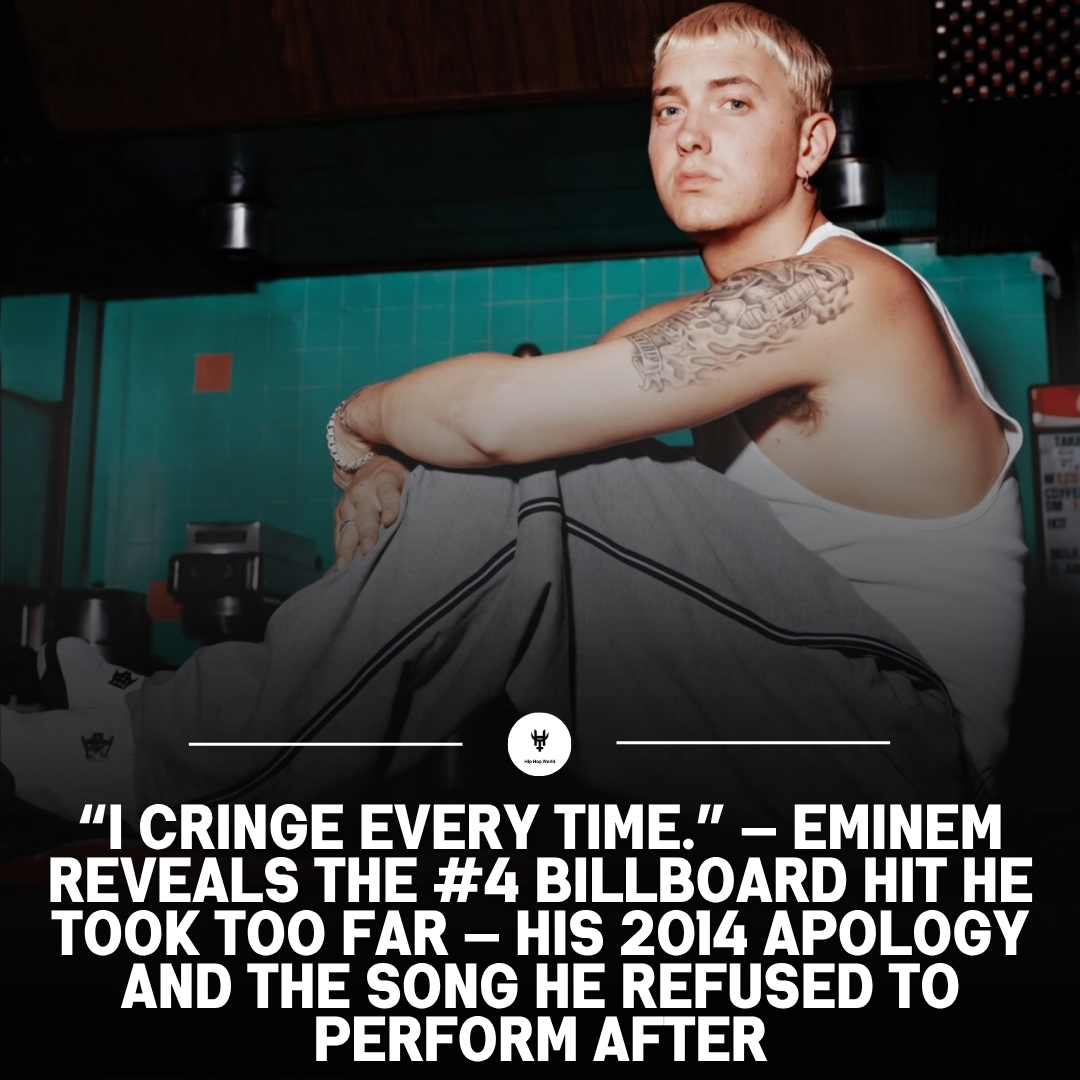
At the height of his rise, Eminem wasn’t known for holding back.
In the early 2000s, he built his identity on saying what others wouldn’t dare, turning controversy into dominance and personal pain into global hits. But among all the records that defined that era, one stood apart—not just for how far it went, but for what it would come to represent years later.
“Cleanin’ Out My Closet” wasn’t just another track.
When The Line Was Crossed Publicly
Released in 2002 as part of The Eminem Show, the song cut deeper than anything he had done before. It wasn’t aimed at rivals or critics—it was directed inward, at his own past. Through it, Eminem laid out his version of childhood, calling out his mother, Debbie Nelson, with a level of anger that felt raw even by his standards.
The accusations were direct. The tone was unforgiving.
And the impact was immediate.
The song climbed the charts, reached No. 4 on the Billboard Hot 100, and quickly became one of the most talked-about records of the year. Its video, filled with haunting imagery and symbolic confrontation, only intensified its reach. For listeners, it felt like unfiltered honesty—pain turned into something powerful.
At the time, nothing about it felt like a mistake.
A Perspective That Didn’t Stay The Same
But time doesn’t leave moments untouched.
As the years passed, Eminem’s life began to shift. Sobriety brought clarity. Fatherhood brought a different kind of responsibility. The anger that once felt justified started to feel heavier, less certain. The story he had told so publicly began to look different when viewed from a distance.
It wasn’t that the past disappeared.
It was that it became more complicated.
He began to recognize that the person he had once portrayed as a single source of pain was also someone shaped by struggles of her own—mental health, addiction, survival. The narrative he had built in that song no longer felt complete.
And that realization didn’t stay private.
The Moment He Said It Out Loud
In 2014, more than a decade after the original track, Eminem addressed it directly.
On “Headlights,” from The Marshall Mathers LP 2, he did something few expected. Instead of revisiting the anger, he confronted it. The tone had shifted completely—no aggression, no accusation, just reflection.
“That song I no longer play at shows and I cringe every time it’s on the radio.”
It wasn’t just a lyric.
It was a decision.
A Silence That Meant More Than The Song
After that moment, “Cleanin’ Out My Closet” quietly disappeared from his live performances.
There was no announcement, no dramatic statement—just absence. A track that once defined a chapter of his career was no longer part of it, even as it continued to live on through radio and fans. For someone whose catalog was built on impact, choosing not to perform one of his biggest songs carried its own weight.
The shift wasn’t about erasing the past.
It was about changing how he stood in relation to it.
Rewriting The Story Without Changing It
The apology extended beyond the music itself.
The video for “Headlights,” directed by Spike Lee, reframed the narrative entirely. Told from Debbie Nelson’s perspective, it moved away from confrontation and into something quieter—missed calls, distance, and time passing without resolution. It didn’t deny what had happened before, but it added something that hadn’t been there.
Understanding.
The conflict that once played out publicly, even spilling into legal battles years earlier, now had a different tone.
Not resolved in a single moment—but no longer fueled the same way.
When Growth Changes The Meaning
What made the shift stand out wasn’t just the apology.
It was the willingness to acknowledge that success and impact didn’t automatically make something right. Eminem didn’t pretend the song hadn’t existed, and he didn’t attempt to rewrite what he felt at the time. Instead, he accepted that perspective can change—and that some expressions, once released, don’t feel the same when revisited.
The track remained what it was.
But his relationship to it didn’t.
The Choice That Stayed Quiet
Today, “Cleanin’ Out My Closet” still plays, still resonates, still holds its place in his discography.
But on stage, it’s missing.
And that absence says more than a performance ever could. It reflects a choice made long after the spotlight of that moment had passed—a choice shaped not by pressure, but by perspective.
For Eminem, the defining part of that story isn’t just what he said in 2002.
It’s what he chose to do with it after.