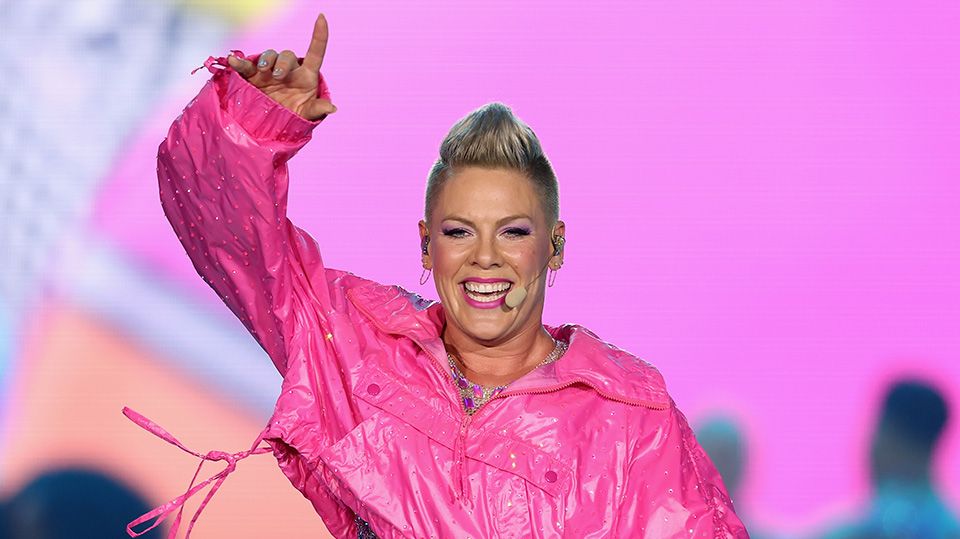
At the peak of her global fame, when most artists would do anything to stay visible, Pink made a choice that stunned the music industry.
She walked away.
Not because ticket sales were slowing down. Not because inspiration had disappeared. And not because she was burned out creatively. Pink stepped away from music for nearly two years for one reason that mattered more to her than stadium tours, chart positions, or celebrity attention:
She wanted to be fully present for her children.
For an artist whose career had been defined by nonstop movement, explosive live performances, and relentless ambition, the decision felt almost unthinkable to fans. Pink had built her reputation as one of the hardest-working performers in modern music — the fearless superstar flying across arenas while delivering powerhouse vocals night after night.
Then suddenly, she traded all of it for ordinary life.

The screaming crowds disappeared. The demanding schedules slowed. Instead of rehearsals and world tours, her days became centered around family routines, motherhood, and quiet moments far removed from the spotlight she had occupied for decades.
And according to Pink, that stillness changed her completely.
When she later reflected on the break, she spoke about motherhood with an honesty that deeply resonated with fans. Rather than describing the time away as a career sacrifice, she framed it as something deeply necessary — a period that grounded her emotionally in ways fame and success never had.
For once, there were no expectations to constantly perform.
No pressure to reinvent herself.
No race to stay relevant.
Just real life.
But stepping away from music also came with emotions she didn’t entirely expect.
Because while she embraced motherhood fully, music had always been tied to her identity. Returning after such a long pause wasn’t as effortless as simply walking back into a recording studio and picking up where she left off.
In fact, Pink admitted the experience left her deeply uncertain.
After being away for so long, she questioned whether she still had something meaningful to say as an artist. The industry had evolved, audiences had changed, and perhaps most importantly, she had changed too.
The woman coming back into music was not the same woman who had left it behind two years earlier.
And strangely enough, that became the most powerful part of her return.
Instead of trying to recreate an older version of herself, Pink leaned into the emotional growth that motherhood had brought into her life. She explained that becoming a parent softened certain parts of her while strengthening others. Her perspective deepened. Her priorities shifted. And the music she eventually created began reflecting a far more layered and vulnerable version of who she had become.
This time, the songs carried different emotional weight.
Fans immediately noticed it.
There was a maturity and honesty in her performances that felt more personal than ever before. Pink wasn’t simply delivering vocals anymore — she was channeling lived experiences, fears, growth, and the emotional complexities that came with stepping away from fame long enough to rediscover herself outside of it.
Part of what made her story so relatable was how candid she remained about the difficult side of the transition.
She openly discussed the fear of being forgotten. The anxiety surrounding whether audiences would still connect with her. And the challenge of balancing two identities that both demanded everything from her: global superstar and devoted mother.
She never pretended it was glamorous.
And that honesty became part of why fans connected with her return on such a deep level.
Because in an entertainment industry obsessed with constant visibility, Pink did something surprisingly rare — she allowed herself to pause.
Not for publicity.
Not for reinvention.
But for life.
When she eventually returned to music, it wasn’t about reclaiming fame or proving she could still dominate the charts. It was about reconnecting with herself creatively after experiencing something that fundamentally changed her as a person.
And in many ways, that made her comeback even more powerful than the success she had before.
Pink’s journey became more than just a story about music. It became a reflection of growth, identity, motherhood, and the courage required to step away from everything the world expects from you.
Because sometimes the strongest comeback isn’t staying in the spotlight without stopping.
Sometimes it’s having the strength to leave — and the confidence to return only when you’re truly ready.