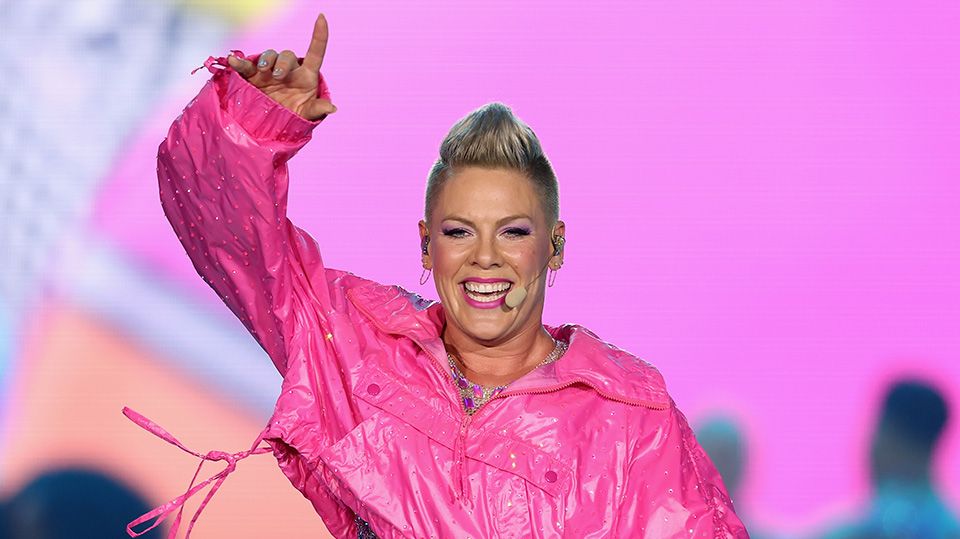
Far from stadium lights, flying rigs, and roaring crowds, Pink has built a second life that feels almost unrecognizable from her global pop persona. And at the center of it all is a quiet, sprawling world she sums up in a single line: “I farm to live.”
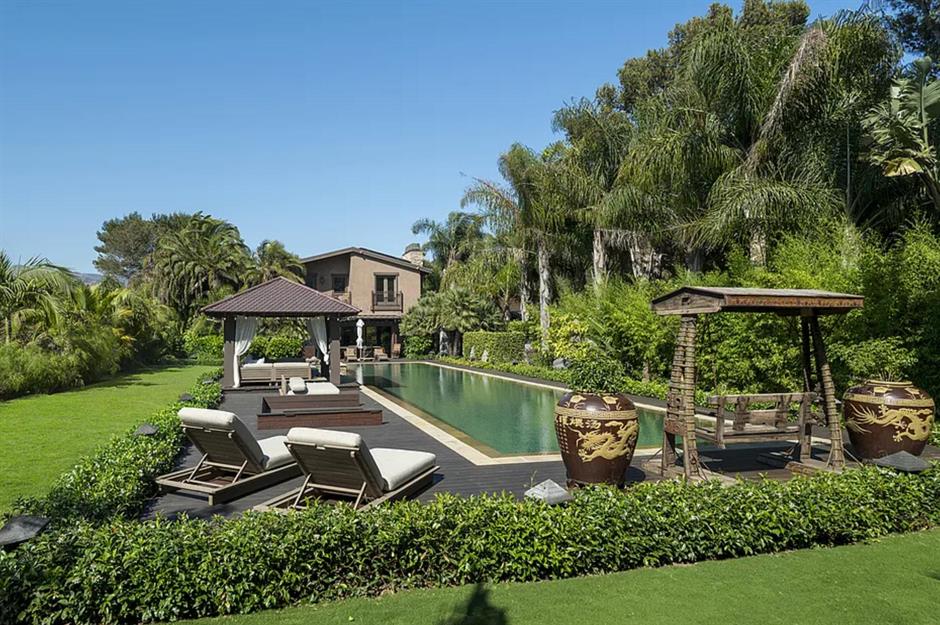
Hidden deep in California’s Santa Ynez Valley, her 200-acre estate is not a celebrity showpiece. It is a working agricultural sanctuary — part vineyard, part farm, and part personal reset button from a life lived in constant motion.
A Sanctuary Built Far From the Spotlight
While most fans know Pink for high-flying arena performances and emotionally charged pop anthems, life in Santa Ynez moves at an entirely different rhythm.
Here, the schedule isn’t built around tour dates or award shows — it’s dictated by soil conditions, pruning cycles, and harvest seasons. Spread across rolling hills, the property includes 25 acres of carefully cultivated organic vines, intentionally tucked away from public view.
It’s designed for privacy, patience, and process — not publicity.
The Real Work Behind “Two Wolves”
At the heart of the estate is her wine label, Two Wolves, a project that stands apart from typical celebrity alcohol ventures. Rather than lending her name to a product, Pink reportedly immersed herself in the craft for years before releasing anything at all.
Her education in viticulture included training connected to University of California, Davis and the Wine & Spirit Education Trust, signaling a serious commitment to understanding winemaking from the ground up.
The vineyards themselves are split into distinct sections, including the original plantings and a later expansion known as the Right Left Vineyard. Instead of chasing mainstream commercial trends, the focus remains on expressive, resilient varietals such as Cabernet Franc, Petit Verdot, and Graciano — grapes chosen for structure, depth, and adaptability to the region.
A Winery Run With Hands-On Precision
Unlike many celebrity-backed brands, Two Wolves operates more like a small-scale craft winery than a marketing extension of fame.
Pink works closely with winemaker Alison Thomson and a largely women-led team overseeing every stage of production — from pruning and canopy management to harvest and sorting. Each season, dozens of tons of grapes are hand-processed with an emphasis on quality over volume.
Production remains intentionally limited, creating small batches that prioritize character and restraint rather than mass distribution.
From Global Stages to Grounded Living
Beyond the vines, the estate functions as a regenerative farm, supplying food and reinforcing a lifestyle rooted in self-sufficiency. For Pink, physical work on the land has become a form of grounding — a contrast to the intensity of global touring.
In interviews and features, she has described how time outdoors shifts her perspective, replacing tour calendars with natural cycles and seasons. It’s a slower rhythm that offers clarity far removed from entertainment industry demands.
At the center of the property is what insiders describe as a “5,000-gallon secret” — a controlled fermentation and aging space where small-batch wines are carefully developed. It represents the quiet engine behind the entire operation, where scale is deliberately restrained and craftsmanship takes priority.
The name “Two Wolves,” inspired by a well-known parable about inner duality, mirrors this balance in Pink’s life: one side defined by global fame and performance, the other rooted in stillness, land, and reflection.
A Life Captured Between Two Worlds
This dual existence has been glimpsed in the documentary Pink: All I Know So Far, directed by Michael Gracey, which contrasts her high-intensity world tours with quiet mornings spent tending vines.
The contrast is stark — one world filled with production, movement, and spectacle; the other defined by silence, patience, and growth.
More Than an Escape — A Foundation
For Pink, the Santa Ynez estate is not a retreat from fame. It is something more permanent and personal: a foundation.
It represents a version of success measured not in sold-out arenas or chart positions, but in harvests, seasons, and the slow work of building something that lasts beyond applause.
In a career defined by motion, this is where she stands still — and lets something else grow.
Because for her, farming isn’t an escape from life.
It is how she lives it.