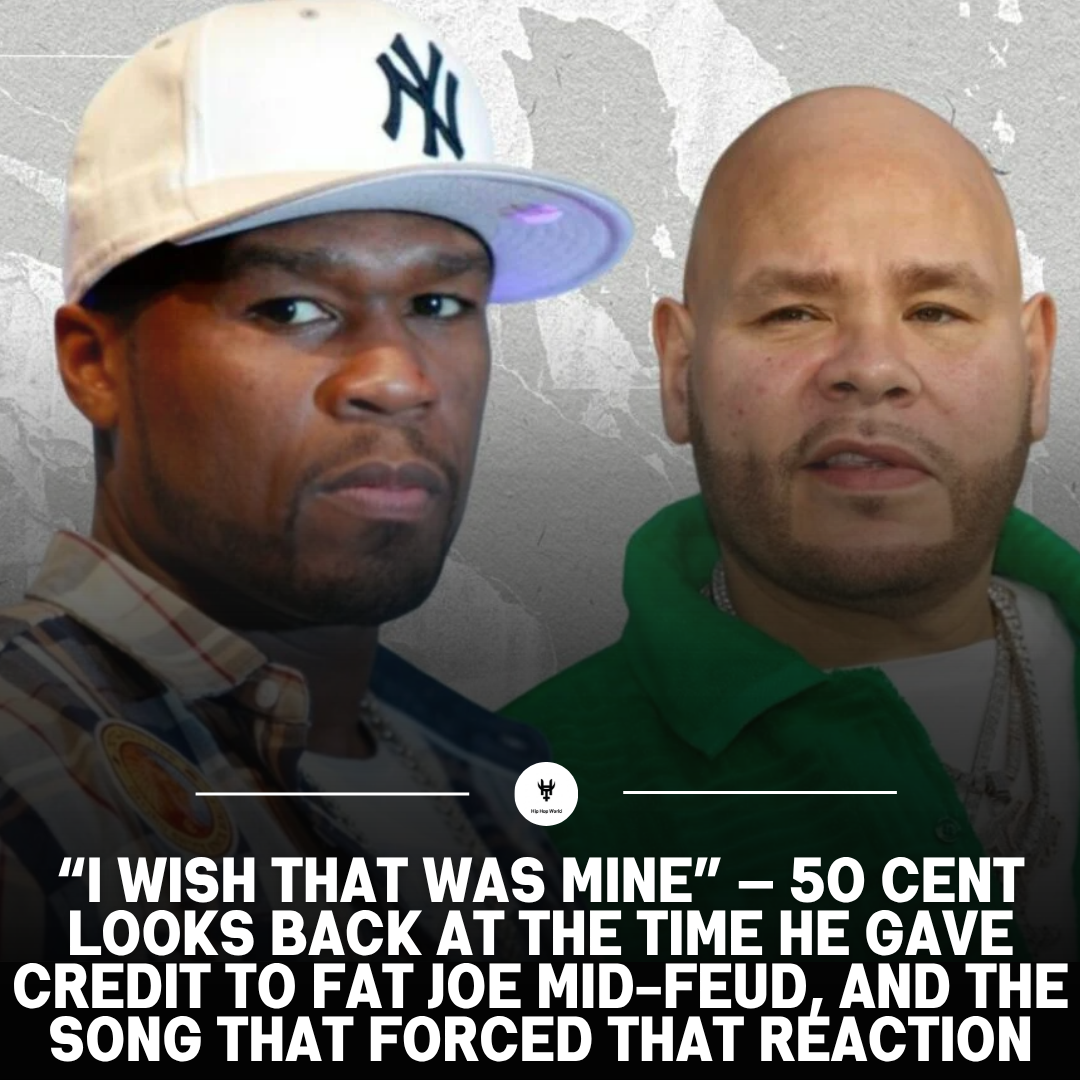
At a time when tensions in hip-hop were often settled with diss records and public shots, respect wasn’t something you expected to hear—especially not between rivals like 50 Cent and Fat Joe.
Their feud had already gone through years of friction, with both sides taking jabs and making it clear there was no real relationship between them. It was the kind of rivalry where even small acknowledgments could be interpreted as weakness. And yet, in the middle of all that, something unexpected happened.
A Surprising Moment Of Respect
In a 2011 interview, while reflecting on the state of hip-hop, 50 Cent started listing records he admired—tracks that, in his view, represented a different era of the culture. He mentioned songs like “Whoa!” and “Put Ya Hands Where My Eyes Could See,” highlighting the kind of impact those records had when they first dropped.
Then, without hesitation, he added one more.
“Fuckin’ ‘Lean Back,’” he said. “I wish that was mine.”
It wasn’t just the statement itself—it was who the song belonged to. At that point, his issues with Fat Joe were still unresolved, and both artists had made it clear they “don’t get along.” But even in that moment, 50 didn’t hesitate to acknowledge the record.
More Than Just A Hit Record
“Lean Back,” released in 2004 by Terror Squad, wasn’t just another single—it was a cultural moment. The track dominated charts, spent weeks at No. 1, and carried a presence that extended far beyond its initial release.
For 50 to single it out wasn’t accidental.
It showed something deeper about how competition works at the highest level. Even in the middle of conflict, there’s an understanding of what hits—and what lasts. That recognition doesn’t erase the rivalry, but it sits alongside it.
Competition Without Illusion
50 made sure to keep the balance clear. While giving credit, he also pointed out that artists like Joe likely looked at his own catalog—tracks like “In Da Club” and “PIMP”—with the same kind of admiration.
That exchange of respect wasn’t about friendship. It was about positioning. About knowing where you stand, and recognizing when someone else played their part just as well.
In that sense, the moment wasn’t a truce—it was a glimpse into how artists view each other beyond the headlines.
From Conflict To Closure
Years later, the tension between 50 Cent and Fat Joe would finally ease. What had once been a prolonged and personal feud eventually gave way to something more measured.
Joe, looking back, framed it as something bigger than just their history. Speaking about their reconciliation, he said, “We gotta show the youth that you can come together — that was a nasty beef — but you can come together afterwards and actually be grown men and show each other love. I got love for 50.”
Knowing When To Recognize The Moment
The compliment 50 gave in 2011 didn’t end the feud. It didn’t shift the narrative overnight. But it revealed something that often stays hidden in rivalries—an ability to separate the competition from the craft.
Because even in the middle of conflict, some records speak for themselves.
And sometimes, even your biggest rival knows it.