At the height of G-Unit’s rise, everything was moving with precision. The music was hitting, the momentum was undeniable, and the group stood on the edge of something much bigger than a typical breakthrough. The industry was watching closely, waiting to see how far they could go. But just as the moment was beginning to crystallize, something shifted.
One of their own was gone.
Tony Yayo, a core figure in the group’s identity, was incarcerated just before the release of Get Rich or Die Tryin’. It wasn’t just an absence—it was a disruption at the worst possible time. For most groups, losing a member in that moment would have fractured the chemistry, diluted the image, and quietly slowed the momentum. Success, especially in hip-hop, often depends on presence. And Yayo had none.
But what followed wasn’t retreat. It was a decision.
A Different Kind of Strategy
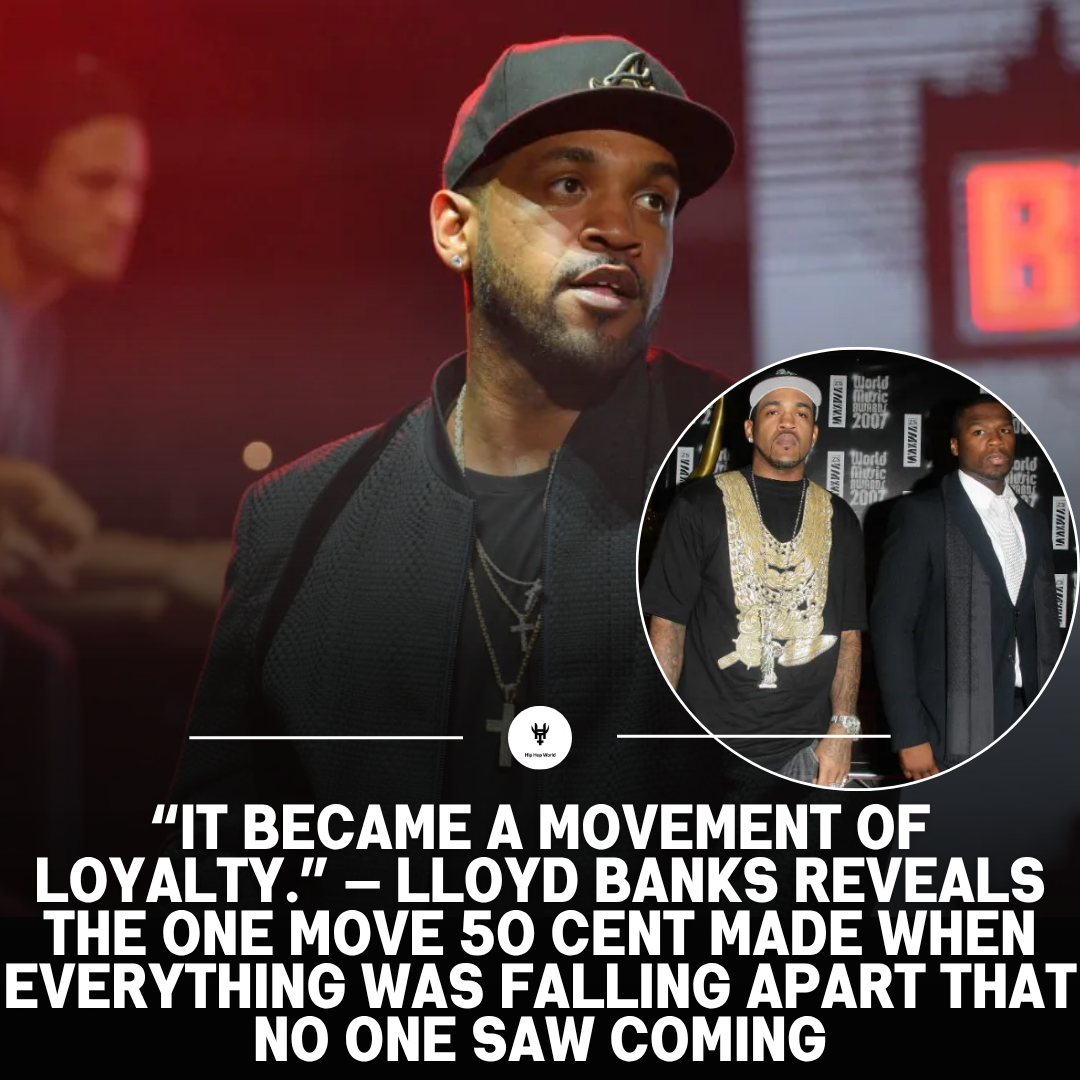
Lloyd Banks would later describe the feeling as “missing an arm.” It wasn’t just about music or business—it was about structure. G-Unit wasn’t built as individuals orbiting around success; it was built as a unit, and removing one piece left a visible gap.
50 Cent understood that gap. But instead of trying to cover it, he chose to make it visible.
He made a call and ordered 5,000 shirts printed. Each one carried Tony Yayo’s name.
At first glance, it was simple. No elaborate rollout, no traditional promotion. Just a name on fabric. But the meaning behind it carried far more weight than the design itself. This wasn’t merchandise—it was a statement of alignment. A refusal to let absence become erasure.
Visibility as Power
The shirts didn’t stay in the background. They became central.
G-Unit wore them everywhere—on major stages like the VMAs and Grammys, in music videos, during interviews. Every appearance became intentional. Every camera angle reinforced the same message: even if Yayo wasn’t physically there, he was still part of the moment.
In an era where image shaped perception, G-Unit turned visibility into something strategic. They didn’t just maintain their unity—they amplified it. The absence that could have weakened them became a symbol that strengthened their identity.
And people noticed.
Fans didn’t just observe the gesture—they participated in it. The shirts moved beyond the group and into the culture, becoming something larger than a tribute. They became a shared signal, a way for supporters to align themselves with the same principle: that loyalty doesn’t fade under pressure—it becomes more visible.
The Return That Was Already Built
By the time Tony Yayo was released, something unusual had happened.
He didn’t return as someone trying to reintroduce himself. He came back to a name that had never left the conversation. Without releasing music, without standing on stages, without traditional promotion, his presence had already been established. The anticipation was there. The recognition was already built.
What should have been lost time had quietly transformed into groundwork.
And that shift didn’t come from marketing formulas or calculated campaigns. It came from a decision rooted in something more personal—a commitment to keep someone present, even when circumstances tried to remove them.
More Than a Group
This moment revealed something essential about G-Unit. They weren’t just a collection of artists moving through success—they were operating as a system. One that understood narrative, consistency, and the power of perception.
While others focused only on releases and chart positions, G-Unit built something else alongside the music: a sense of identity that extended beyond individual performance. They understood that influence wasn’t just about what you put out—it was about what you represent.
In that sense, the shirts became more than a symbol of loyalty. They became part of a larger mythology—one where adversity wasn’t hidden, but integrated into the story.
What That Moment Still Means
Looking back, that single decision—to print 5,000 shirts—feels less like a clever move and more like a defining one.
It showed that authenticity, when expressed clearly, carries its own kind of power. That loyalty, when made visible, can shape perception in ways that strategy alone cannot. And that sometimes, the strongest statements aren’t made through words or performances, but through actions that refuse to let someone be forgotten.
Because in a moment where absence could have rewritten the narrative, G-Unit chose to rewrite what absence meant.
And in doing so, they turned one missing voice into something that could be seen everywhere.