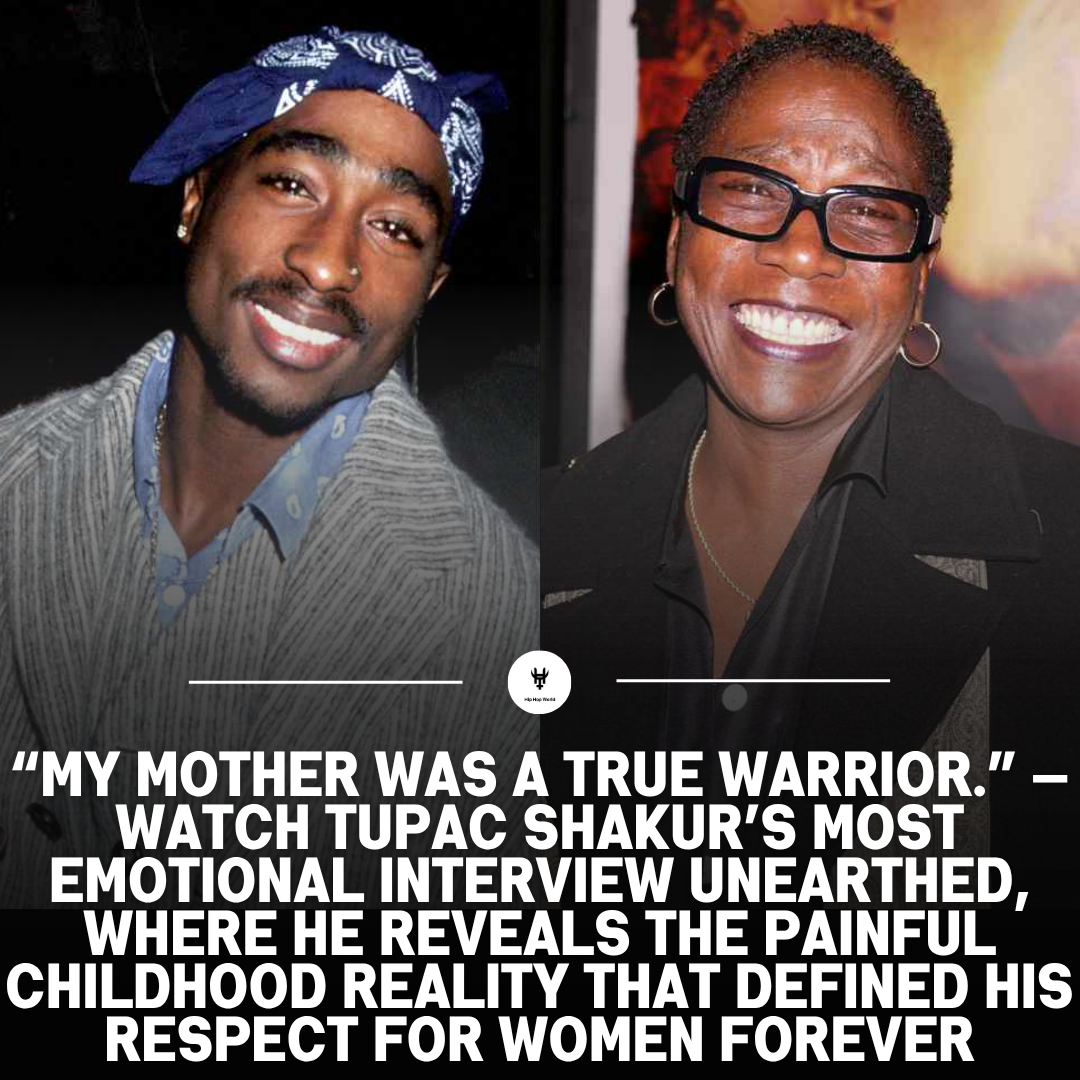
He wasn’t performing. He wasn’t delivering lines. Sitting in that interview, Tupac Shakur spoke about his mother with a kind of stillness that didn’t match his public image. There was no bravado in his voice—just clarity. And when he described Afeni Shakur as a “true warrior,” it didn’t sound like admiration from a distance. It sounded like something he had lived inside.
The World That Shaped Them
Before the fame, before the records, his understanding of strength came from watching her survive. Afeni wasn’t just raising a child—she was navigating a system that often worked against her. As a former member of the Black Panther Party, she had already lived through political pressure, legal battles, and constant scrutiny. The 1970s weren’t just turbulent in theory—they were something she endured personally, while trying to build a life for her son.
For Tupac, this wasn’t background information. It was daily reality. The instability, the financial struggles, the tension—it all existed alongside something else: resilience. Not the kind people talk about, but the kind that shows up quietly, every day, without recognition.
The Turning Point in His Understanding
In that interview, he didn’t try to glorify what they went through. He acknowledged it for what it was—painful, unstable, and sometimes overwhelming. But within that honesty, something deeper was revealed. He had learned to recognize strength not in success, but in endurance.
That perspective became a defining part of who he was. It shaped the way he saw women—not as abstract ideals, but as people carrying burdens most never fully understand. His respect didn’t come from theory or image. It came from observation. From watching one woman refuse to break, even when everything around her suggested she should.
How It Echoed in His Music
You can hear that influence across his work. Songs like “Dear Mama” don’t feel constructed—they feel remembered. The struggles of single mothers, the weight carried by women in marginalized communities, the demand for respect—all of it traces back to what he witnessed growing up.
This wasn’t a theme he adopted for impact. It was something he returned to because it was real to him. His music didn’t separate personal experience from social commentary—it blended them. And that’s why it resonated the way it did.
What Stayed With Him
What made that interview linger wasn’t just what he said—it was how he said it. There was no distance between the artist and the son. No performance separating the two. Just a quiet acknowledgment of where his strength came from.
Even as his life moved into chaos, fame, and controversy, that foundation never disappeared. It stayed underneath everything—his words, his perspective, his decisions. A constant reference point in a life that rarely stood still.
A Legacy That Leads Back to Her
Today, when people talk about Tupac’s impact, they often focus on his voice, his influence, his cultural weight. But moments like that interview reveal something more personal. His strength wasn’t something he built alone.
It was inherited, observed, and shaped by a woman who faced her own battles without stepping back.
And in speaking about her the way he did, he didn’t just tell her story—he explained his own.