Before N.W.A became one of the most influential groups in rap history, they were just a group of young men from Compton trying to make records that sounded honest. Loud. Dangerous. Real. And according to Ice Cube, none of it would have happened without Eazy-E.
Years after the group changed hip-hop forever, Cube looked back on those early days and pointed directly at Eazy as the person who gave NWA its identity before the world even understood what gangsta rap was becoming.
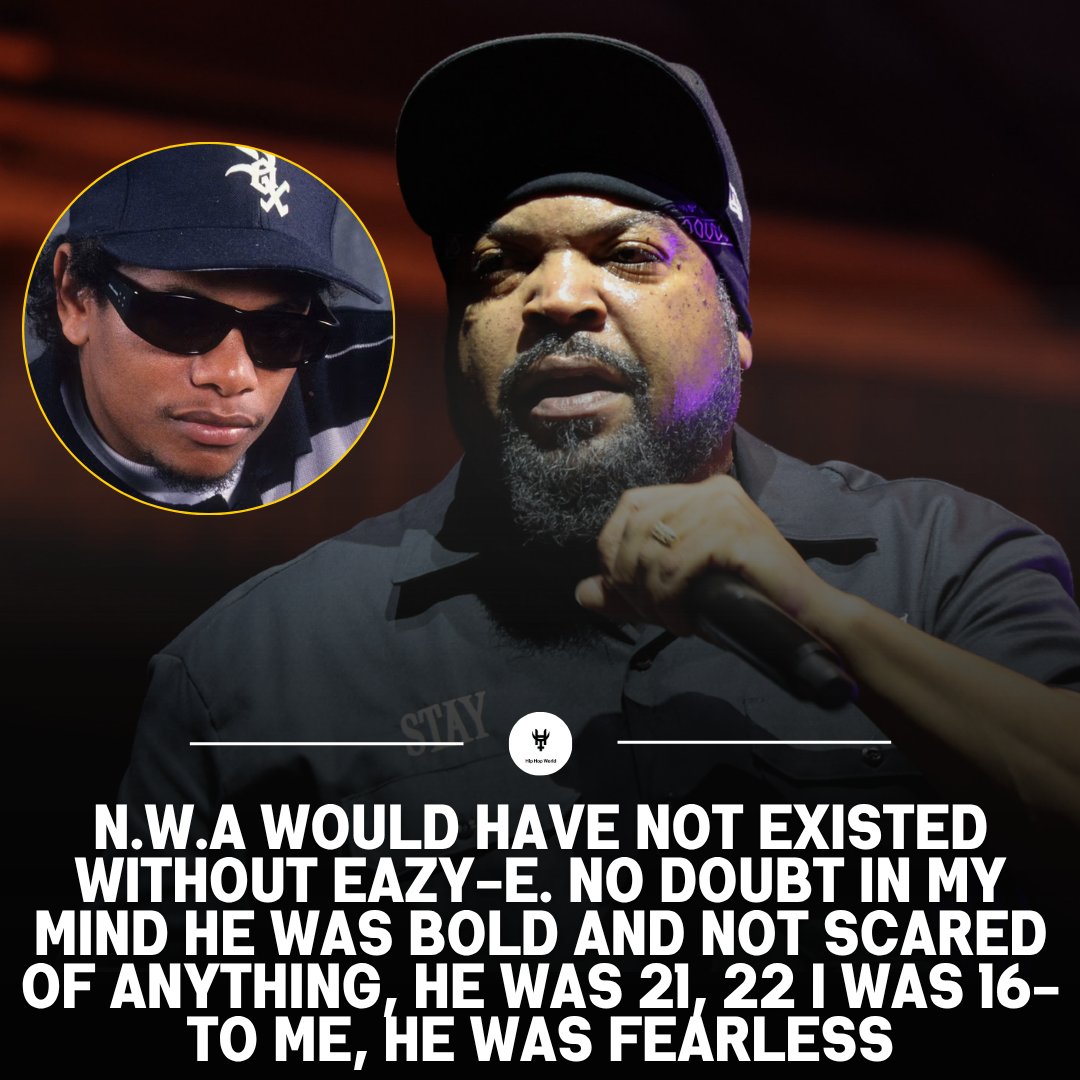
“NWA would have not existed without Eazy-E,” Cube claimed during an interview with Billboard in 2015. “No doubt in my mind.”
At the time, Cube was still a teenager. Eazy was only in his early twenties, but to the younger members around him, he already carried himself differently. He wasn’t cautious. He wasn’t trying to fit into what the music industry wanted rap to sound like in the late 1980s. And that attitude ended up shaping the entire group.
The Energy That Pulled Everyone Forward
The chemistry inside N.W.A was unusual from the start. Dr. Dre brought production genius. Cube brought sharp writing and anger. MC Ren added lyrical aggression. DJ Yella helped shape the sound. Arabian Prince was part of the early foundation.
But Eazy brought something harder to define.
Confidence.
According to Cube, Eazy’s mindset gave the group permission to fully commit to the kind of music they actually wanted to make. Not polished radio songs. Not safe crossover records. He wanted the music to reflect exactly what they were seeing around them in Los Angeles.
“He was bold and not scared of anything,” Cube said of his bandmate, who died in 1995. “He was 21, 22, I was 16—to me, he was fearless.”
That fearlessness mattered because hip-hop was still evolving at the time. There was no guaranteed blueprint for how aggressive street rap could become commercially successful. Labels were nervous. Radio was limited. A lot of artists still softened their image in hopes of broader acceptance.
Eazy wanted the opposite.
“That’s what he brought,” said Cube. “‘I don’t want to do no corny ass records that try to get on the radio. I want to do hardcore records about what the hell is going on around here.’”
That mentality became the foundation of NWA’s identity. The group didn’t sound filtered. They sounded confrontational. Their records felt like dispatches directly from Compton, and whether critics liked it or not, audiences couldn’t ignore them.
The Reluctant Rapper Who Forced Himself to Improve
What made Eazy’s rise even more interesting was the fact that he was not naturally the strongest rapper in the group during the beginning.
Cube admitted that openly.
But what Eazy lacked early on in technical skill, he made up for with discipline and persistence. He kept showing up. Kept recording. Kept improving.
“Eazy just worked hard,” Cube said. “He worked hard, hard, and actually became a pretty good rapper.”
At first, Eazy’s voice sounded different from everyone else around him. High-pitched. Raw. Unpolished. But over time, that uniqueness became part of what made him unforgettable. Instead of trying to sound like somebody else, he slowly turned his own imperfections into style.
“He got better every time he got in front of the mic,” said Cube. “He got better and better and better until he was a bona fide rapper.”
That progression mirrored the growth of NWA itself.
The group wasn’t built from polished industry stars. It was built from ambition, tension, personality, and people figuring things out in real time while the world watched. Eazy’s willingness to take risks before success was guaranteed gave the entire movement momentum.
And decades later, even with the enormous legacies attached to names like Dr. Dre and Ice Cube, Cube still points back to the same person when explaining how everything truly started.
Without Eazy-E’s fearlessness, NWA may never have sounded dangerous enough to change hip-hop at all.