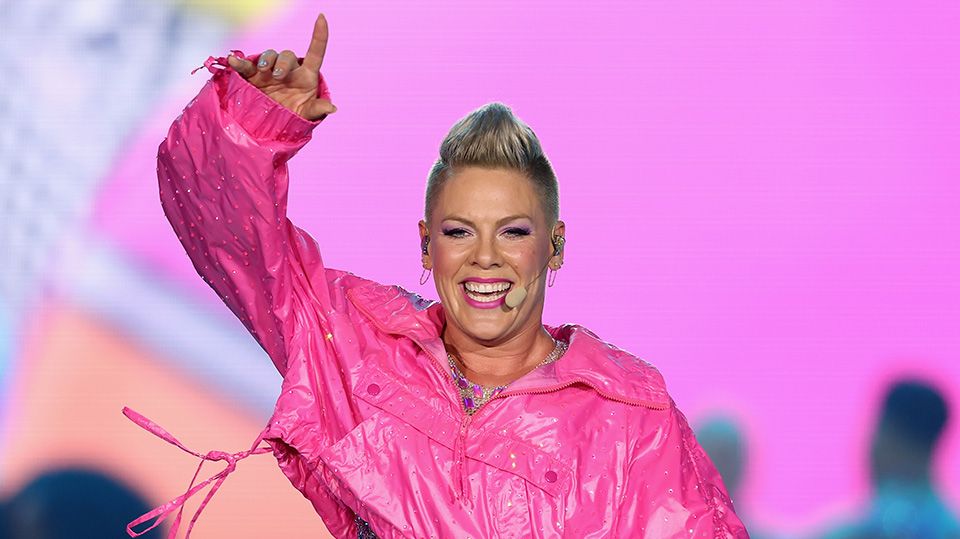
What began as a stop on Pink’s blockbuster Trustfall Tour quickly evolved into something far bigger than music—a public act of resistance that turned thousands of concertgoers into participants in a growing battle over censorship.
According to Suzanne Nossel, CEO of PEN America, the global pop superstar wasn’t interested in making a symbolic statement when she arrived in Miami. Instead, she launched a direct challenge to the wave of book removals sweeping through Florida schools, using her platform to place banned and challenged books directly into the hands of fans.
At the heart of the effort was a simple but powerful declaration:
“I refuse to let them erase us.”
Nossel says those seven words captured the motivation behind an ambitious campaign that distributed more than 2,000 books during Pink’s Miami tour dates. The giveaway featured works from celebrated authors and creators, including Amanda Gorman and Todd Parr, whose books have faced challenges or removal in some Florida school districts amid ongoing debates over educational content.
Rather than relying on social media posts or public criticism alone, Pink reportedly chose a more hands-on approach. Leveraging the massive infrastructure already supporting her stadium tour, she worked alongside advocacy organizations, literacy groups, and volunteers to coordinate the large-scale distribution effort outside concert venues.
The result transformed an ordinary concert weekend into a highly visible statement about free expression, education, and access to literature.
For Nossel, the significance of the initiative extended far beyond celebrity activism. She argued that book bans often have the greatest impact on young readers from marginalized communities—children who depend on literature to see their identities, experiences, and challenges reflected in the world around them.
When those stories disappear from shelves, Nossel believes the message can be deeply damaging.
“She didn’t just complain online,” Nossel noted. “She actively found a way to put these stories back into circulation.”
The controversy centers on ongoing efforts by Florida lawmakers and school board officials who have supported measures aimed at reviewing and removing certain books from school libraries. Supporters of the legislation argue the policies strengthen parental oversight and ensure age-appropriate educational materials. Critics, however, contend that many of the challenged titles disproportionately involve themes related to race, gender identity, and sexual orientation.
Organizations monitoring censorship trends have documented a sharp increase in book challenges across the United States, with Florida frequently emerging as one of the most closely watched states in the debate.
Pink’s involvement dramatically elevated public awareness of the issue. By introducing banned literature into the environment of a major entertainment event, she brought a political and cultural debate directly to an audience that may not otherwise have encountered it.
Nossel says that blend of activism and entertainment was no accident.
Pink reportedly viewed her concerts as more than places for audiences to escape reality. She believed they could also serve as spaces where important social issues are confronted openly. By weaving advocacy into the tour experience, she encouraged fans to engage with stories that have become the focus of heated political battles.
The decision was not without potential consequences. Florida remains a major touring destination, and public opposition to the state’s education policies has often triggered fierce criticism from political figures and commentators. Yet Nossel says Pink never appeared concerned about the backlash.
Instead, the singer remained focused on what she viewed as the larger issue: ensuring that young people continue to have access to stories that promote understanding, empathy, and representation.
For one unforgettable weekend in Miami, Pink’s tour became more than a concert series. It became a high-profile literary protest—one designed to challenge censorship, amplify marginalized voices, and remind thousands of fans that the fight over books is ultimately a fight over whose stories get to be told.