When Eminem decides he wants your voice on a track, it usually feels like a dream phone call most artists would jump at instantly. But when that call reportedly went out to P!nk, the reaction inside her camp wasn’t excitement on autopilot — it was hesitation, reflection, and a decision that caught even Eminem off guard.
The story begins years earlier, when Eminem allegedly came across an early demo of P!nk before she had fully locked in the pop-rock identity that would later define her career. What stood out to him wasn’t just technical ability — it was attitude. A mix of grit and emotional openness that didn’t quite fit the polished pop lane she was being placed in at the time.
That contrast is what reportedly made him act quickly. He saw something that could collide perfectly with his own aggressive, razor-edged storytelling style — and he wanted it in a studio.
But P!nk didn’t immediately lean in.
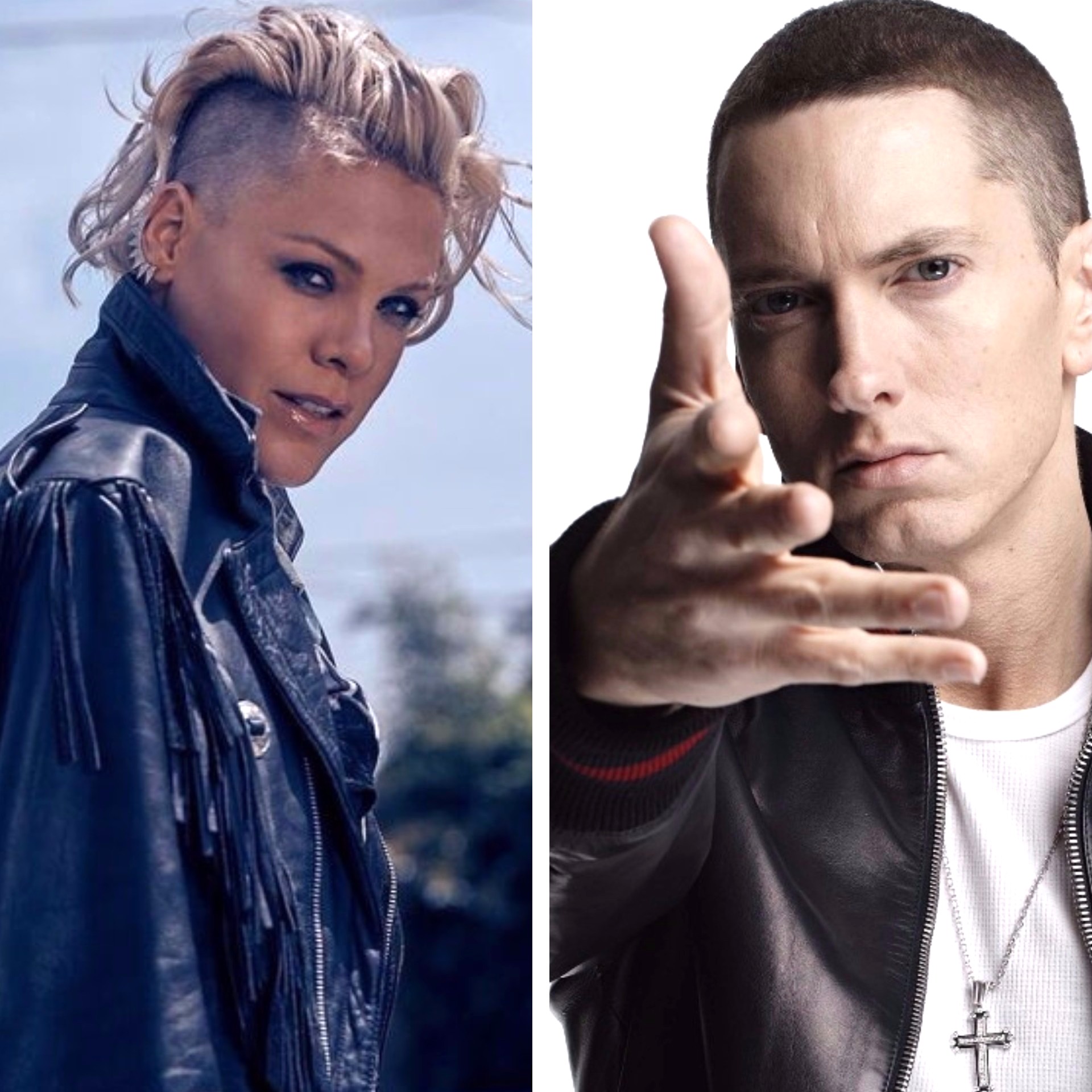
At that stage in her career, she was still fighting for artistic control and trying to define herself beyond industry expectations. Being paired with one of the most dominant and intense figures in hip-hop wasn’t a small decision. It wasn’t about prestige — it was about identity.
Instead of rushing into the opportunity, she reportedly paused to question it. Did the collaboration reflect the artist she was becoming, or the version of her people already assumed she should be? That distinction mattered more to her than the headline.
It wasn’t rejection. It was resistance to being shaped by someone else’s narrative.
That creative caution ultimately became part of what made the eventual collaboration work. When P!nk and Eminem finally came together on “Revenge” during the Revival-era sessions, the chemistry felt deliberate rather than forced. There was no sense of two worlds being mashed together for attention. Instead, it felt like two artists meeting at full strength — but on their own terms.
Eminem brought precision, speed, and sharp lyrical intensity. P!nk answered with emotional force and melodic power. Neither tried to overpower the other. The balance came from the fact that both had arrived with clear boundaries already in place.
Looking back, the most interesting part of the story isn’t that Eminem made the offer. It’s that P!nk didn’t treat it like a shortcut.
What looked like hesitation was actually control — the kind that defines long-term artistic identity. And in the end, that pause didn’t weaken the collaboration. It shaped it.
Because sometimes the strongest creative decisions aren’t the fastest ones.