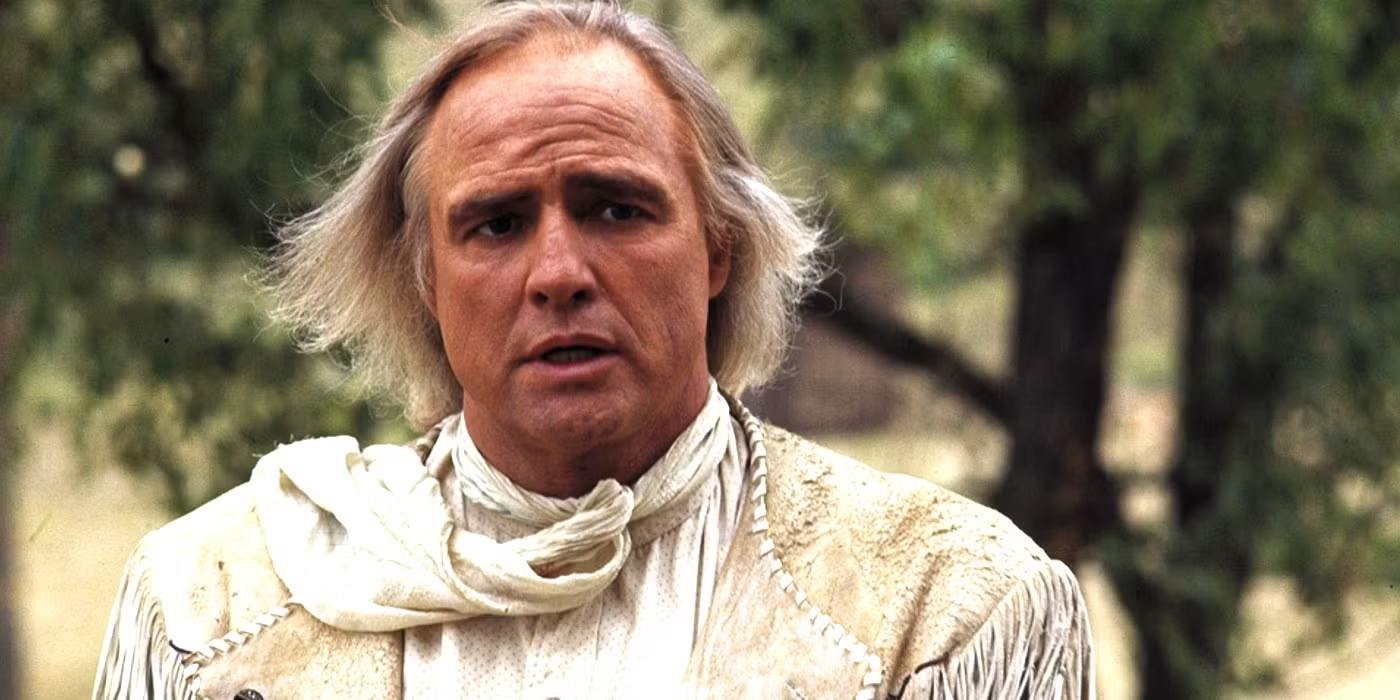
Marlon Brando remains one of the most legendary actors to ever grace the screen, known for his raw intensity and transformative performances in The Godfather, Apocalypse Now, and A Streetcar Named Desire. His ability to embody complex, often brutal characters made him both admired and feared in Hollywood, while his deep commitment to method acting often blurred the lines between performance and reality.
Over his decades-long career, Brando worked with some of the most acclaimed directors in cinema—Francis Ford Coppola, Bernardo Bertolucci, Elia Kazan, and Joseph L. Mankiewicz, among others. While his dedication to his craft produced some of the greatest performances in film history, it also led to tense relationships and chaotic on-set experiences. His time on Apocalypse Now, for example, became the stuff of Hollywood legend, with the film’s notoriously troubled production descending into madness in the heart of the jungle. But despite the well-documented challenges of Coppola’s war epic, Brando himself considered another film to be his most frustrating professional experience.
In 1969, Brando starred in Burn!, a historical drama directed by Gillo Pontecorvo. The film tells the story of a mercenary who incites a slave rebellion on the Caribbean island of Queimada, only to return years later to suppress the very revolution he helped create. While the movie carried a powerful anti-colonial message, the experience of making it was anything but inspiring for Brando.
Filming in the relentless heat of Colombia, Brando clashed with Pontecorvo, frustrated by the director’s harsh and detached approach. But beyond the grueling shoot itself, what angered Brando most was the mistreatment of the Black cast and crew members. He was appalled by the stark wage gap between them and their white counterparts, as well as the poor living conditions they endured. His outrage boiled over to the point where he was overheard saying, “I want to kill Gillo. I really want to kill him.” When asked why, he responded, “Because he has no fucking feelings for people.”
While Brando was no stranger to controversy, he often used his influence to challenge the darker aspects of the film industry. His refusal to accept the Oscar for The Godfather in protest of Hollywood’s treatment of Native Americans is one of the most famous moments in Academy Award history. His stand against unfair labor practices on the set of Burn! was another example of how he wasn’t just a rebel on screen—he was also willing to fight for justice behind the scenes.
Though his career was filled with highs and lows, Brando’s legacy isn’t just about his acting. It’s also about his willingness to call out exploitation and inequality, even when it made him an outsider in Hollywood.