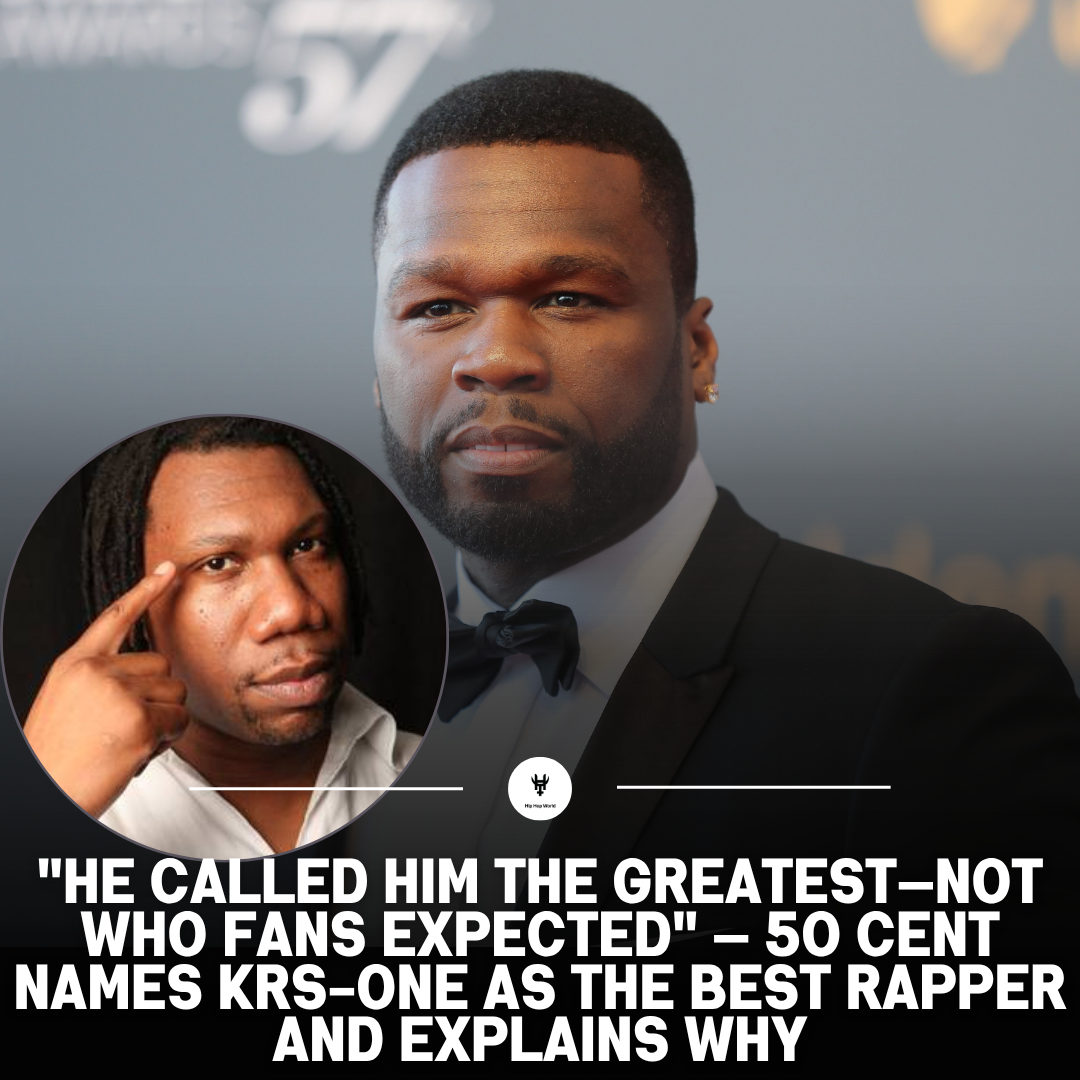
By the early 2000s, Curtis Jackson had already rewritten the rules of survival in hip-hop. When 50 Cent emerged under the banner of Shady Records in 2002, his arrival didn’t feel like a debut—it felt like a takeover. “Wanksta” echoed through the culture with a sharp confidence, setting the stage for what would follow. Then came Get Rich Or Die Tryin’, an album that didn’t just succeed—it defined an era, turning tracks like “In Da Club” and “21 Questions” into global anthems.
But even at that peak, recognition didn’t always align with impact.
The Award That Sparked Debate
When the Grammys passed over his debut for OutKast’s Speakerboxxx/The Love Below, the decision stirred conversation across the industry. For many, it felt like a moment where cultural dominance and institutional recognition moved in different directions. Kanye West would later voice what others were already thinking, calling out the Academy for overlooking what many considered one of the defining rap albums of its time.
Still, 50 Cent didn’t pause.
Adapting Beyond The Spotlight
As the years moved forward, he continued to collaborate with some of the most influential names in hip-hop, including Jay-Z, Kanye West, and Lil Wayne on his 2007 album Curtis. But when that project didn’t match the commercial weight of his earlier work, he made a decision that would reshape his trajectory.
Instead of resisting change, he leaned into it.
Television, business, and brand-building became extensions of his identity. What began as a rap career evolved into something broader—a blueprint for longevity in an industry that rarely offers it.
A Different Kind Of Respect
Yet even as his empire expanded, his connection to hip-hop never faded. In a 2012 conversation on The Breakfast Club, 50 Cent revealed something more personal than charts or accolades: the artist he considered the greatest.
KRS-One.
It wasn’t a choice based on popularity or numbers. It was rooted in influence, in the kind of energy that shaped how he understood rap itself. 50 spoke about the early aggression, the competitive spirit, the way tracks like “The Bridge Is Over” carried a raw intensity that resonated deeply with him.
But admiration came with reflection.
He pointed to a shift in KRS-One’s path, suggesting that as the message deepened, something changed in how that energy translated. It wasn’t dismissal—it was perspective from someone who had studied the balance between impact and evolution.
The Measure Of Legacy
In that moment, 50 Cent wasn’t speaking as a mogul or a businessman. He was speaking as a student of the culture, someone shaped by the voices that came before him.
Because beyond the records, the sales, and the ventures, his story has always been about understanding how to move—when to dominate, when to adapt, and when to reflect.
And in the end, that may be his greatest legacy of all—not just building an empire, but knowing exactly what it was built on.