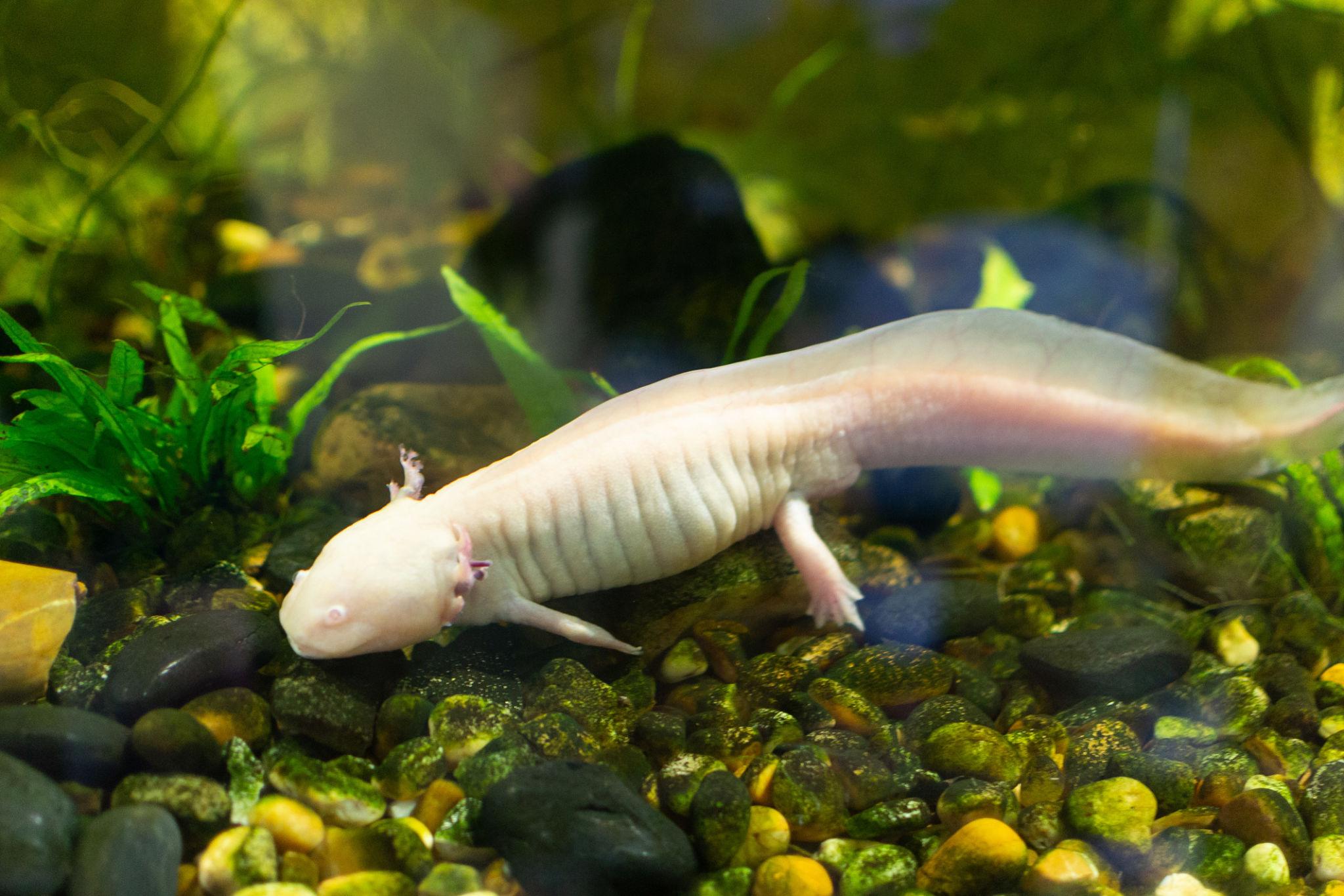
It looks like a creature from another planet, with a permanent smile, tiny eyes and unusual feathery gills extending from the sides of its head. But the axolotl has something far more extraordinary than its appearance: it can regenerate entire lost limbs and repair several types of damaged tissue. Scientists believe studying this unusual animal could help us better understand the future of human medicine.
Deep in the freshwater lakes and canals of Mexico lives one of the most remarkable amphibians on Earth.
Its name is the axolotl, and its biological abilities have fascinated scientists for decades.
Unlike humans, who form scars when many types of tissue are damaged, this unusual creature can rebuild complex body structures with an extraordinary degree of precision.
Lose a leg? It can grow another one.
Suffer damage to parts of its spinal cord? It can regenerate much of the affected tissue.
Even certain injuries to its heart and brain can trigger remarkable repair processes.
So, what makes this little animal so special?
1. It Can Regrow an Entire Limb
One of the axolotl’s most impressive abilities is limb regeneration.
If it loses an arm or leg, its body can begin rebuilding the missing structure.
The process involves several stages.
First, cells gather around the injured area, forming a specialised structure called a blastema.
These cells then multiply and develop into the different tissues needed to rebuild the missing limb.
Over time, the axolotl can regenerate bones, muscles, nerves, blood vessels and skin.
The result is not simply a replacement limb that looks similar to the original. It can restore a remarkably functional structure.
This is one of the reasons researchers consider the axolotl such an important model for studying tissue regeneration.
2. It Can Repair Parts of Its Heart and Brain
Perhaps even more fascinating is that limb regeneration is not its only remarkable ability.
Research has shown that axolotls can regenerate certain damaged heart tissues and repair parts of their central nervous system.
They can also regenerate portions of their brain following certain injuries.
Their ability to restore damaged tissue without forming the extensive permanent scars commonly seen in humans makes them especially interesting to medical researchers.
Scientists are investigating the cellular and molecular mechanisms that allow this to happen.
The ultimate question is whether some of these mechanisms could eventually help improve tissue repair in humans.
3. Why Doesn’t the Axolotl Transform Into a Salamander?
The axolotl has another unusual characteristic.
Most amphibians undergo metamorphosis as they develop. For example, tadpoles transform into adult frogs.
Axolotls are different.
They generally retain their juvenile characteristics throughout their lives, including their external feathery gills.
This biological phenomenon is known as neoteny.
Instead of leaving the water and developing into a typical land-dwelling salamander, axolotls usually remain aquatic.
They can still reach sexual maturity and reproduce while retaining their youthful appearance.
This is why they look so unusual compared with many other amphibians.
4. Where Can You Find This Extraordinary Animal?
The axolotl is native to the lake and canal system around Xochimilco, near Mexico City.
Unfortunately, its natural habitat has been severely affected by urbanisation, pollution, invasive species and other environmental pressures.
The wild axolotl is now classified as Critically Endangered on the IUCN Red List.
Although axolotls are widely bred in captivity and kept in aquariums and research laboratories, their survival in the wild remains a serious conservation concern.
Protecting the remaining natural habitat is essential if this extraordinary species is to survive.
5. Could Scientists Eventually Use Its Abilities to Help Humans?
This is where the axolotl becomes particularly important.
Human bodies can repair themselves, but our regenerative abilities are limited.
We can heal cuts, repair broken bones and replace certain damaged cells. However, we cannot naturally regrow an entire arm or leg.
Axolotls offer scientists an opportunity to study how complex structures can be rebuilt.
Researchers are investigating several important questions:
- How do cells know which body part needs to be replaced?
- How does the animal rebuild bones, muscles and nerves in the correct arrangement?
- Why can it regenerate certain tissues without forming large scars?
- What controls the growth and organisation of new tissue?
Understanding these processes could eventually contribute to advances in regenerative medicine.
However, translating discoveries from axolotls into safe and effective human treatments remains a major scientific challenge.
An Animal That Could Change How We Understand Regeneration
The axolotl may look like a small, smiling aquatic creature, but its biology is anything but ordinary.
Its ability to regenerate limbs, repair damaged tissues and retain its juvenile appearance makes it one of the most fascinating animals studied by modern science.
And while researchers have not yet discovered every secret behind its extraordinary abilities, one thing is certain: this unusual amphibian has already taught us a great deal about how living organisms can repair themselves.
Sometimes, the most extraordinary discoveries in science come from the most unexpected creatures. And the axolotl might hold some of nature’s most fascinating secrets.