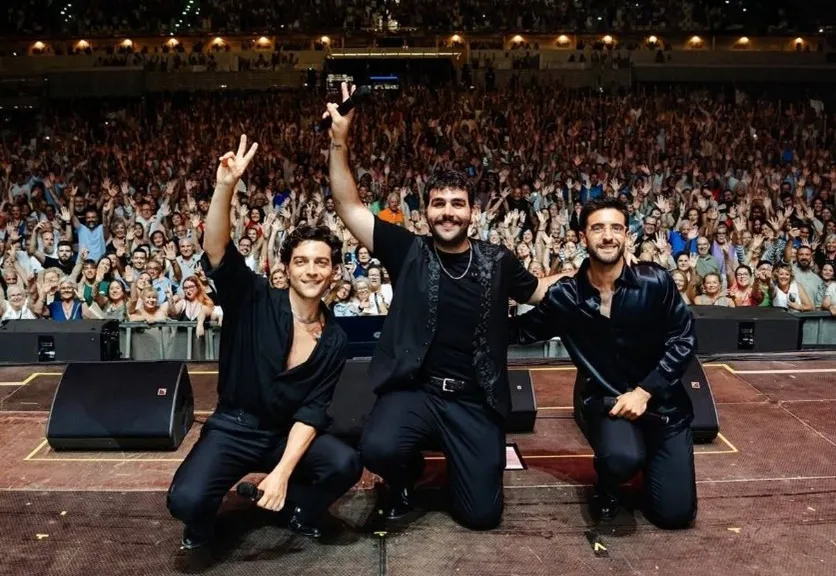
On a night meant to celebrate unity on a global scale, St. Peter’s Square became something far beyond a concert venue. On September 13, 2025, during the closing of the Jubilee Year celebration “Grace for the World,” an estimated 253,000 people gathered in St. Peter’s Square for an event that blended music, faith, and history in one of the most symbolic locations in the world.
The lineup alone reflected the scale of the occasion. International artists including Andrea Bocelli, John Legend, Jennifer Hudson, and Pharrell Williams each contributed to a night built around celebration and shared humanity.
But despite the star power filling the Vatican sky, it was a quieter, more restrained moment that ultimately defined the evening.
A Sacred Composition in an Open Sky
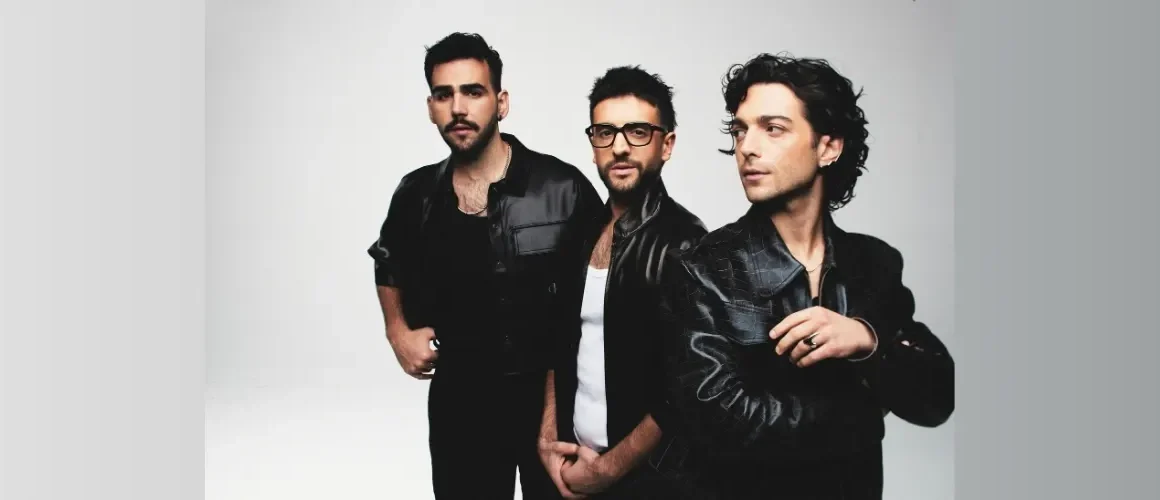
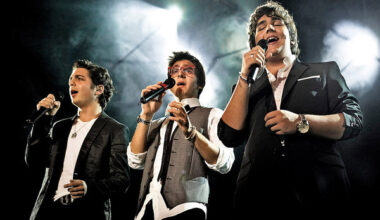
When Il Volo stepped forward to perform Magnificat, the atmosphere in the square noticeably shifted.
The piece, composed by Monsignor Marco Frisina, is deeply rooted in liturgical tradition and carries a weight of spiritual reflection that extends beyond performance. On this night, Frisina himself stood conducting the Choir of the Diocese of Rome, guiding the music as it unfolded beneath the open Roman sky.
From the first notes, the tone of the evening changed—less a spectacle, more a shared moment of contemplation.
When Nature Entered the Performance
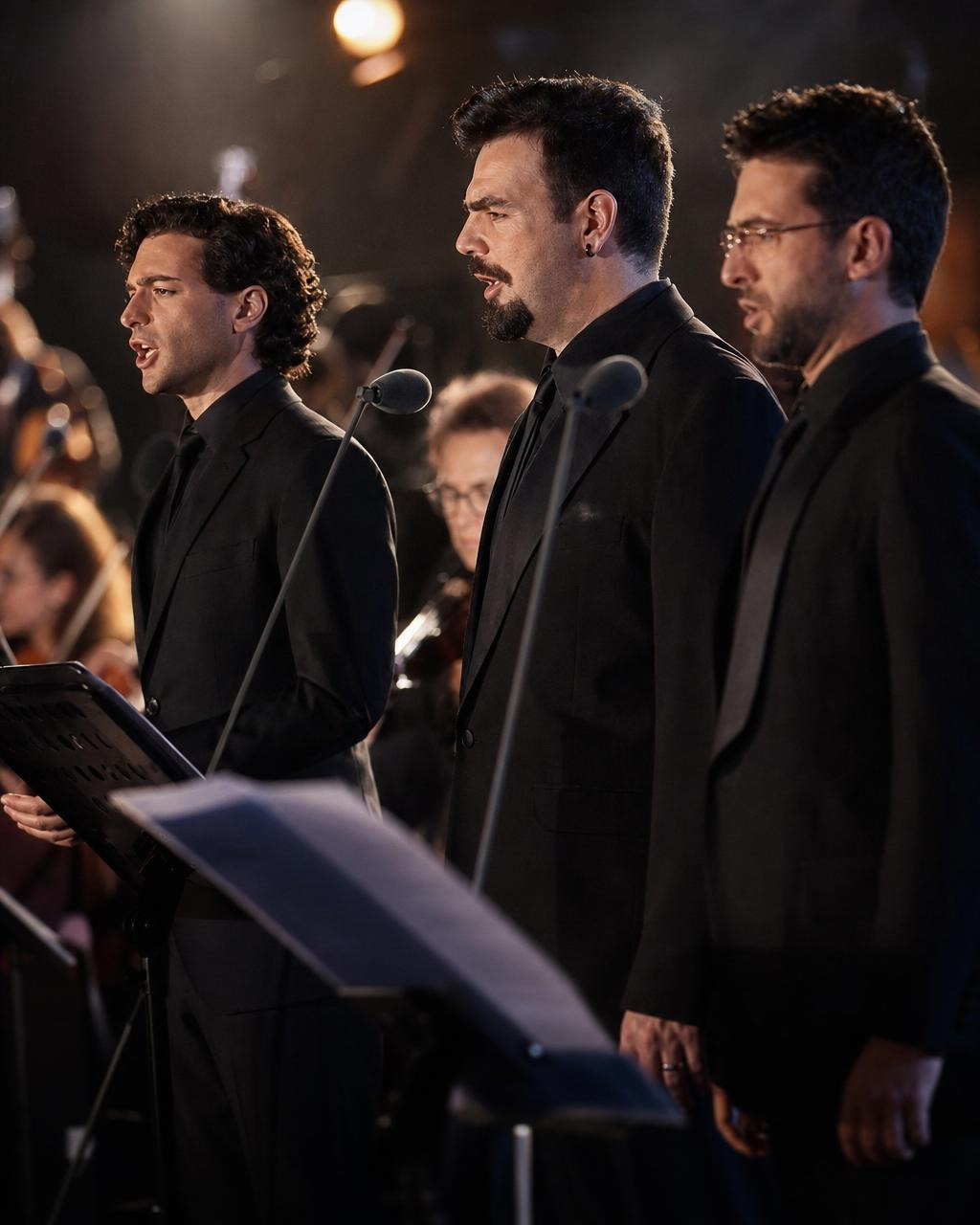
As the trio began singing, an unexpected challenge swept through the square: a strong wind moving across the vast open space. Sheets of music fluttered and shifted, threatening to disrupt the delicate precision of the performance.
But rather than breaking focus, the members of Il Volo held their place.
With one hand steadying their scores and the other committed to performance, they continued without interruption—anchoring themselves in the music and in each other. What might have become a distraction instead became part of the moment itself.
The result was a performance shaped not just by preparation, but by resilience.
A Collective Sound Across a Monumental Space
As the music expanded, so did its emotional reach. Thousands in attendance fell into near silence, allowing the performance to carry across one of the most iconic public spaces in the world.
The blend of sacred composition, live orchestration, and operatic vocal control created a rare kind of atmosphere—one where scale did not diminish intimacy, but enhanced it.
Observers noted the visible focus of Monsignor Marco Frisina, whose conducting reflected both precision and emotion as he guided the ensemble through the piece in real time.
A Moment That Needed No Applause
When the final notes of Magnificat faded into the night air, the reaction was not immediate celebration. Instead, there was stillness.
In a gathering of more than 250,000 people, silence became the response—a shared pause that felt as intentional as the performance itself.
According to those present, even Vatican staff offered only a brief acknowledgment afterward, summed up in a simple phrase: “You were good.” Nothing more was needed.
Why This Moment Stood Apart
In an evening filled with globally recognized performers and large-scale production, the performance by Il Volo stood out not because of volume or spectacle, but because of restraint.
There were no dramatic effects, no visual distractions—only voices, music, and the unpredictability of the open air.
And yet, that simplicity is precisely what made it unforgettable.
A Performance That Felt Larger Than Music
What remains from that night is not just the memory of a performance, but the feeling it left behind: a vast crowd, a sacred space, and a moment of collective stillness shaped by music that seemed to suspend time itself.
In the end, Il Volo’s Magnificat did not compete with the scale of the event—it rose above it in silence.