Some songs don’t just belong to an artist—they define them. Blaze of Glory is one of those rare tracks. It carries the dust and drama of the American West, the cinematic weight of Young Guns II, and the unmistakable voice of Jon Bon Jovi at his peak.
For decades, it felt untouchable.
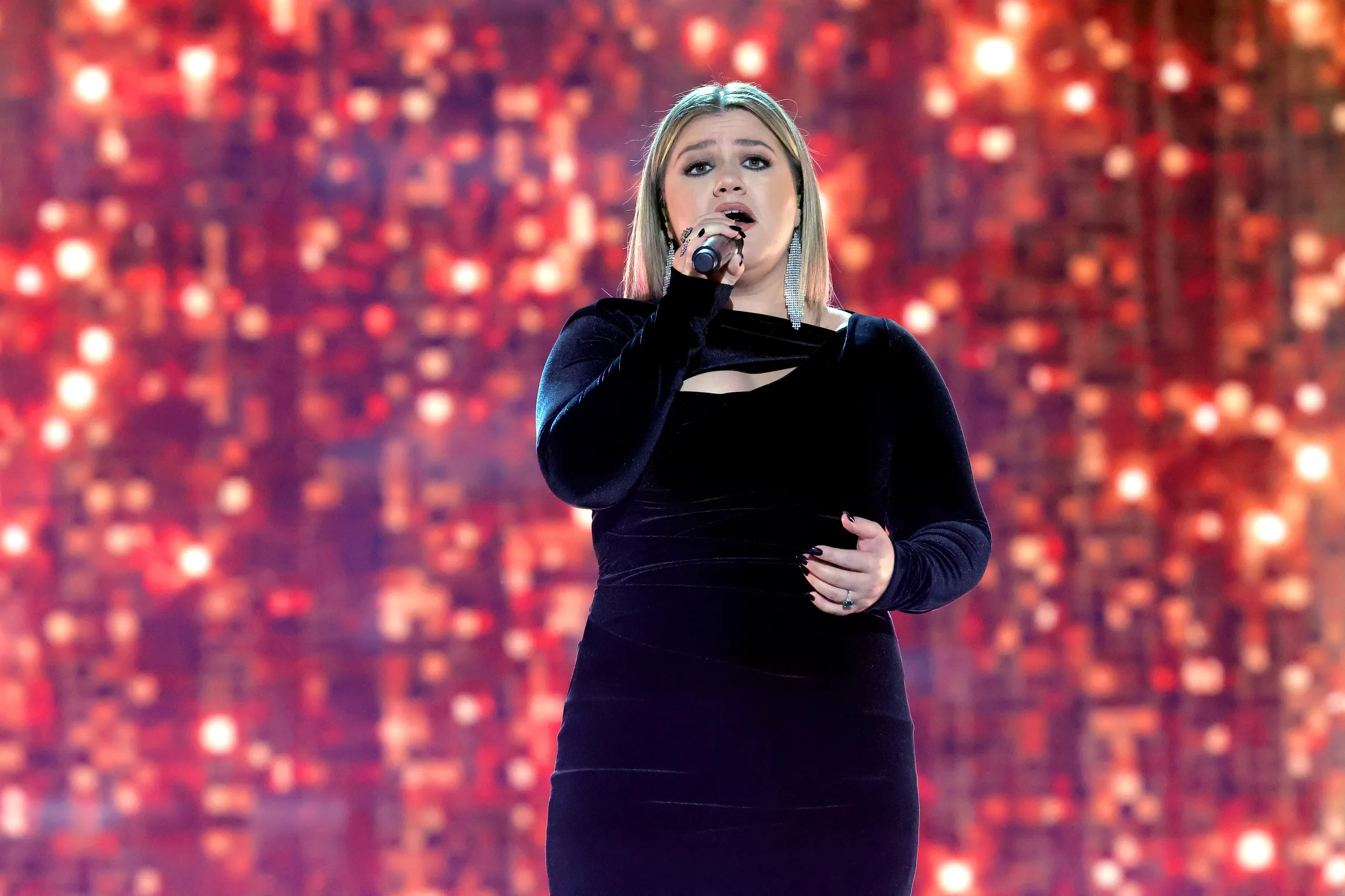
Then Kelly Clarkson stepped up to the mic—and didn’t just sing it. She reimagined it.
A Cover That Refused to Play It Safe
Clarkson’s 2024 performance on The Kelly Clarkson Show didn’t aim for nostalgia. It aimed for impact.
Where Bon Jovi’s original leaned into grit and storytelling, Clarkson introduced something sharper and more elastic. Her phrasing stretched the melody in unexpected ways, and her high notes didn’t just land—they soared past the boundaries most singers would respect out of caution.
It wasn’t imitation. It was interpretation.
And that difference changed everything.
When the Original Artist Takes Notice
Covers often invite polite praise from the artists who came first. This wasn’t that.
When Bon Jovi appeared on Clarkson’s show, his reaction carried a mix of admiration and disbelief. He openly acknowledged that she pushed the song into territory he no longer attempts—particularly those towering high notes that demand both confidence and stamina.
But what made the moment remarkable wasn’t the compliment.
It was what he did next.
Singing Through Limitations
In recent years, Bon Jovi has been candid about his vocal challenges, including surgery and the realities of fatigue that come with decades of performing. For many artists, that kind of limitation leads to caution—choosing safer keys, shorter sets, or fewer risks.
Instead, Clarkson’s performance had the opposite effect.
It pulled him in.
Choosing connection over caution, Bon Jovi joined her to sing “Blaze of Glory” live. His voice—weathered, textured, and unmistakably his—blended with Clarkson’s clarity in a way that felt less like contrast and more like continuity.
This wasn’t about hitting every note perfectly.
It was about showing up anyway.
A Duet That Felt Like a Handshake Across Time
What unfolded on stage didn’t feel like a typical duet. There was no sense of competition, no attempt to outshine.
Clarkson didn’t try to “outdo” the original.
Bon Jovi didn’t try to reclaim it.
Instead, they met in the middle.
- Clarkson brought precision and vocal lift
- Bon Jovi brought history and emotional weight
Together, they turned a solo anthem into a shared experience—one rooted in respect rather than reinvention for its own sake.
Why This Moment Resonated
Technically, the performance was impressive. But that’s not why it stayed with people.
It resonated because it revealed something rare in music: the willingness of an icon to let go of ownership without losing identity.
Bon Jovi didn’t treat Clarkson’s version as a challenge to his legacy. He treated it as proof that the song still had room to grow.
And Clarkson, for her part, approached the material with reverence—not restraint.
That balance is difficult to achieve. Most covers fall into one of two traps: copying too closely or changing too much. This avoided both.
The Evolution of a Signature Song
Songs like “Blaze of Glory” often risk becoming museum pieces—respected, remembered, but rarely reexamined.
This performance disrupted that pattern.
By allowing a new voice to stretch its limits, and by stepping back in without trying to dominate, Bon Jovi helped the song evolve in real time. It gained a second dimension—not as a replacement for the original, but as an extension of it.
That’s how music stays alive.
Legacy Isn’t About Control
There’s a quiet lesson embedded in this moment, one that goes beyond a single performance.
Great artists don’t protect their work by locking it in place. They protect it by trusting it can withstand change.
Clarkson’s version proved the song could carry new energy.
Bon Jovi’s response proved he was willing to let it.
And in doing so, they created something neither version could achieve alone.
A Moment Bigger Than the Song
In the end, this wasn’t just about vocal power or technical skill.
It was about generosity.
An artist inspired enough to take a risk.
A legend secure enough to share the spotlight.
For a few minutes, “Blaze of Glory” stopped being a solo statement and became a conversation—between eras, styles, and voices.
And that’s what made it unforgettable.