Tributes are usually polished. Respectful. Carefully controlled.
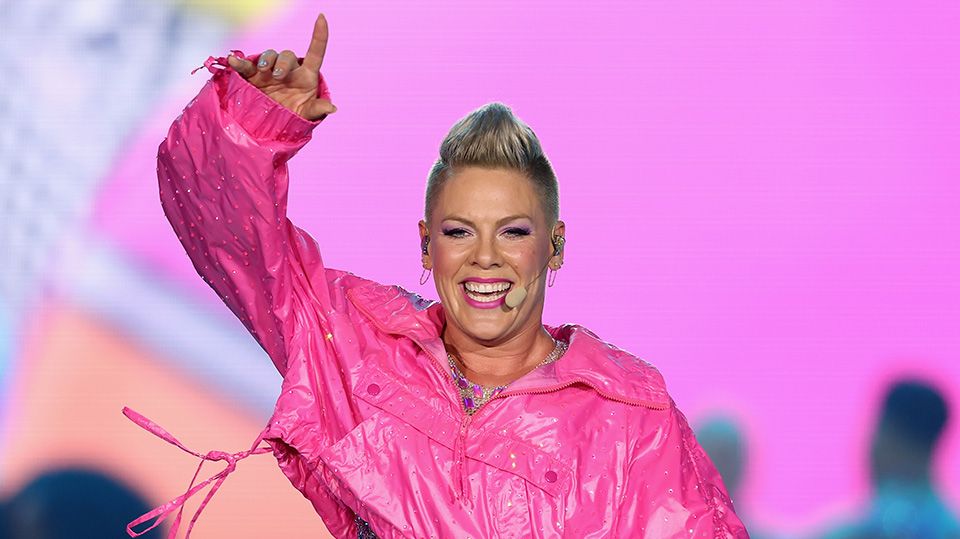
What P!nk delivered onstage for Dolly Parton in 2019 was none of those things.
It was raw. Unsteady. And, in a way that caught even Dolly off guard, deeply revealing.
Singing Under Pressure—Seen and Unseen
On paper, the moment looked straightforward: a major artist honoring one of country music’s most iconic songwriters with a performance of “Jolene.” It’s a song that has lived many lives, interpreted countless times, but always tethered to Dolly Parton’s delicate, almost pleading original.
But P!nk wasn’t walking onstage with a fully rested instrument.
At the time, she was navigating vocal strain—something many touring artists experience but rarely spotlight. Long schedules, constant performances, and physical fatigue can wear down even the most durable voices.
Instead of postponing or disguising it, she stepped into the performance exactly as she was.
A Different Kind of “Jolene”
Dolly’s version of “Jolene” is controlled, almost deceptively gentle. The tension lives beneath the surface—a quiet desperation wrapped in melody.
P!nk pulled that tension outward.
Her interpretation stripped away the polish and leaned into something more grounded. The edges of her voice weren’t smoothed over; they were front and center. The result wasn’t fragile—it was exposed.
When she sang the name “Jolene,” it didn’t feel ornamental. It felt personal, like something being confronted rather than admired.
When Imperfection Becomes the Point
In most high-profile performances, vocal strain is something to manage, minimize, or hide. It’s treated as a flaw to correct.
Here, it became part of the storytelling.
There’s a certain honesty that comes through when a voice isn’t operating at full strength. Notes don’t just land—they reveal effort. Breath becomes audible. Control feels earned rather than assumed.
Instead of weakening the performance, that transparency gave it weight.
It shifted the focus from execution to emotion.
Dolly Parton’s Reaction: Recognition, Not Comparison
Dolly Parton has heard “Jolene” sung in countless ways. That’s the reality of writing a song that transcends generations.
What stood out in this moment wasn’t technical reinvention—it was emotional reinterpretation.
Her response wasn’t about who sang it “better.” It was about what was brought to the song that hadn’t been there before. A different kind of strength. A different kind of vulnerability.
When she later praised P!nk’s grit, it wasn’t casual admiration. It was recognition—one artist seeing another push through something real in real time.
The Unspoken Challenge of Vocal Recovery
Voice is one of the few instruments you can’t set aside when it’s damaged. You carry it with you, and when it falters, there’s no external substitute.
Recovering from vocal strain isn’t just physical—it’s psychological. Confidence shifts. Choices change. Every note comes with awareness.
For an artist like P!nk, whose identity is tied to power and projection, adapting to a compromised voice requires recalibration. Not just how to sing—but how to perform.
Moments like this become part of that process.
Redefining What Strength Sounds Like
Strength in music is often equated with clarity, range, and control.
But there’s another version of strength—one that shows up when those elements aren’t fully available.
It’s the decision to continue. To adjust. To let the performance reflect reality rather than fight it.
That’s what audiences respond to, even if they don’t always articulate it. The sense that what they’re hearing isn’t just practiced—it’s lived.
A Bridge Between Two Generations
The connection between P!nk and Dolly Parton extends beyond that single performance. Both artists, in very different eras and genres, have built careers on authenticity rather than conformity.
They approach music as something personal, not just performative.
That shared philosophy is what made the moment resonate. It wasn’t about passing a torch or merging styles. It was about mutual understanding—two artists recognizing the value of truth over perfection.
Why the Performance Endures
Years later, the performance still circulates—not because it was flawless, but because it wasn’t.
In a landscape where technology can correct nearly anything, there’s something compelling about a moment that remains unfiltered. Where the voice carries evidence of effort, strain, and resilience.
It feels real.
And real moments tend to last longer than perfect ones.
The Lasting Lesson
P!nk didn’t just reinterpret “Jolene.” She reframed what a tribute can be.
It doesn’t have to replicate the original. It doesn’t have to meet an ideal of technical perfection. Sometimes, it just has to tell the truth of where the artist is at that moment.
Even if that truth is a little rough around the edges.
Especially then.