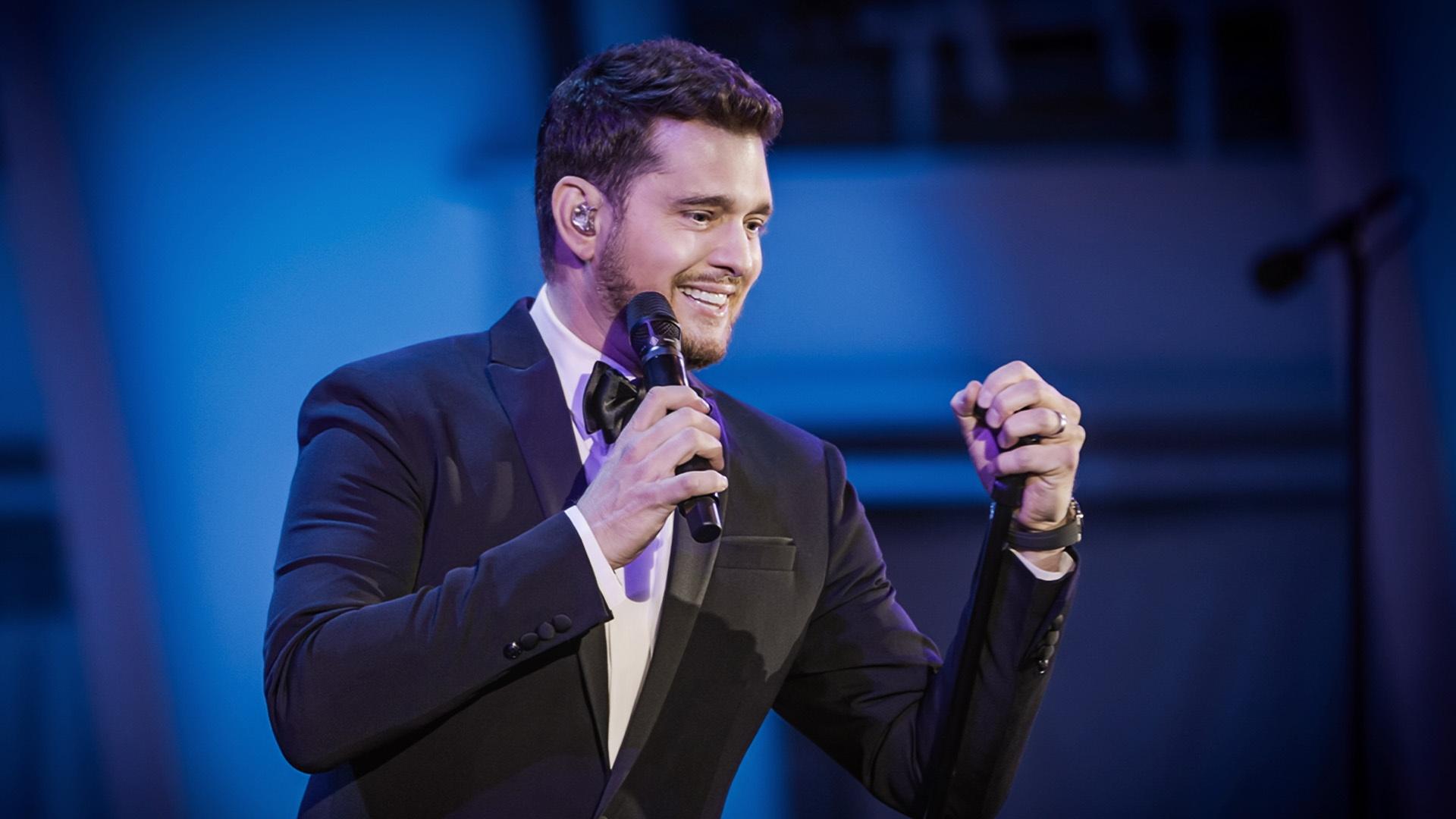
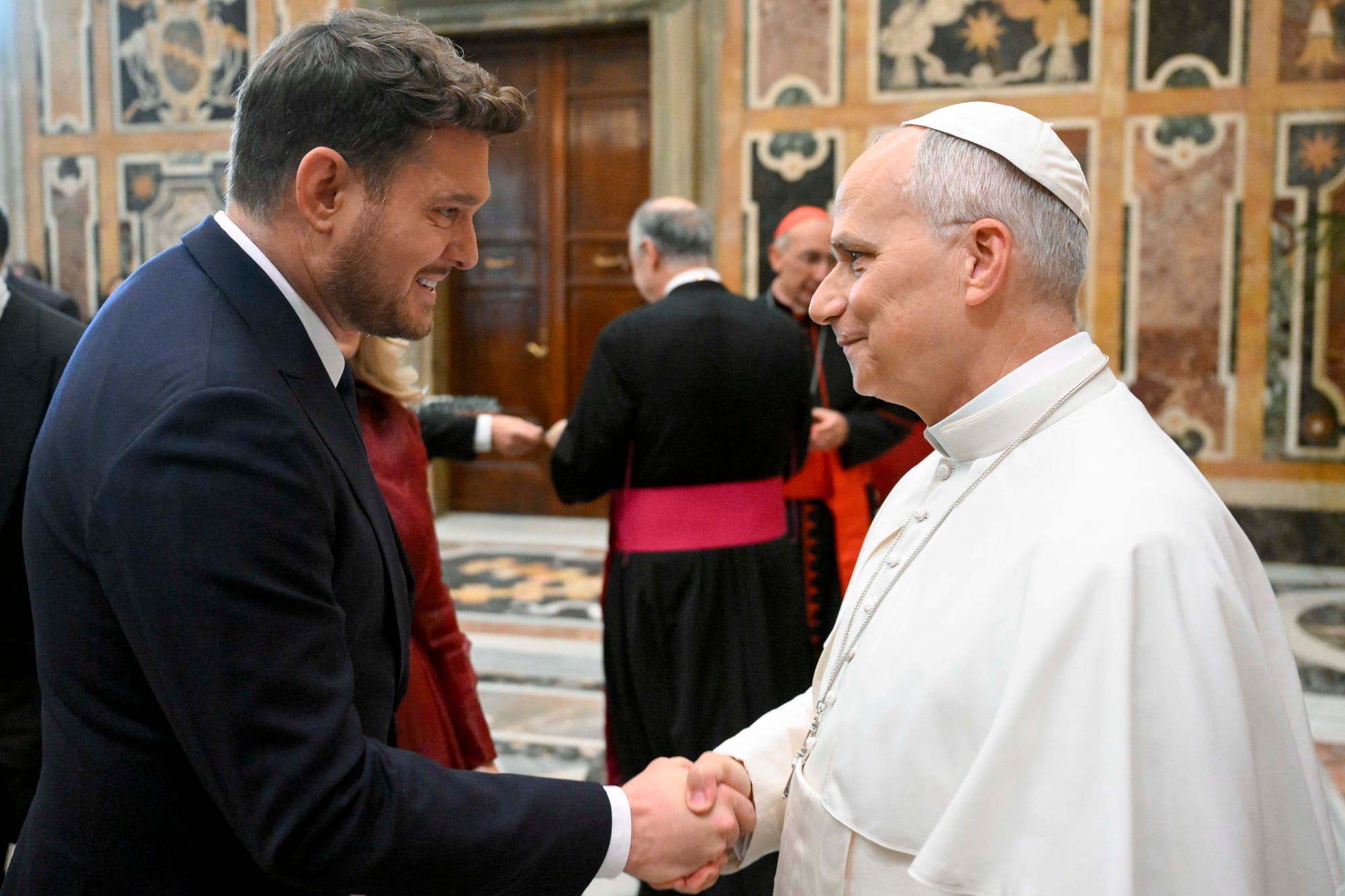
“For you, Maestro… would you honor us with ‘Ave Maria’?” With those quiet, history-shaping words, Pope Leo extended a request that felt less like an invitation and more like a sacred calling. And standing before him was Michael Bublé — a singer known for velvet charm and effortless warmth — suddenly confronted with the weight of a moment that would echo far beyond the Vatican walls.
What followed did not feel like a performance. It felt like something holy being set loose in the air.
As Michael stepped forward, the grand cathedral seemed to still itself. Even the light filtering through the stained-glass windows softened, as though the room instinctively understood the significance of what was about to happen. Bublé closed his eyes, drew a slow, steady breath, and began to sing Ave Maria with a purity and humility that surprised even those who thought they knew his voice well.
Each note rose like a prayer—gentle, reverent, trembling with emotion. Gone was the charismatic entertainer who fills arenas with charm; in his place stood a man offering something deeply personal, almost vulnerable, to a world suddenly silent around him. The Vatican audience—priests, musicians, dignitaries, and everyday worshipers—leaned forward in unison, as if collectively afraid to disturb the fragile beauty of the moment.

Witnesses later said it felt as though time had stopped.
Some described chills they couldn’t explain.
Others admitted they cried without knowing why.
Even Pope Leo, seated beneath the golden glow of the chapel’s towering altar, was visibly moved. His expression carried both pride and awe—as though he, too, had not merely requested a song, but had witnessed a revelation.
For Michael Bublé, the experience marked a shift—an unexpected, profound return to the spiritual roots of music itself. He often speaks about faith, family, and gratitude, but never had those themes poured so clearly from his voice. This was not the polished sound of a stage show; it was the raw honesty of a man singing from the deepest part of his soul.

When the final note faded into the cathedral’s vast silence, there was no immediate applause. Just stillness—deep, reverent, overwhelming. It felt like a collective heartbeat suspended, held gently in the air before the world dared to exhale again.
And then, the Vatican erupted.
A standing ovation thundered through the hall, echoing off centuries-old stone. Pope Leo himself rose, offering Michael a smile full of warmth and gratitude. It was a tribute not only to the beauty of the performance, but to the sincerity behind it.
For those who witnessed it, the moment already feels legendary—one of those rare events destined to be retold for generations:
The day Michael Bublé turned a simple papal request into a moment of pure grace.
A moment so powerful, so unexpectedly sacred, that even the Vatican held its breath.