When a Verse Reignites an Old Rivalry
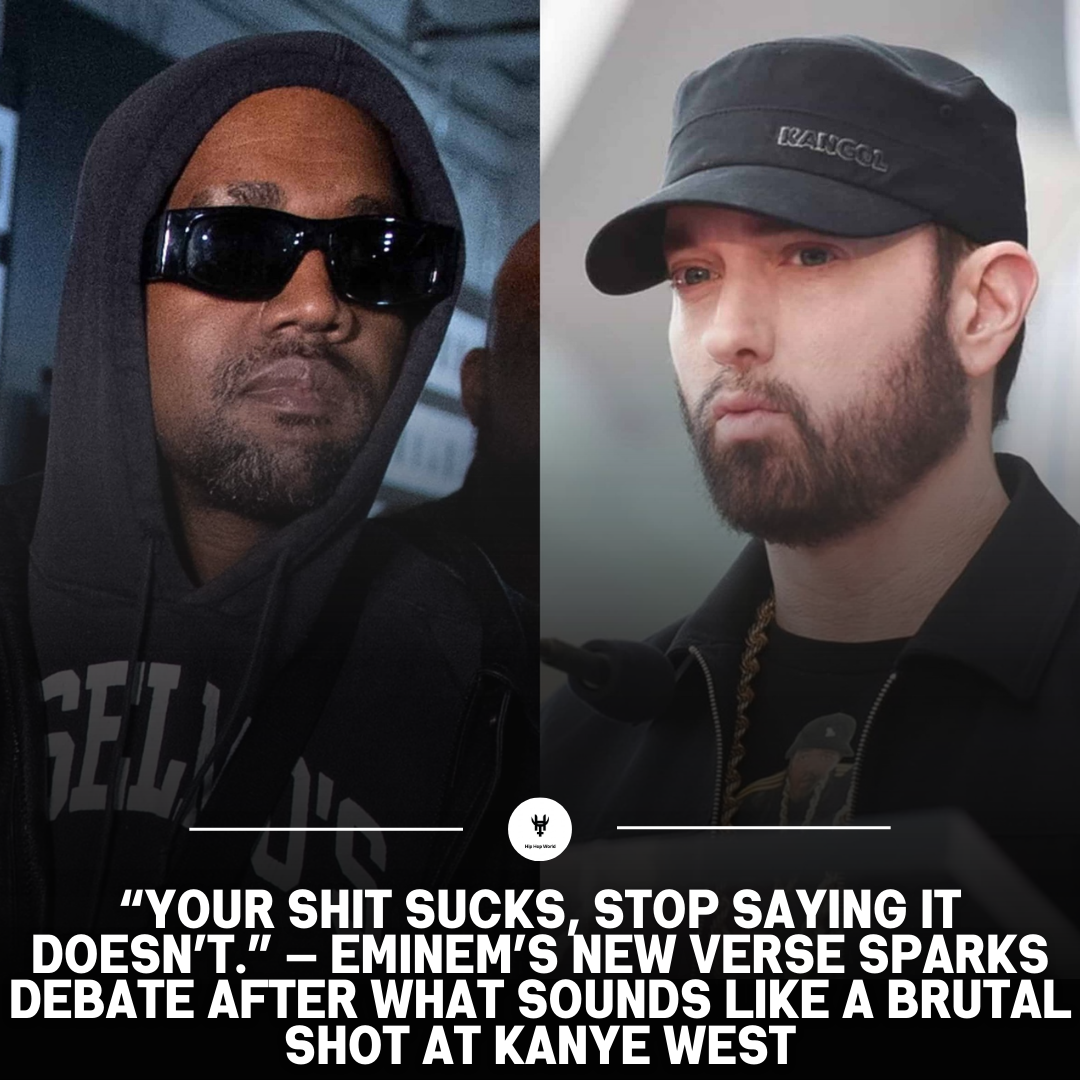
Hip-hop has always thrived on confrontation. From the earliest battle rap circuits to modern studio collaborations, sharp lyrics and pointed insults remain part of the culture’s competitive DNA. On July 4th, that tradition resurfaced when Eminem delivered a new verse that immediately reignited conversation across the rap world.
The verse appears on a track titled “Animals (Pt. I)”, a collaboration with JID released as part of JID’s GDLU (Preluxe) project. While the song itself brings together two technically gifted rappers, much of the attention quickly shifted to Eminem’s third verse, where he takes aim at one of hip-hop’s most controversial figures: Kanye West.
The moment instantly sparked debate among fans, critics, and longtime followers of the genre.
The Verse That Sparked the Conversation
When Eminem enters the track, the tone becomes unmistakably confrontational. His bars combine the aggressive cadence and layered wordplay that have defined much of his career, but one section of the verse stands out for its direct reference to Kanye West.
Within the lyrics, Eminem alludes to a recent revelation Kanye made in one of his own songs. The reference quickly became the focal point of online discussion.
The line connects to a track Kanye released earlier in the year titled “Cousin.” In that song, Kanye described a deeply personal and controversial story from his childhood, recounting a moment involving a cousin when both were young. The lyrics surprised listeners for their unusually candid tone and immediately generated widespread conversation across social media and music platforms.
When Eminem referenced the subject in his verse on “Animals (Pt. I),” many listeners interpreted it as a pointed jab aimed directly at Kanye.
Within hours of the track’s release, fans began dissecting the lyrics, highlighting the reference and debating whether it marked the start of a broader lyrical conflict between the two artists.
Kanye West’s Earlier Revelation
Kanye West’s song “Cousin” had already stirred significant attention before Eminem’s verse arrived. In the track, Kanye reflected on a childhood experience involving a cousin, describing a confusing moment that occurred when they were both young.
The lyrics present the story as part of a broader reflection on memory, guilt, and responsibility. Kanye later elaborated on the meaning of the song through social media, explaining that the experience had stayed with him for years.
In his explanation, he suggested that discovering certain magazines as a child had influenced the situation and that he had carried a sense of blame related to what followed. He also mentioned that the cousin referenced in the story is currently serving a life sentence for a violent crime.
The revelation added another layer to Kanye’s already complex public narrative—one that has frequently blurred the lines between confession, artistic expression, and controversy.
For many listeners, the track felt unusually raw, even by Kanye’s standards.
Eminem’s Return to the Spotlight
Eminem’s appearance on “Animals (Pt. I)” also marks another moment in a career defined by sharp lyrical responses and fearless commentary. Over the years, the Detroit rapper has built a reputation for addressing other artists directly within his music.
From early battle rap days in Detroit to globally recognized diss tracks later in his career, Eminem has often used verses to challenge rivals or respond to cultural moments within hip-hop.
His contribution to JID’s track follows that same tradition.
Although the verse includes several lines aimed at Kanye West, it also reinforces Eminem’s long-standing persona as an artist who thrives on provocation and lyrical confrontation. For many listeners, the moment felt like a reminder of the aggressive style that helped establish his reputation in the late 1990s and early 2000s.
At the same time, the collaboration itself reflects a generational crossover within hip-hop.
JID, one of the most respected lyricists among the newer generation of rappers, has often been praised for his intricate flows and storytelling ability. Pairing him with Eminem on a track naturally attracted attention even before the controversy surrounding the verse emerged.
A Culture Built on Competition
Moments like this highlight a deeper aspect of hip-hop culture: its long tradition of lyrical competition.
Throughout the genre’s history, rappers have challenged one another through verses, interviews, and performances. Sometimes those confrontations develop into full-scale rivalries. Other times they remain isolated lyrical moments that fuel conversation without escalating further.
Eminem and Kanye West share a complicated place within that history. Both artists rose to prominence in the early 2000s and quickly became defining figures of the era. Their styles, however, have always been dramatically different.
Eminem’s career has largely revolved around technical lyricism, intricate rhyme structures, and battle-oriented storytelling. Kanye West, meanwhile, built his reputation on innovative production, emotionally driven songwriting, and a willingness to challenge cultural norms.
Despite those differences, both artists have left an enormous mark on modern music.
The Reaction from Fans
As clips of the verse spread online, reactions quickly flooded social media. Some listeners praised Eminem for returning to the confrontational style that made his earlier work so memorable. Others questioned whether referencing Kanye’s personal story crossed a line.
The debate itself reflects how closely fans still follow both artists’ careers.
More than two decades after their rise to fame, Eminem and Kanye remain central figures in hip-hop’s cultural conversation. Any interaction—direct or indirect—between them inevitably draws attention.
Another Moment in Hip-Hop’s Ongoing Story
Whether Eminem’s verse leads to further responses from Kanye West remains uncertain. Hip-hop has seen countless lyrical exchanges that either escalated into full rivalries or quietly faded after the initial headlines.
What is clear, however, is that the moment once again demonstrates the enduring power of rap’s competitive spirit.
A single verse, delivered on a holiday release, was enough to send fans back into debate about two of the genre’s most influential voices.
And in a culture where words often carry as much weight as beats, that kind of moment continues to remind listeners why hip-hop remains one of the most dynamic forms of musical expression.