There are performances that sound good, and then there are performances that mean something. The night Kelly Clarkson took the stage to sing “Just Give Me a Reason,” it was clear from the first note that this wouldn’t be just another cover.
It felt personal. Almost too personal.
And then everything changed.

A Song That Hit Too Close to Home
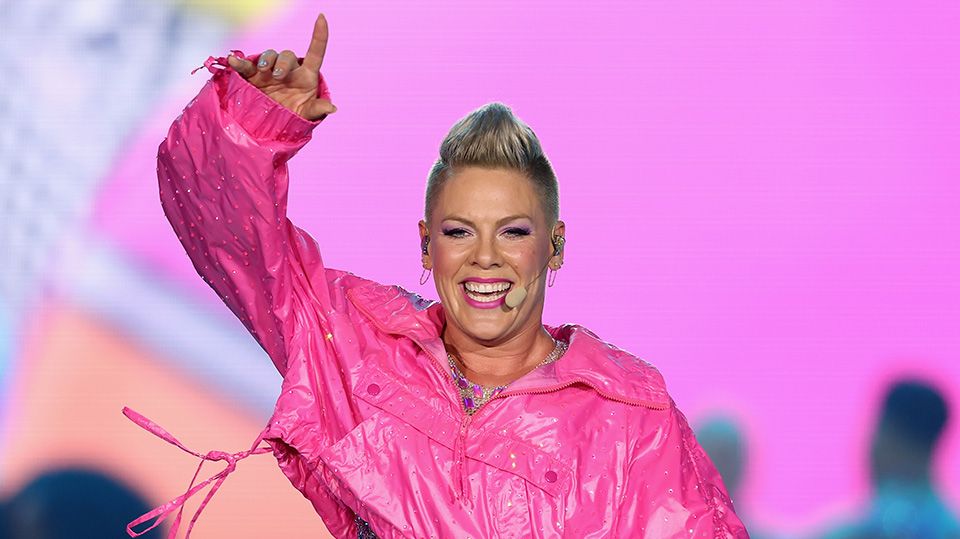
Originally recorded by Pink featuring Nate Ruess, “Just Give Me a Reason” has always carried emotional weight. It’s written as a conversation between two people trying to salvage something that’s falling apart—a plea wrapped in melody.
But when Clarkson performed it in the aftermath of her divorce, the lyrics landed differently.
Lines about distance, misunderstanding, and fragile hope didn’t feel like storytelling. They felt like confession.
Backed by a stripped-down arrangement led by strings, her voice carried a rawness that studio recordings rarely capture. There was no hiding behind production—just phrasing, breath, and emotion doing the heavy lifting.
The Moment the Performance Shifted
About a minute in, just as the performance settled into its emotional groove, something unexpected happened.
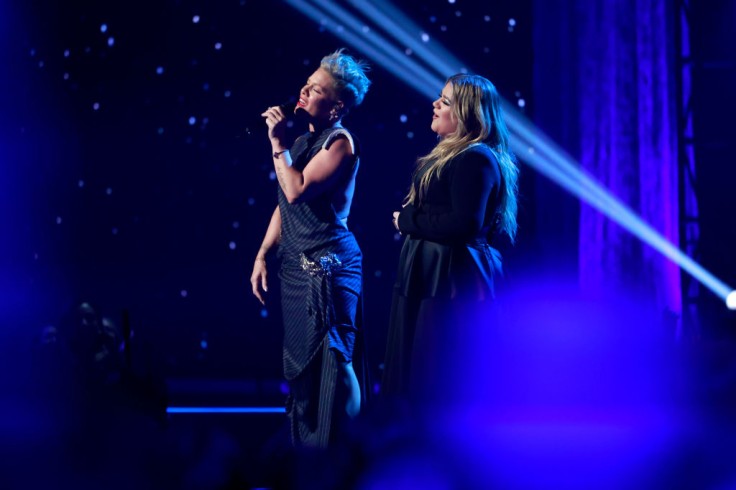
From the audience, Pink stood up.
No dramatic entrance. No announcement. Just a voice joining in—steady, familiar, and impossible to miss.
What had been a solo moment of vulnerability instantly became something else: a dialogue.
From Cover to Conversation
The brilliance of that surprise wasn’t just the shock factor—it was how naturally it worked.
“Just Give Me a Reason” was always designed as a duet. With Pink stepping in, the performance finally mirrored the song’s original structure: two perspectives, intertwined.
Clarkson wasn’t just singing about a relationship anymore. She was in one—musically speaking.
Their voices contrasted in a way that elevated the moment:
- Clarkson’s tone leaned into openness and ache
- Pink’s delivery brought grit and grounded intensity
Together, they created tension and release, like two sides of the same emotional argument.
A Small Gesture That Said Everything
One of the most talked-about moments wasn’t a high note—it was a reaction.
After Clarkson delivered a particularly intricate vocal run, Pink playfully waved her off, as if to say, “Okay, okay… enough showing off.”
Clarkson broke into a smile.
It was brief, unscripted, and human. And it cut through the heaviness of the song in a way that made the entire performance feel real, not rehearsed.

Why the Audience Couldn’t Look Away
The performance quickly spread online, drawing millions of views. But the numbers don’t fully explain its impact.
What resonated was the balance:
- Vulnerability without self-pity
- Technical excellence without ego
- Chemistry without overproduction
It felt like two artists meeting in the middle of something honest—not competing, not performing at each other, but listening and responding in real time.
The Enduring Power of “Just Give Me a Reason”
Released in 2013 as part of Pink’s album The Truth About Love, the song became one of her defining hits. Its success wasn’t just commercial—it was emotional.
By structuring the track as a back-and-forth between two voices, Pink and her collaborators captured something universal: relationships rarely fall apart in isolation. There are always two sides, two stories, two people trying (or failing) to understand each other.
That’s exactly what made this live moment so powerful.
Clarkson brought lived experience.
Pink brought original intent.
Together, they created something that felt complete.
It’s easy to label performances like this as “viral” and move on. But this one lingers for a reason.
It wasn’t just about surprise or star power. It was about timing, context, and authenticity aligning in a way that can’t be manufactured.
For a few minutes, a song about heartbreak became something else—connection, empathy, even a little bit of joy.
And in a space as polished as an awards show, that kind of spontaneity is rare.
The Collaboration Fans Still Want
Moments like this inevitably lead to the same question: why don’t they collaborate more?
With voices this distinct and expressive, a studio duet between Clarkson and Pink feels less like a “nice idea” and more like an obvious opportunity.
But part of what made this performance special is that it wasn’t planned for perfection. It happened in the moment—and sometimes, that’s exactly why it works.
Some performances impress. Others stay with you.
This one did both.