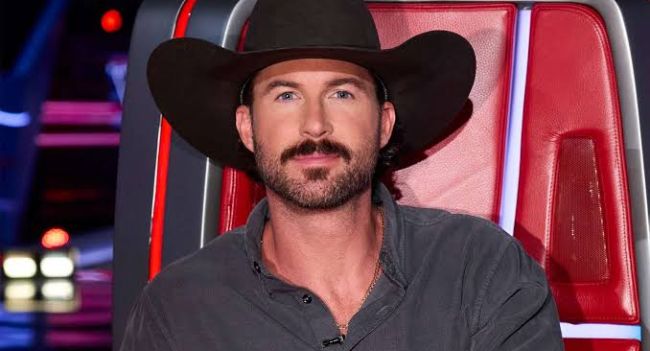
Riley Green’s biggest challenge on The Voice may not be finding talented singers. It may be figuring out how to turn a team packed with country artists into a group of genuine championship contenders when so many of them are competing for the same audience. With Season 30 moving through the Battle rounds, Green’s country music background could become his greatest advantage, but it also raises an interesting question: How does a coach make several artists from the same musical neighborhood stand out from one another?
Country music has always had a special place in singing competitions, but not every country singer brings the same ingredients to the stage. Some performers thrive on storytelling and a lived-in vocal tone, while others command attention with powerful high notes, Southern rock energy, or a polished pop-country sound. The strongest contestants understand that singing a country song well is only the starting point. They need to give listeners a reason to remember their particular voice after the final note fades.
That is where Green’s experience as a recording artist could prove especially valuable. He understands the importance of choosing material that fits a singer’s identity rather than simply reaching for the biggest vocal moment available. A song can have an impressive chorus and still be the wrong choice for a particular performer. On a show where contestants have limited time to make an impression, the right song can reveal personality, emotional depth, and vocal character far more effectively than a technically demanding performance that never quite connects.
The Battle rounds make that challenge even more complicated because singers are no longer being judged in isolation. They must share a song with another artist, and the comparison can change how viewers perceive both performers. One singer might have the stronger upper register, while the other possesses a rougher, more distinctive tone. A third might be the more natural storyteller, delivering every line with a conviction that makes the audience forget about vocal fireworks altogether. The coach’s job is to recognize those differences and help each artist make the most of them.
For Green, country music’s storytelling tradition offers a particularly useful way to approach those decisions. The genre rewards singers who can make a lyric feel personal, whether they are delivering a restrained ballad or leaning into a driving, guitar-heavy arrangement. That does not mean every country contestant should sing softly or avoid taking risks. Instead, it means understanding when to hold back, when to let a note soar, and how to make a performance feel like more than a demonstration of vocal ability.
It also explains why a team full of country singers does not necessarily have to sound repetitive. Country and Americana can embrace intimate acoustic arrangements, while blues-influenced performances offer room for gritty phrasing and expressive vocal runs. Country-rock brings a different kind of intensity, and pop-country can give a singer a more radio-friendly edge. Those distinctions matter enormously on The Voice, where a coach who can identify each artist’s strongest musical lane has a better chance of helping them develop a recognizable identity.
The question is whether Green can encourage that individuality while still preparing his artists for the demands of a national competition. Contestants cannot rely exclusively on familiar genre conventions if they hope to keep surprising viewers. A singer who delivers a convincing traditional country performance one week might benefit from a carefully chosen song outside that comfort zone the next. The trick is to stretch an artist without stripping away the qualities that made the audience pay attention in the first place.
This is also where Green’s own career could offer an interesting perspective. Building a connection with listeners requires more than a good voice; audiences often return to artists because they recognize something consistent in their delivery, song choices, and musical personality. That lesson translates naturally to coaching. The most successful contestants are not always the ones who produce the loudest note or the most elaborate run. They are often the singers who make people feel that nobody else could have delivered that particular performance in quite the same way.
Of course, The Voice is not simply a test of musical taste. Coaches must make difficult decisions, and even a strong performer can struggle when paired against someone whose strengths happen to suit the song better. A contestant’s progress also depends on how effectively they respond to feedback and whether they can adapt under pressure. Green may recognize the potential in an artist, but potential alone will not carry anyone through every round. The singers who advance need to demonstrate that they can turn coaching into noticeable improvement.
There is another factor worth watching as the competition develops: whether Green’s country-focused team can attract viewers who do not normally gravitate toward the genre. A compelling performance can cross musical boundaries when the singer communicates genuine emotion. A listener who rarely chooses country music might still connect with a beautifully delivered ballad or an explosive performance built around a memorable melody. That crossover appeal could become important if Green’s artists hope to remain competitive against singers with very different musical backgrounds.
My take is that Green’s success as a coach should not be measured by how many country singers he can guide through the competition. The more meaningful test will be whether he can help each artist become more distinctive, more confident, and more convincing onstage. Having a clear musical identity is a terrific starting point, but a winning team also needs versatility, emotional range, and the ability to deliver when the pressure rises. If Green can bring those elements together, his team’s shared country roots could become a strength rather than a limitation.
Now the fun part is deciding which kind of country performer has the best chance of making a deep run. Do you prefer the traditional storytellers, the bluesy voices, or the country-rock singers who bring a little extra fire to the stage? And do you think Riley Green has what it takes to turn his country-heavy roster into a championship team on The Voice Season 30? Share your picks and tell us which kind of performance would make you turn your chair around.