Joe Henley may have one of the most distinctive country voices competing on The Voice this season, but there is one detail about his journey that makes his progress even more remarkable: before stepping onto the show’s audition stage, the young Alabama singer had reportedly never performed a live gig.
At just 19 years old, Henley is already attracting attention for a vocal quality that reminds listeners of traditional country music’s most recognizable voices. His performance of Travis Tritt’s “Anymore” during the Blind Auditions earned him two coaching offers, but it was the reaction from the judges that revealed just how unusual his talent might be.
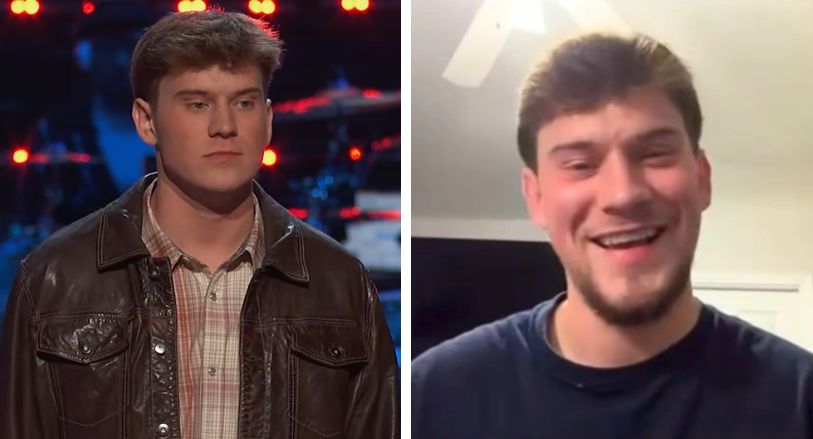
Kelly Clarkson and Riley Green both turned their chairs, giving Henley an important decision to make. Although Clarkson made a strong case for bringing him onto her team, Henley ultimately chose Green, a fellow Alabama native whose country music background made the partnership particularly appealing.
What happened next demonstrated that Henley might have something special, even if he still has plenty to learn about performing professionally.
The teenager’s lack of live performance experience became an interesting talking point during his audition journey. For someone who had not spent years playing venues, entertaining crowds, or developing the instincts that come with regular stage work, he displayed a natural vocal presence that immediately caught the coaches’ attention.
Clarkson was particularly impressed by what she heard. She compared Henley’s vocal quality to Randy Travis, pointing to the depth and distinctive character of his voice. It was a significant comparison, especially considering Travis’ influence on traditional country music and the unmistakable sound that helped define his career.
Adam Levine also recognized something unusual about Henley’s voice during the Battle Rounds, describing its distinctive quality as something that stood out to him. Queen Latifah praised the power in his delivery, adding to the growing appreciation for what the young singer could bring to the competition.
But having a naturally impressive voice and knowing how to command a stage are two very different things.
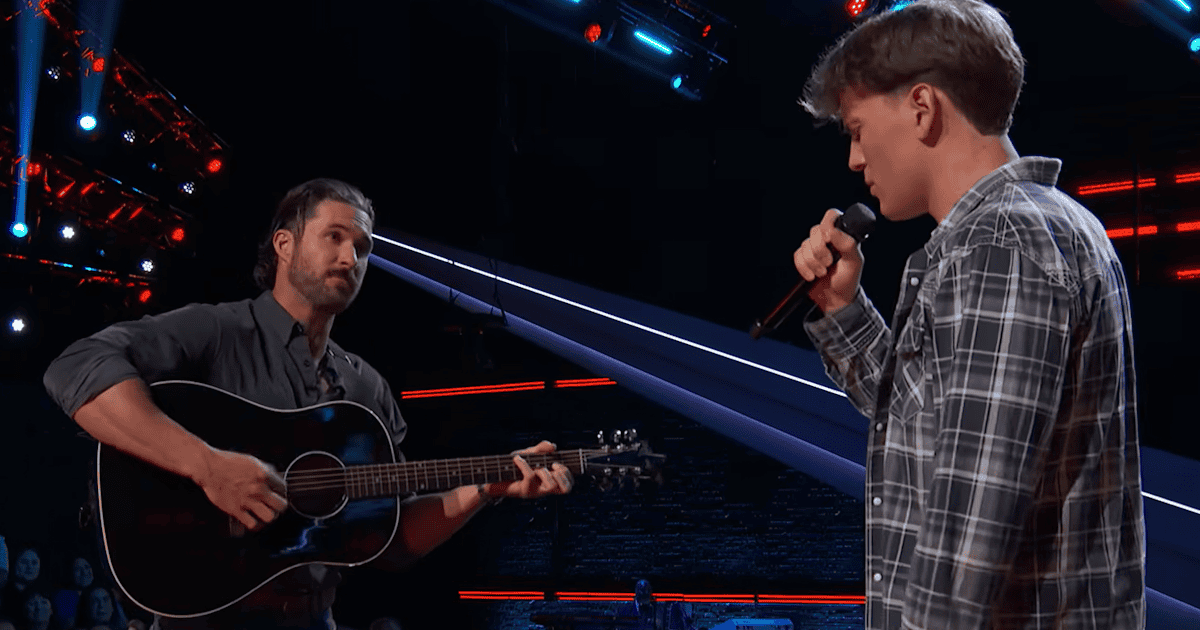
That distinction became especially noticeable when Henley began working on his Battle performance with fellow Team Riley contestant Kenna Elpers. The two were assigned “Don’t Mind If I Do,” the duet recorded by Green and Ella Langley, putting Henley in the unusual position of performing his coach’s own music in front of him.
Elpers brought considerably more performance experience into the pairing. She had previously performed live and even opened for Green, giving her an understanding of the demands of being onstage that Henley was still developing.
During rehearsals, Green and Battle Advisor Carly Pearce worked with the contestants on the performance. One particularly amusing moment came when Henley’s unfamiliarity with using a microphone stand became apparent. Green jokingly compared the inexperienced singer to someone who had not quite grown into his surroundings, highlighting the difference between his natural vocal ability and his limited stage experience.
It was a small moment, but it illustrated an important challenge facing Henley. He had the voice, but he was still learning some of the practical skills that professional performers often develop through years of experience.
The Battle itself provided an opportunity to see how quickly he could adapt.
Rather than choosing a song that allowed both singers to remain comfortably within their individual styles, Green gave them a track that required musical chemistry, coordination, and an understanding of the relationship between the two performers.
The result impressed the coaching panel. Clarkson again highlighted Henley’s resemblance to Randy Travis, while Levine and Latifah also recognized the qualities that made his voice memorable.
Green faced a difficult decision because both artists delivered strong performances. Ultimately, however, he chose Henley to advance, explaining that the young singer possessed a unique, natural talent that he wanted to continue developing. He also acknowledged how much Henley had improved during the preparation for their performance.
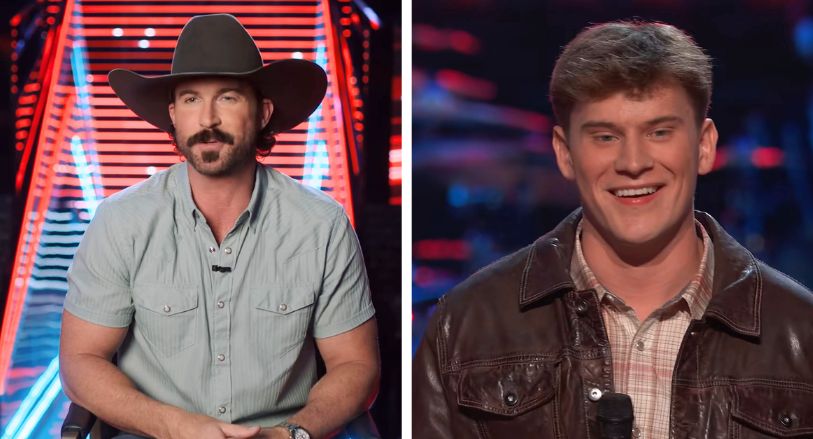
That decision was particularly interesting because Green was not simply rewarding the contestant with the most experience. He was investing in someone whose vocal potential appeared to outweigh his current limitations as a performer.
And that could be the most important part of Henley’s story.
Many contestants arrive on The Voice with years of experience, established performance routines, and a clear understanding of how to work an audience. Henley represents a different kind of competitor: someone who appears to be discovering what he can do while simultaneously learning how to present himself as a professional artist.
His journey also highlights why a singing competition can be about much more than finding the person who delivers the most polished performance on a particular night. Sometimes, the most interesting contestant is the one who still has the most room to grow.
Green seems to recognize that distinction. His decision to keep Henley after the Battle suggested that he sees more than an impressive audition voice. He sees an artist who could become increasingly comfortable and capable as the competition progresses.
There is also a potentially exciting musical direction to explore. Henley’s resemblance to Randy Travis gives him a connection to traditional country sounds that have a special place in the genre’s history. At the same time, he is young enough to develop his own identity rather than simply following in the footsteps of artists who came before him.
That balance will be important as he faces more demanding performances. A familiar vocal quality can make an artist immediately recognizable, but developing a personal style is what can help turn early attention into a lasting career.
Henley’s next challenge is Cut Week, scheduled for November 2. His earlier performance of Keith Whitley’s “Don’t Close Your Eyes” offers another opportunity to demonstrate how he handles material from country music’s traditional repertoire. More importantly, it gives viewers another chance to see whether his stage confidence is catching up with his natural vocal ability.
For Green, the challenge will be helping a promising young singer transform raw potential into consistent performances. For Henley, it is an opportunity to prove that his lack of experience does not have to define his future.
In my view, that is what makes his journey particularly worth following. A contestant who already knows how to perform can certainly be impressive, but watching someone discover their abilities in front of millions of viewers creates a different kind of excitement.
Henley has already shown that he can hold his own against more experienced singers. Now the question is whether he can continue improving quickly enough to turn that naturally distinctive voice into a serious championship contender.
Do you think Joe Henley’s traditional country voice could make him one of the biggest surprises of The Voice Season 30, or does he still need more stage experience before he can compete with the strongest artists?